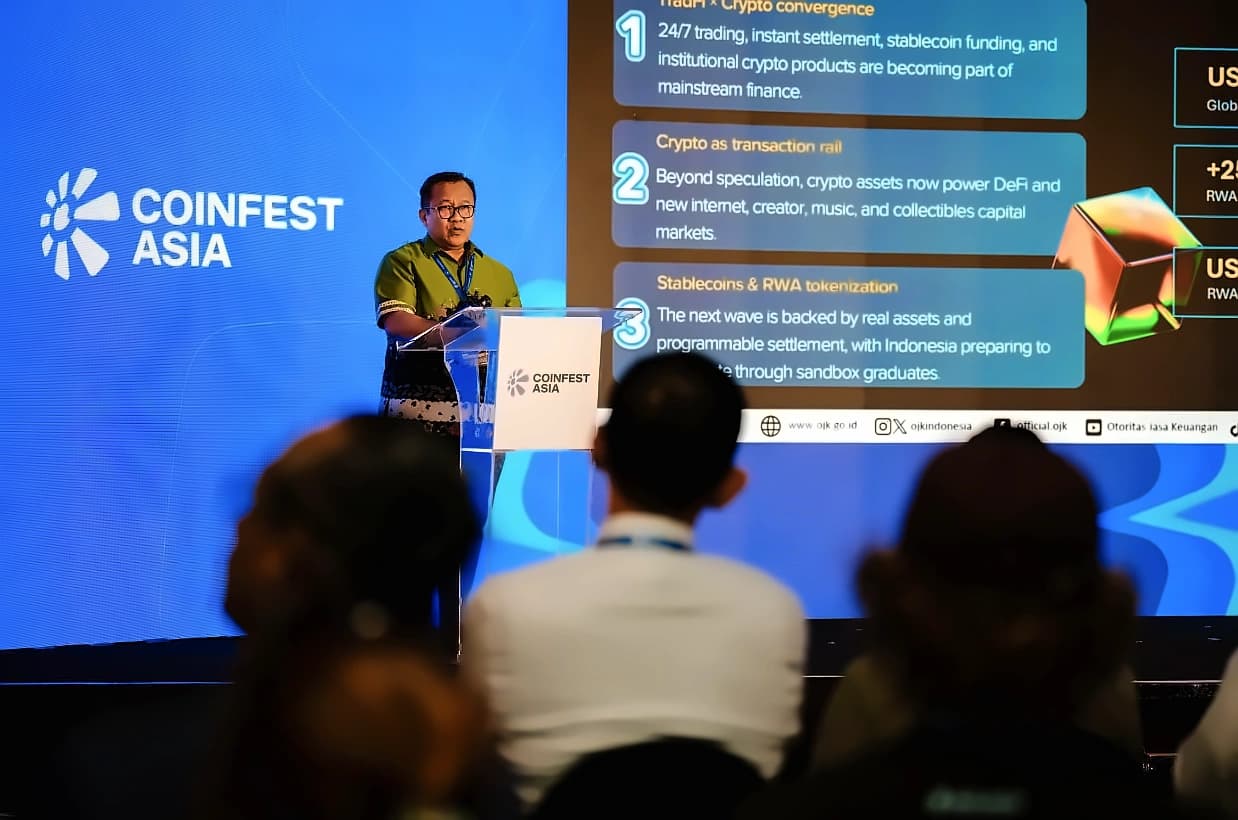
The global stablecoin market achieved a significant milestone in August 2026, with stablecoin supply reaching $303 billion according to blockchain analytics firm Allium. The data reveals that identified stablecoin payments totaled between $401 billion and $527 billion across the first eight months of 2026, representing a substantial expansion from prior years. This payment range suggests an annualized payment volume of approximately $600 billion to $790 billion, indicating meaningful growth in real-world stablecoin adoption. The stablecoin market is dominated by Tether's USDT and Circle's USDC, which together have historically accounted for the large majority of total stablecoin market capitalization, with other issuers including PayPal's PYUSD and various algorithmic stablecoins contributing to the overall supply figure.
Malaysia's regulated cryptocurrency trading reached ₹17.14 billion ($4 billion) in 2025, representing a 23% annual increase from ₹13.93 billion in 2024, according to the Securities Commission Malaysia's 2026 digital-asset market update. As reported by Fitch Ratings, this growth demonstrates Malaysia's emergence as one of the more open Islamic-finance markets for regulated cryptocurrency. The trading volume represents approximately 2.5% of the value traded in Malaysia's domestic equity market, indicating that regulated cryptocurrency activity remains relatively small compared to traditional securities trading. Fitch Ratings highlighted that the $4 billion figure represents cumulative trading activity across all commission-licensed exchanges during the calendar year, with the Securities Commission Malaysia overseeing all licensed digital asset exchanges operating within the country.
Malaysia's Shariah Advisory Council has established a comprehensive framework for digital asset compliance, with Bitcoin, Ether, XRP, Litecoin, Solana, Cardano, Chainlink, Uniswap, Avalanche, Polkadot and Stellar receiving Shariah-compliant status. According to Fitch Ratings, the council first considered digital asset treatment in 2020, resolving that regulated digital currencies can qualify as mal, or property, from a Shariah perspective. The current Securities Commission list identifies Stellar as Shariah-compliant following a December 2024 council meeting, with regulated exchanges seeking to offer other digital currencies required to obtain council endorsement under revised Islamic capital-market rules from March 30, 2026. Malaysia's Shariah-compliant framework provides regulatory clarity for products and services that adhere to Islamic finance principles, including prohibitions on excessive speculation and requirements for asset-backing, which differentiates Malaysia from other regional markets and has attracted both domestic and international participants seeking compliant digital asset exposure.

The Securities Commission Malaysia has licensed 10 digital asset operators across exchanges, custodians and offering platforms by the end of the first half of 2026, as reported by Fitch Ratings. The current official digital-asset register includes five Digital Asset Exchange operators - HATA Digital, Luno Malaysia, MX Global, SINEGY DAX and Kinetic DAX - along with Kapital DX and Pitch Platforms as IEO operators, and CoKeeps, Gambit Custody and Jada Platform as registered digital-asset custodians. The number of investors participating in Malaysia's regulated digital-asset market increased approximately 29% from 2024, with 23 digital assets listed on recognized exchanges at the end of 2025. These licensed exchanges serve as the only legal venues for Malaysian retail and institutional investors to trade cryptocurrencies, with the commission maintaining a published register of approved platforms and requiring platforms to comply with strict anti-money laundering and counter-terrorism financing rules.
Malaysian banks remain largely confined to services provided to regulated operators, with most Islamic banks examined by Fitch Ratings yet to generate material revenue from direct cryptocurrency trading, brokerage, custody or financing. According to Fitch, deeper participation could generate fee income but could expose banks to operational, liquidity, compliance, reputational and Shariah-compliance risks. Bank Negara Malaysia is pursuing a separate track focused on regulated digital money and tokenization through its Digital Asset Innovation Hub, which has engaged more than 30 domestic and international organizations since its June 2025 launch. The Securities Commission Malaysia revised its Digital Asset Exchange rules in May 2026 to streamline product introduction processes while raising requirements covering client-asset protection, governance, financial resources, ownership and management standards. Digital Asset Exchange operators are scheduled to become members of Malaysia's Financial Markets Ombudsman Service during 2026, providing investors access to formal dispute-resolution frameworks.