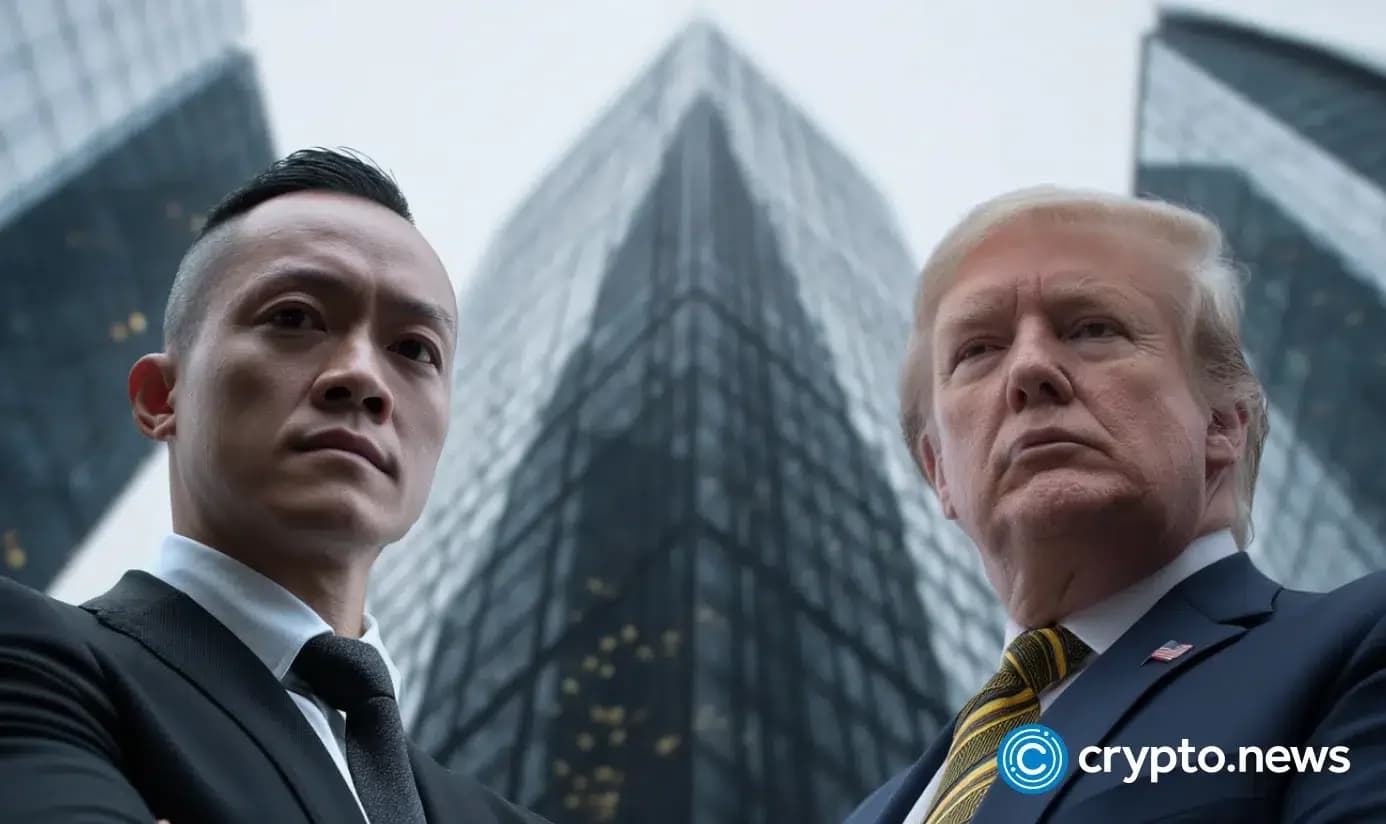
Crypto entrepreneur Justin Sun has filed a lawsuit against World Liberty Financial, alleging the Trump-linked DeFi platform engaged in fraud and unlawfully restricted access to his tokens. According to reports from Reuters, the complaint was filed on April 21 in the U.S. District Court for the Northern District of California. Sun invested ₹360 crore ($45 million) into World Liberty between late 2024 and early 2025, acquiring 3 billion WLFI tokens as an early backer of the project. The lawsuit portrays Sun's support as key to the company's early success, claiming WLFI tokens saw "lackluster demand" and generated just ₹184 crore ($22 million) in sales in the first month before his investment. Sun was later awarded a further 1 billion tokens after being named as an advisor to World Liberty, bringing his total portfolio to 4 billion WLFI tokens worth roughly ₹2,560 crore ($320 million). In his social media announcement of the lawsuit, Sun stated that "at times, his WLFI tokens have been valued at more than $1bn," highlighting the significant value destruction since his initial investment.
The lawsuit claims World Liberty implemented a 'blacklisting' function within its token smart contract without disclosure or governance approval. As reported by Reuters, these controls allowed the company to restrict transfers and freeze wallets, including Sun's assets. The complaint alleges these controls were used to block Sun from transferring or selling his tokens even after they became tradable on September 1, 2025. Since that date, WLFI tokens have lost about 25% of their value, according to CoinGecko. The lawsuit states that Sun and his businesses "will be unable to realize any economic value from their tokens — which have at times been valued at $1 billion or more — as long as the tokens are unlawfully frozen." Sun has also alleged that World Liberty secretly embedded what he described as a 'backdoor blacklisting function' in blockchain-based contracts, giving the company "unilateral power" to "freeze, restrict, and effectively confiscate the property rights" of token holders without cause or recourse. In his social media post announcing the lawsuit, Sun specifically accused the firm of "frozen all of my tokens, stripped me of my right to vote on governance proposals, and have threatened to permanently destroy my tokens by 'burning' them - all without any proper justification."
Sun further alleges that World Liberty threatened to burn his tokens and used the restrictions as leverage to pressure additional financial commitments. According to the lawsuit, these actions constitute part of an 'illegal scheme to seize property'. The complaint seeks damages alongside injunctive relief, describing the actions as part of a broader scheme to undermine user ownership rights. Sun also accused World Liberty Financial executives, including co-founder Chase Herro, of seeking to "leverage the Trump brand" to illegally drive profits, stating that "Even though Mr. Sun was one of World Liberty's anchor investors and biggest supporters, that did not stop Mr. Herro and the company's other principals from making Mr. Sun a prime target of their fraudulent scheme." The lawsuit alleges that World Liberty representatives "repeatedly contacted and pressured" Sun to invest additional capital between April and July 2025, including requests to commit to acquiring ₹1,600 crore ($200 million) in a separate World Liberty stablecoin token and to acquire an equity stake in the company. Sun has also invested heavily in Trump's so-called meme coin, with Trump launching a slate of crypto-friendly policies since returning to the White House in January 2025.
The lawsuit alleges that World Liberty borrowed at least ₹625 crore ($75 million) in stablecoins by pledging billions of its own WLFI tokens as collateral, then converted a portion of those funds into cash. According to the complaint, this activity could add downward pressure on the token's price and make it harder for holders to trade the crypto. The lawsuit cites these developments as evidence of mounting financial strain at World Liberty, stating that "World Liberty's collateral is rapidly deteriorating, its governance credibility has been undermined and market confidence in the company is eroding." The complaint seeks court intervention to block World Liberty from invalidating Sun's tokens, arguing that the company could struggle to meet its obligations. Sun has also invested heavily in Trump's so-called meme coin, with Trump launching a slate of crypto-friendly policies since returning to the White House in January 2025. Since September 1, 2025, WLFI tokens have plunged from 31 cents to just under 8 cents, representing a dramatic decline in value that Sun attributes to the company's alleged misconduct.
The litigation threatens to chill Sun's relationship with President Trump, as the entrepreneur revealed last year that he was the largest holder of another Trump-backed crypto token, dubbed $TRUMP. Co-founder Zach Witkoff, World Liberty Financial's chief executive and a co-founder, dismissed Sun's allegations as "entirely meritless" in social media posts, stating that "He engaged in misconduct that required World Liberty to take action to protect itself and its users." Witkoff claimed that Sun's lawsuit is a "desperate attempt to deflect attention from Sun's own misconduct" and accused Sun of "playing the victim while making baseless allegations to cover up his own misconduct." Co-founder Eric Trump, a son of the president and also a World Liberty co-founder, responded with a social media post referencing Sun's 2024 purchase of an art piece called "Comedian," writing "The only thing more ridiculous than this lawsuit is spending $6 million on a banana duct-taped to a wall." A spokesperson for World Liberty Financial declined to comment on the lawsuit, while a representative had earlier told Reuters that Sun "is not an advisor at World Liberty Financial, and he has never held an operational role in the company." The White House did not immediately respond to a request for comment. Meanwhile, the Securities and Exchange Commission has dropped its investigation into Sun, with Senator Elizabeth Warren questioning if it was tied to his investments in Trump's crypto ventures.