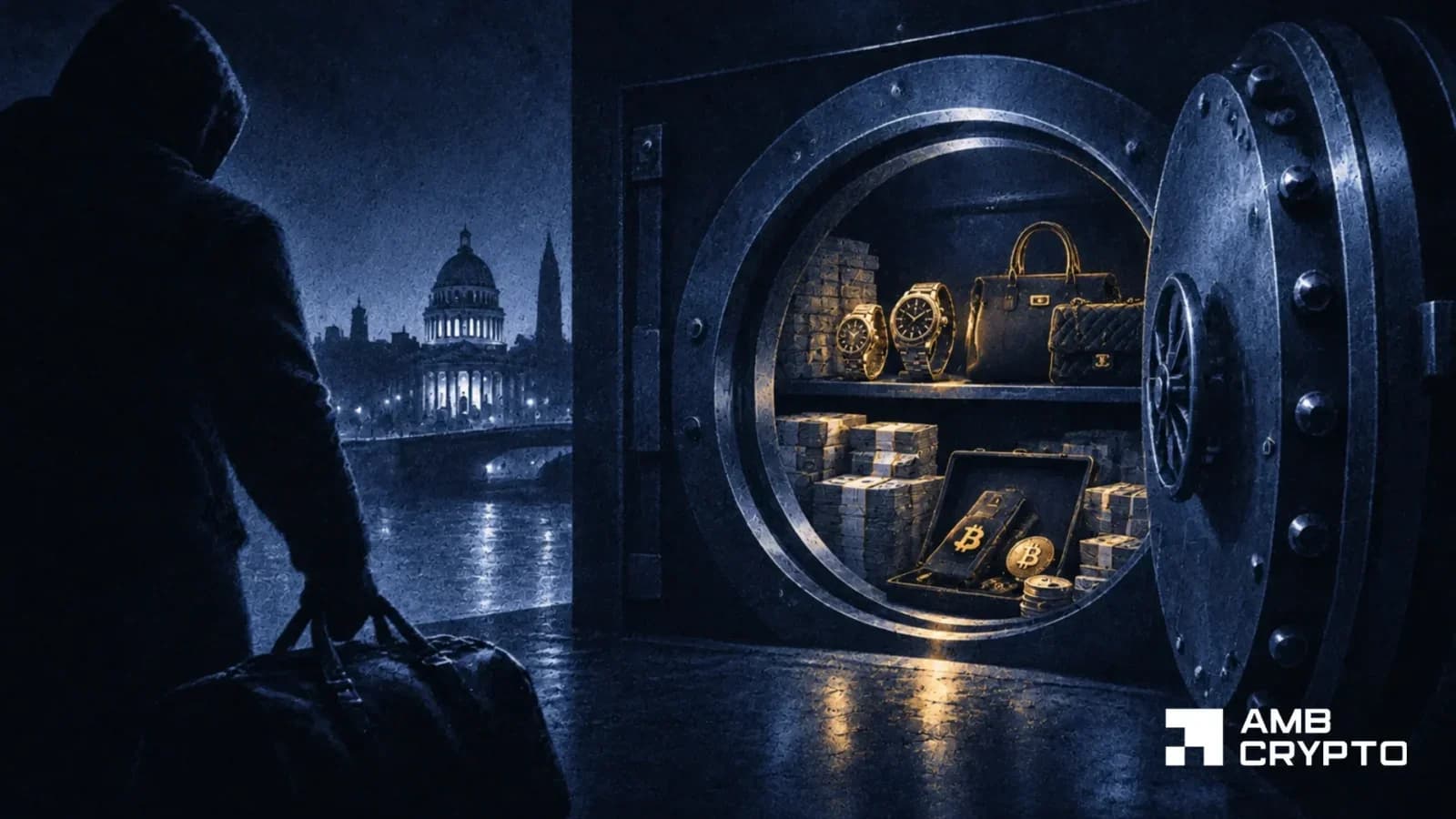
Organized crime groups in Ireland are increasingly using private storage vaults to protect and hide proceeds from illegal activities, according to reports from The Sunday Independent. These vaults are designed to hold six-figure luxury watches, designer handbags, and other high-value goods, along with cryptocurrency access keys that provide control over digital assets. Detective Chief Superintendent Michael Gubbins, who heads the Criminal Assets Bureau, confirmed that rented vaults can contain access credentials for cryptocurrency wallets alongside assets traditionally associated with criminal proceeds. As Gubbins explained, "Could be cryptocurrency keys or cash or watches or could even be passports." The criminals believe there's an anonymity attached to cryptocurrency while also recognizing the volatility as a potential vulnerability.
Michael Gubbins acknowledged the trend while noting its limitations, stating that while criminals are using cryptocurrency as part of layering operations, it is not the sole method of money laundering. As reported by The Sunday Independent, Gubbins described crypto use among Irish criminal groups as "still quite basic" despite its increased presence in investigations. "It's still a cash business for those engaged in drug trafficking," he emphasized. The combination of cash, luxury goods, and cryptocurrency provides criminals with multiple ways to store and move illicit wealth across separate locations, representing a modern adaptation of traditional money-laundering methods to the current financial environment.
This new approach adds another layer of sophistication to criminal operations, as reported by The Sunday Independent. Even if law enforcement discovers one location, the criminals' entire collection of assets may not be found there. The combination of different asset types allows gangs to make their wealth harder to trace, representing a modern adaptation of traditional money-laundering methods to the current financial environment. This trend coincides with a recent report finding that Ireland's criminals are increasingly using cryptocurrency to hide and move crime proceeds, with the Department of Finance classifying crypto assets as a "very significant" money laundering and terrorist financing risk in its 2026 National Risk Assessment.
Ireland's Criminal Assets Bureau has achieved significant success in recovering cryptocurrency assets, particularly from the 6,000 BTC holding seized from convicted cannabis grower Clifton Collins in 2019. As reported by The Sunday Independent, CAB has realized more than €130 million from the roughly €360 million holding as authorities continue working through the wallets. The recovery process has been complex, with Collins having divided the holdings across 12 wallets containing roughly 500 BTC each and writing the private keys on paper before hiding them inside the aluminum cap of a fishing rod case. Progress came in March when CAB, working with Europol's European Cybercrime Centre, accessed the first wallet containing 500 BTC, followed by a second 500 BTC wallet in May and another 500 BTC by July, raising the total accessible amount to 1,500 BTC. Activity connected to the holdings continued in late August when another Collins-linked wallet moved 500 BTC worth nearly $40 million at the time.
The findings reported by CAB come as Ireland prepares for another stage of the European Union's anti-money laundering framework, with EU rules taking effect in July 2027 that will impose a €10,000 maximum on cash payments for goods and services, though member states can adopt lower limits. Obliged businesses handling occasional cash transactions of at least €3,000 will have to identify and verify the customer. Crypto-asset service providers face separate requirements, needing to conduct customer checks on occasional crypto transactions worth at least €1,000, while applying identification measures to transactions below that level. The framework brings crypto-asset service providers, crowdfunding operators and several other sectors within the EU's updated anti-money laundering regime, containing measures covering self-hosted crypto addresses and requiring service providers to identify and assess money laundering risks linked to transfers involving them.