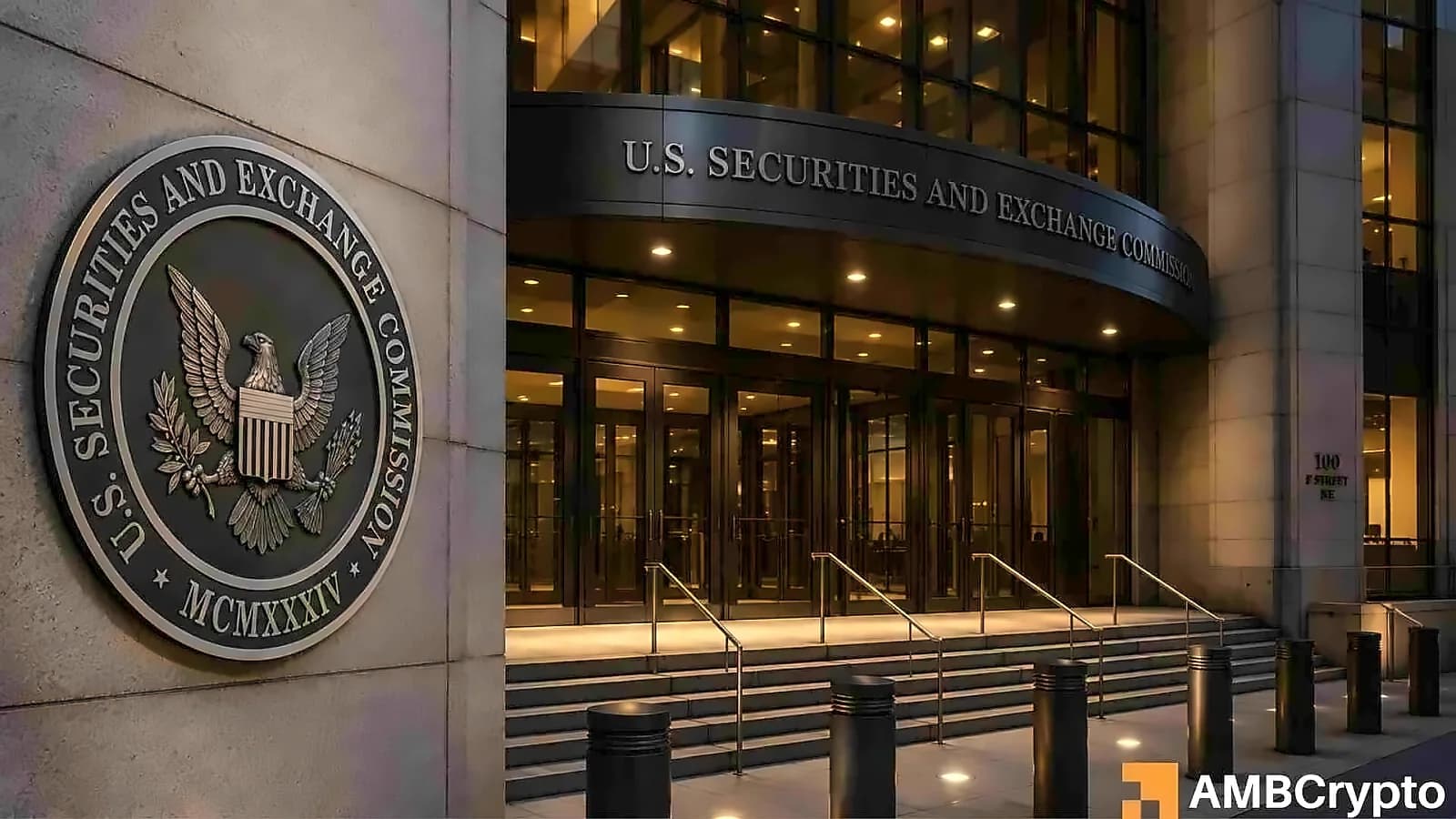
Hester Peirce has left the SEC early to join Regent University School of Law as associate professor starting in November 2026. According to recent reports, Peirce's official SEC term runs until June 2025, but U.S. law allows commissioners to remain for up to 18 additional months if no successors are appointed. With her early departure, only two Republican commissioners will remain on the SEC: Mark Uyeda and Chairman Paul Atkins. Democratic commissioner Caroline Crenshaw stepped down from the SEC in January 2026, after the Senate Banking Committee did not vote to confirm her second term due to strong crypto industry opposition. President Donald Trump has yet to nominate replacements for either open spot at the SEC or the Commodity Futures Trading Commission (CFTC).
Peirce has led the SEC's Crypto Task Force since January 2025 and served as commissioner since 2018, appointed by President Trump. As reported by Crypto.news, she became an SEC commissioner in January 2018 and was named head of the Crypto Task Force in January 2025. Her second five-year term expired in June 2025, and she has served in a holdover capacity since then, making this a planned transition she signaled in March 2025. Her exit removes a key internal advocate for ETF approvals and clear token standards-mechanisms that have driven institutional capital into digital assets. The immediate flow impact hinges on whether the task force maintains momentum under new leadership or stalls during the nomination gap. Her dissenting record on spot Bitcoin ETFs is arguably her most consequential legacy, with the 2024 approvals widely credited in part to the legal and political pressure her sustained dissents created.
Peirce is widely known in the crypto industry as 'Crypto Mom' for her consistent advocacy for digital asset innovation. According to Crypto.news, her dissents from enforcement-heavy SEC actions under former chair Gary Gensler earned her the nickname and the industry's loyalty. Her consistent position that the agency should allow experimentation rather than applying securities law reflexively has been central to the crypto industry's regulatory expectations. The SEC dropped or settled a string of enforcement cases against Coinbase, Gemini, Kraken, Robinhood, and others that had defined the Gensler era. Speaking at an industry event, she told the audience she was sorry that "over most of my tenure at the SEC, I failed to convince my colleagues in government to give you a chance." The crypto industry widely credits her early dissents for helping clear the path to spot Bitcoin ETF approvals in 2024 and to softer SEC stances on meme coins and developer activity in 2025.
At Regent Law in Virginia Beach, Peirce will teach securities regulation, financial markets, digital assets, and public policy. As reported by Crypto.news, Dean S. Ernie Walton stated that "Greg Jacob and Hester Peirce have served at the highest levels of law, government, and public life. Their decision to join Regent Law full time is a remarkable blessing for our students." Regent University emphasized that Peirce's involvement will strengthen the law school's programs in digital assets, securities, and federal litigation, with her robust background in U.S. financial regulation expected to be a valuable asset to the academic community. Gregory F. Jacob, who previously served as counsel to Vice President Mike Pence, is also joining Regent University School of Law as the senior associate dean and associate professor. This mirrors Gary Gensler's post-SEC move to academia and creates a potential think-tank influence channel, with industry watchers tracking whether she assumes any formal advisory role with crypto firms that would reveal whether she retains direct flow influence outside the agency.

Peirce's exit removes the most prominent pro-crypto voice inside the SEC at a critical moment. The SEC will drop from five to just two commissioners with her departure, with zero Democrat-appointed commissioners remaining as Caroline Crenshaw's position also remains unfilled. The most significant unfinished regulatory items include stablecoin rules that remain unwritten, tokenization frameworks still in roundtable phase, and exchange registration requirements for digital assets that have no clear statutory home. Her departure marks the end of the most crypto-progressive era at the SEC, reshaping digital asset oversight at a critical juncture for the industry. The "CLARITY Act" currently before Congress could shift major oversight of crypto markets from the SEC to the CFTC if it becomes law, with the CFTC expected to assume a more active and decisive regulatory role in the cryptocurrency sector. Industry attorneys emphasize that the next nominee's stance on token classification, custody, and exchange registration will determine the pace of the task force agenda she initiated, with the regulatory trajectory she championed facing an uncertain future at a critical juncture for digital asset flows.