According to reports from Investing.com, Bitcoin was trading up 0.30% at $62,992.8 as of 06:07 ET (10:07 GMT), having earlier touched $63,165. The world's largest cryptocurrency's failure to follow US stocks to record highs pointed to crypto-specific pressure rather than a broader retreat from risk assets. Meanwhile, Ethereum rose 0.37% to $1,880.31, while Solana declined 0.36% and XRP shed 0.17% to trade at $1.0020. These mixed price movements across major cryptocurrencies reflect the current market's erratic behavior, with no clear bullish or bearish momentum dominating.
As reported by AMBCrypto, Zach Pandl, Head of Research at Grayscale, presented analysis indicating that Ethereum and Solana may become more scarce assets due to their respective networks' consideration of lowering the annual production of new tokens. Currently, issuing new ETH and SOL, which expands the total supply, helps to fund staking rewards on Ethereum and Solana. This inflation would be decreased by the suggested modifications. According to Pandl, by 2031, the annual supply growth of ETH and SOL may drop to about 0.4% and 1.1%, respectively, bringing them closer to Bitcoin's supply growth and below gold's estimated 1.8% annual supply growth. The lower issuance rates could strengthen the scarcity narrative surrounding both cryptocurrencies, although they would also likely reduce the rewards available to network participants who stake their assets.
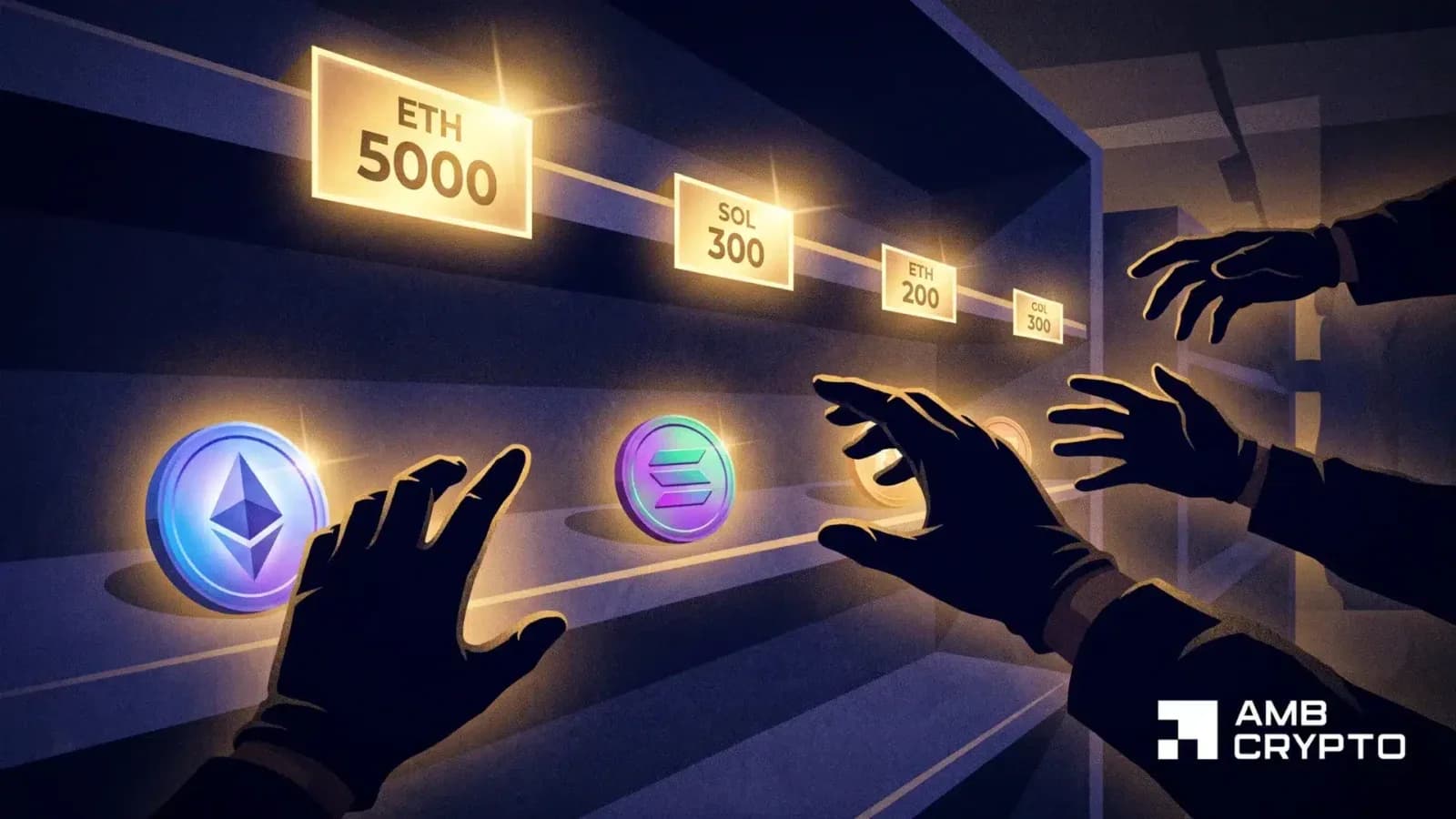
According to the analysis reported by AMBCrypto, for stakers, there is a trade-off as people who stake their tokens will get fewer tokens as rewards if there are fewer new ETH and SOL created. After a decrease in inflation, for instance, a staker who earns 5 SOL might only receive 3 SOL. However, the value of those three SOL might still surpass the value of the initial five SOL if the decreased supply makes SOL more scarce and its price increases noticeably. Therefore, while stakers must weigh the potential for higher token prices against the possibility of lower token rewards, unstaked holders may directly profit from increased scarcity. The balance between nominal yield and long-term token scarcity will therefore become increasingly important for staking economics.
As reported by AMBCrypto, Ethereum's monetary policy has changed significantly since the network moved to proof of stake, no longer relying on mining to secure the blockchain. Instead, validators stake ETH and receive rewards for participating in consensus, while the network burns a portion of transaction fees. This creates a dynamic relationship where when activity is high, more ETH can be burned, and when activity is lower, issuance can have a larger impact on net supply. Solana currently operates with a scheduled inflation mechanism that gradually declines over time, with Coinbase Institutional previously noting that Solana's inflation schedule was designed to taper by 15% annually toward a terminal rate of approximately 1.5%. The newer proposals could push the effective rate even lower, potentially making SOL scarcer over the long term while changing staking economics significantly.
This analysis suggests that stronger long-term price support may result from lower SOL and ETH inflation, similar to how lowering the production of a commodity typically increases its value if demand remains constant or rises. However, these changes remain subject to development and community decisions, with Grayscale's estimates assuming the proposed changes are implemented and that other relevant conditions remain broadly unchanged. Tokenomics is becoming increasingly relevant to institutional investors as digital assets become more accessible through regulated investment products, with Grayscale itself having expanded staking exposure through its Ethereum and Solana investment products. If Ethereum and Solana successfully reduce inflation, scarcity could become a stronger part of their investment narratives, though the market will ultimately determine whether lower supply growth translates into greater value. Longer-term adoption developments offer some support, with Grayscale noting that government deficits, wider blockchain use and changing portfolio preferences among younger investors could increase Bitcoin adoption beyond the current bear market.