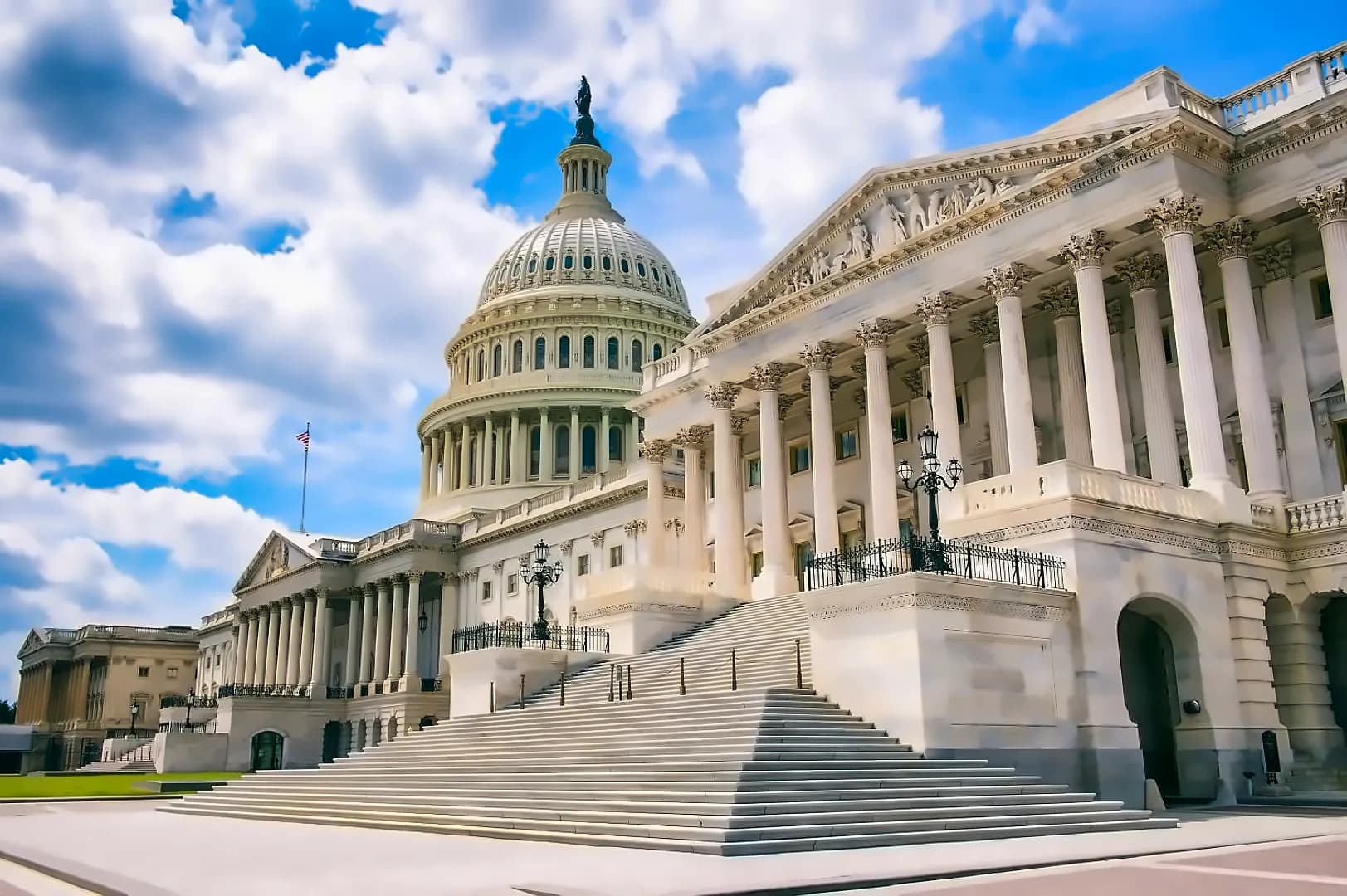
The Senate Banking Committee approved the CLARITY Act 15-9 on May 14, with Gemini now projecting a full Senate floor vote within approximately 30 days. This marks a significant milestone as the bill advances through the legislative process. The committee vote provided the bipartisan signal that removed structural risks that had previously concerned analysts. Two Democrats, Ruben Gallego of Arizona and Angela Alsobrooks of Maryland, joined all 13 committee Republicans to advance the bill, demonstrating strong support across party lines. The revised 309-page Amendment in the Nature of a Substitute (ANS) incorporated key compromises, including the Tillis-Alsobrooks agreement on stablecoin yield and updated provisions under the Blockchain Regulatory Certainty Act (BRCA).
Galaxy Research head Alex Thorn raised his estimate of the CLARITY Act becoming law in 2026 to 75%, citing the Senate Banking Committee's 15-9 bipartisan vote on May 14 as the breakthrough the bill needed. According to reports from crypto.news, this marks a sharp reversal from Galaxy's prior position, where Thorn had put the odds at roughly 50/50 and warned that a markup slipping past mid-May would drop chances sharply. The upgrade reflects the removal of structural risks that had previously concerned Thorn. Galaxy Research estimates a potential signing the week of August 3 if the current legislative pace holds, with the bill creating a comprehensive digital-asset regulatory framework that would set jurisdictional boundaries between the SEC and CFTC, define regulatory obligations for digital commodity intermediaries, and provide protections for software developers under the BRCA. Thorn's updated timeline, published in Galaxy Research's weekly brief on May 16, runs as follows: Senate Banking and Agriculture committee reconciliation in early June, Senate floor consideration by mid-June, final Senate passage before the end of June, House reconciliation through July, and a potential Trump signature the week of August 3.

Polymarket traders priced 2026 passage at 68% as of May 18, up from 46% at the start of the month but still below Thorn's estimate. According to crypto.news, Kristin Smith of the Solana Policy Institute offered a more cautious read, putting passage probability at 60%. The bill would permanently classify Bitcoin and Ethereum as non-securities, which is likely viewed as bullish for crypto markets, though it still requires multiple legislative steps including committee text merge, securing the necessary 60 Senate votes, House-Senate reconciliation, and presidential signature. The measure faces opposition from banks, unions, and law enforcement agencies that say various provisions would hurt consumers and endanger financial systems. Senator Elizabeth Warren's continued opposition on anti-money-laundering and ethics grounds remains unresolved on the Senate floor, and the ethics language restricting senior officials' digital asset holdings has created friction among some offices seeking carve-outs that could complicate the final vote count.
If the timeline holds, US retail will be operating inside a defined federal framework before year-end, a shift that goes beyond exchange compliance and reshapes what tools traders can legally access onshore. The bill would define protocol-level decentralization and sharpen SEC/CFTC boundaries, establishing clearer jurisdictional frameworks for digital asset markets. The CLARITY Act would also include provisions for customer property rights in bankruptcy and expand tokenization under SEC authority. These measures aim to create a clearer and more stable environment for digital asset markets, which could have significant implications for institutional investors and market participants. The legislation faces multiple hurdles including resolving a conflict-of-interest provision and securing the necessary 60 Senate votes, which will necessarily include a significant number of Democrats. As reported by crypto.news, Thorn described the CLARITY Act and the companion GENIUS Act as the kind of foundational U.S. crypto legislation that has "laid the foundation for 100 years of US capital markets dominance."