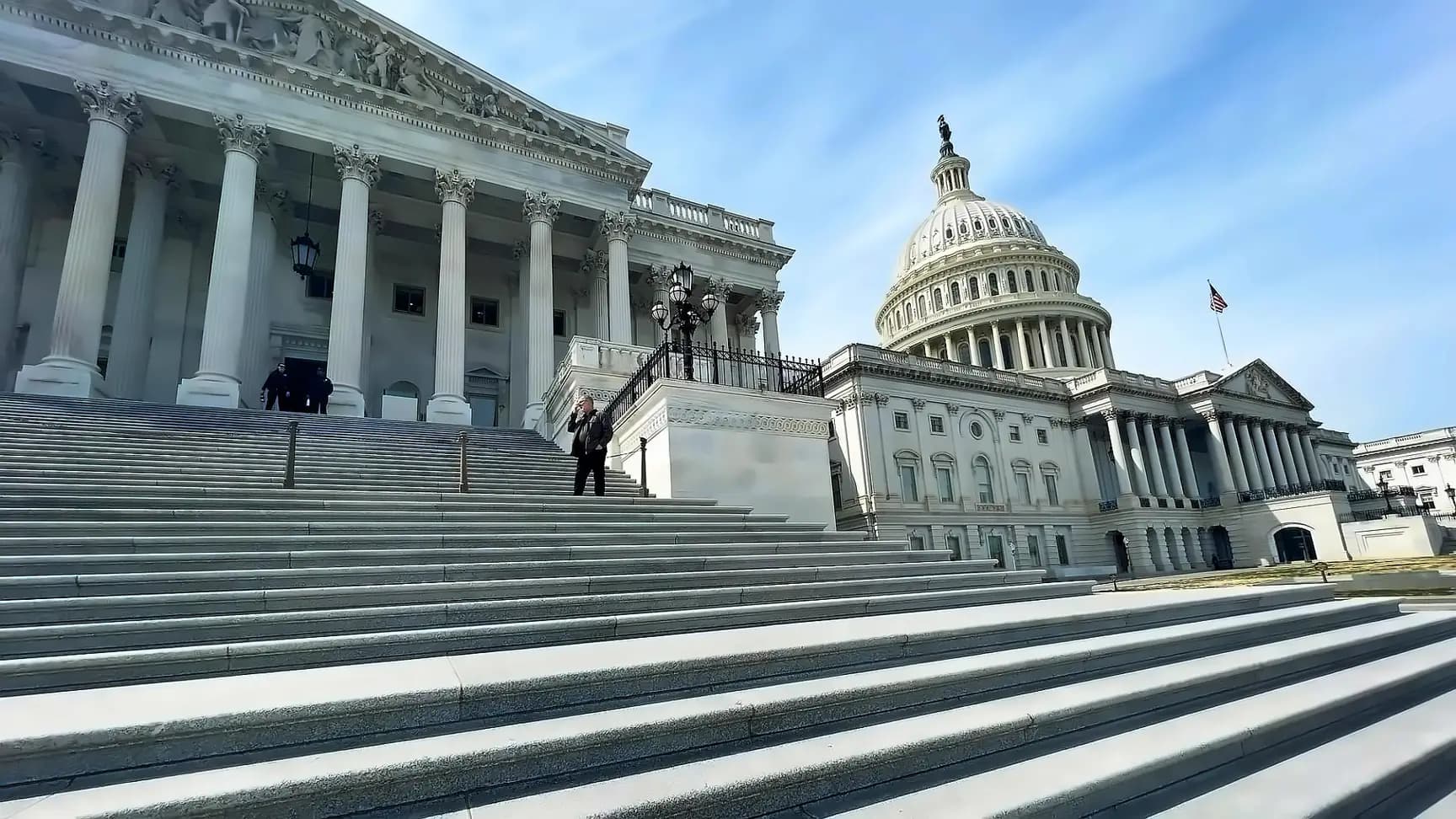
Senate Majority Leader John Thune confirmed on August 3 that H.R. 3633, the Digital Asset Market Clarity Act, will receive a Senate floor vote before the August recess, upgrading the bill's status from probable to scheduled. As of that confirmation, the CLARITY Act was still absent from the official Senate floor calendar, and no cloture motion had been filed. Per analysis from crypto analyst Ted Pillows, if Senate leadership waits until Wednesday, August 6, to file cloture, the earliest possible floor vote falls on Friday, August 8, leaving almost no margin before the chamber disperses for its state work period. The primary source identifies August 7 as the last functional Senate workday, with August 10 marking the visible close of the window. Thune's move to force a vote, even without guaranteed passage, is partly about accountability. A floor vote creates a public record, placing every undecided Democrat on the spot before the midterm cycle intensifies.
President Donald Trump is reportedly weighing a bipartisan ethics proposal that could clear the path for CLARITY Act passage before the Senate's August recess. SkyBridge Capital founder Anthony Scaramucci expects Trump to approve the revised ethics language negotiated by Republican Sen. Thom Tillis and Democratic Sen. Ruben Gallego. As per CoinDesk, Senators Ruben Gallego and Thom Tillis sent a proposed revised ethics provision to the White House on Thursday, after drafting the compromise the day before, with the White House having not officially responded to the proposal as of midafternoon on Friday. However, Republican support remains divided, with Sen. Josh Hawley reportedly a holdout according to pro-crypto Sen. Cynthia Lummis, who noted that 'Republican support is very high. But I don't think it will be unanimous, as people like Josh Hawley are really resistant.' This means Republicans will need over 11 Democratic votes to pass the bill on the Senate floor.
The Senate Banking Committee passed its version of the bill 15-9 on May 14, 2026, with all Republicans plus Democratic Senators Ruben Gallego and Angela Alsobrooks in favor, though both explicitly reserved judgment on floor support pending further negotiations. The Senate Agriculture Committee, which oversees CFTC jurisdiction over digital commodity spot markets, approved a separate version in January 2026. Senator Cynthia Lummis released a unified draft merging both committee texts on July 22, but reconciliation gaps remain. The stablecoin rewards debate is the most commercially charged open issue, with the Senate Banking draft prohibiting yield payments on stablecoin holdings, treating platforms that pay such yields as de facto deposit-taking institutions subject to bank-equivalent requirements.
Polymarket odds on 2026 passage have fallen from a February peak above 80 percent to roughly 33 percent as of July 29, reflecting the market's assessment that the bill is more likely to slip to September or die entirely. The ethics provision is the most politically charged element, with Democrats wanting stronger restrictions on crypto ventures connected to the president and senior officials, while Republicans say the existing language is sufficient. The consumer protection gap involves Democrats wanting the bill to include a private right of action for retail investors, which would give individual investors the ability to sue, while industry groups oppose this because it increases litigation risk for exchanges and token issuers. The national security provisions involve sanctions compliance for decentralized protocols and cross-border transactions, with Democrats wanting explicit obligations on DeFi front-ends and Republicans preferring to leave decisions to Treasury rulemaking.
The crypto industry is growing increasingly frustrated with the delays, with CLARITY Act approval odds dropping to 33%, nearly reaching their annual low. As per AMBCrypto, a well-known crypto trader on Kalshi emphasized that if the CLARITY Act doesn't move to Senate voting in the next 5 days, it'll probably not pass this year. Anthony Scaramucci expressed similar concerns, stating that it now feels like the Republicans don't want the CLARITY Act to pass so that they can blame the Democrats for not passing it and then seek donations from the crypto industry in the Fall. Tom Shaughnessy Jr., co-founder of Delphi Digital, noted that the Solana Policy Institute (SPI) recently sent a letter to Senate Democrats Schumer and Thune asking them to bring the CLARITY Act to the Senate floor before the August recess begins. It remains unclear which legislative vehicle will be used, the passed H.R. 3633 or the revised Senate text introduced by Sen. Cynthia Lummis.
The shrinking window carries an electoral dimension, with a procedural vote forcing senators to create a public record before the 2026 midterms. Axios reported that more than $125 million in crypto-linked political funds remained available as negotiations continued, with separate groups having already announced $1.5 million in advertising supporting Republican Senate candidates in Michigan and Iowa. The vote could also prove a litmus test for the crypto industry, as Semafor reported last week that part of the issue for the crypto political action committees is that a vote would help guide where funds can go in the final months before the 2026 midterm election by putting Senators on the record. Any amended version must also return to the House, which passed H.R. 3633 by 294–134 in July 2025, with the House vote including support from 78 Democrats.