Recent Bitcoin ETF outflows may be driven by cash-and-carry arbitrage unwinds rather than investors rotating into anticipated IPOs such as SpaceX and Anthropic. Fabian Dori, chief investment officer at Swiss digital asset bank Sygnum, argues that while ETF outflows are real, the data does not truly support the hypothesis that Bitcoin would be bleeding because of the SpaceX IPO. According to CoinDesk, if investors were systematically selling Bitcoin to raise cash for IPO allocations, exchange balances would likely show unusual patterns of outflows and stablecoin market capitalization would probably decline. However, exchange flows remain broadly normal, while stablecoin supply has seen little meaningful contraction, suggesting capital is not exiting the crypto ecosystem systematically.
The $75 billion SpaceX IPO launched on June 12, 2026, targeting $135 per share and creating 4,000 new millionaires including cafeteria workers with employee stock options, has triggered an immediate liquidity drain on the crypto market. As per GSR's Spencer Hallarn in a Reuters interview, "Crypto is a funding currency for a lot of this. We've got to find $75 billion for this IPO, and it's got to come from somewhere." The $22 billion retail tranche is specifically aimed at the same demographic that has been buying Bitcoin, meme coins, and crypto ETFs for the past three years. A BNP Paribas note cited in CNBC coverage projected up to $50 billion in retail liquidations across crypto, semiconductors, and leveraged ETFs just to fund the SpaceX allocation. The IPO is already several times oversubscribed, confirming that capital is leaving other corners of the market, including crypto, to participate in the listing.

Bitcoin is confronting a massive capital rotation as three major AI companies prepare for public offerings worth over $3 trillion combined. OpenAI filed a confidential S-1 on June 8 at a $852 billion valuation, joining Anthropic at $965 billion and SpaceX's* $1.77 trillion IPO process** as the third major AI mega-listing in under two weeks. According to CreditSights, combined hyperscaler capital expenditure is estimated at over $600 billion in 2026, with roughly $450 billion allocated to AI hardware, servers, and networking. The timing is particularly challenging for Bitcoin, which is currently trading near $63,400 amid these massive IPO activities. The combined pipeline from these three listings is projected to absorb more than $240 billion in capital by year-end, according to CoinDesk analysis cited by Binance Square, which exceeds 60% of the total global stablecoin market cap.
The strongest argument against the IPO-rotation theory comes from derivatives markets, where CME bitcoin futures open interest has declined coinciding with ETF redemptions. As per Sygnum's Fabian Dori, "Open interest and funding rates moved very positively together over the same period," pointing towards a significant portion of ETF flows being associated with unwinding of funding-rate carry-trade arbitrage. A cash-and-carry trade is a popular institutional arbitrage strategy that seeks to profit from the gap between Bitcoin's spot price and futures prices, where investors buy spot Bitcoin through ETFs while selling Bitcoin futures contracts. When the futures premium narrows or funding conditions become less attractive, traders unwind positions by selling spot exposure and closing futures shorts, generating ETF outflows even when investors remain bullish on Bitcoin itself.
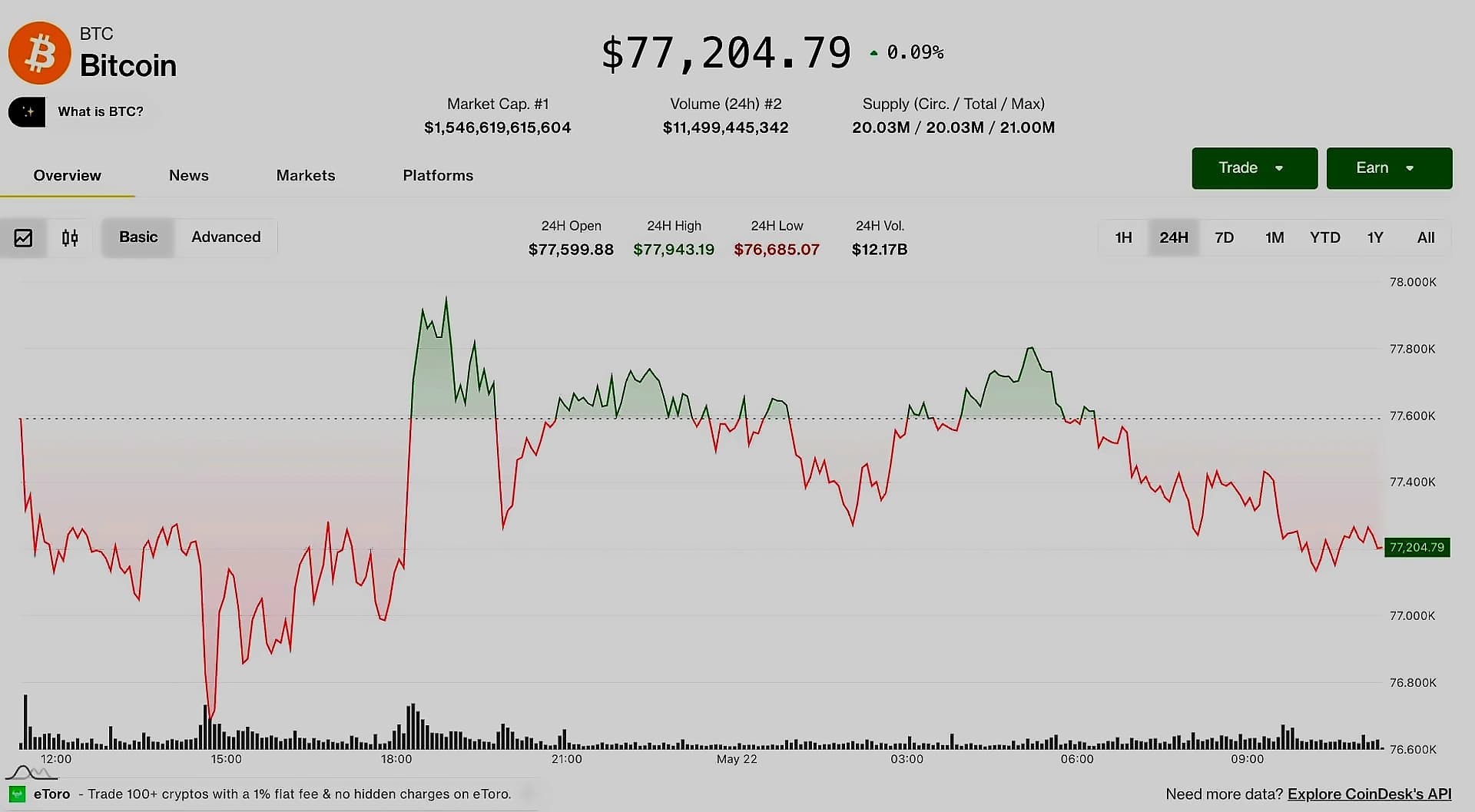
Bitcoin has declined from approximately $77,000 on May 17 to $61,282, representing a 24% drop over 30 days. According to recent analysis, Bitcoin is down approximately 8% over the past 90 days, while other major cryptocurrencies have experienced even steeper declines. Ethereum is down 12%, XRP is down 14%, and Solana is down 18% over the same period. The selloff that took Bitcoin toward $60,000 was driven by record ETF outflows, Strategy's first Bitcoin sale since 2022, and forced liquidations totaling $1.8 billion in a single session. Michael Saylor has attributed the Bitcoin ETF outflows to capital moving toward AI infrastructure buildout, noting that $400 billion is being spent on AI infrastructure over six months, with Bitcoin ETF outflows of approximately $4 billion since May 14 reflecting this rotation rather than fundamental impairment of Bitcoin.