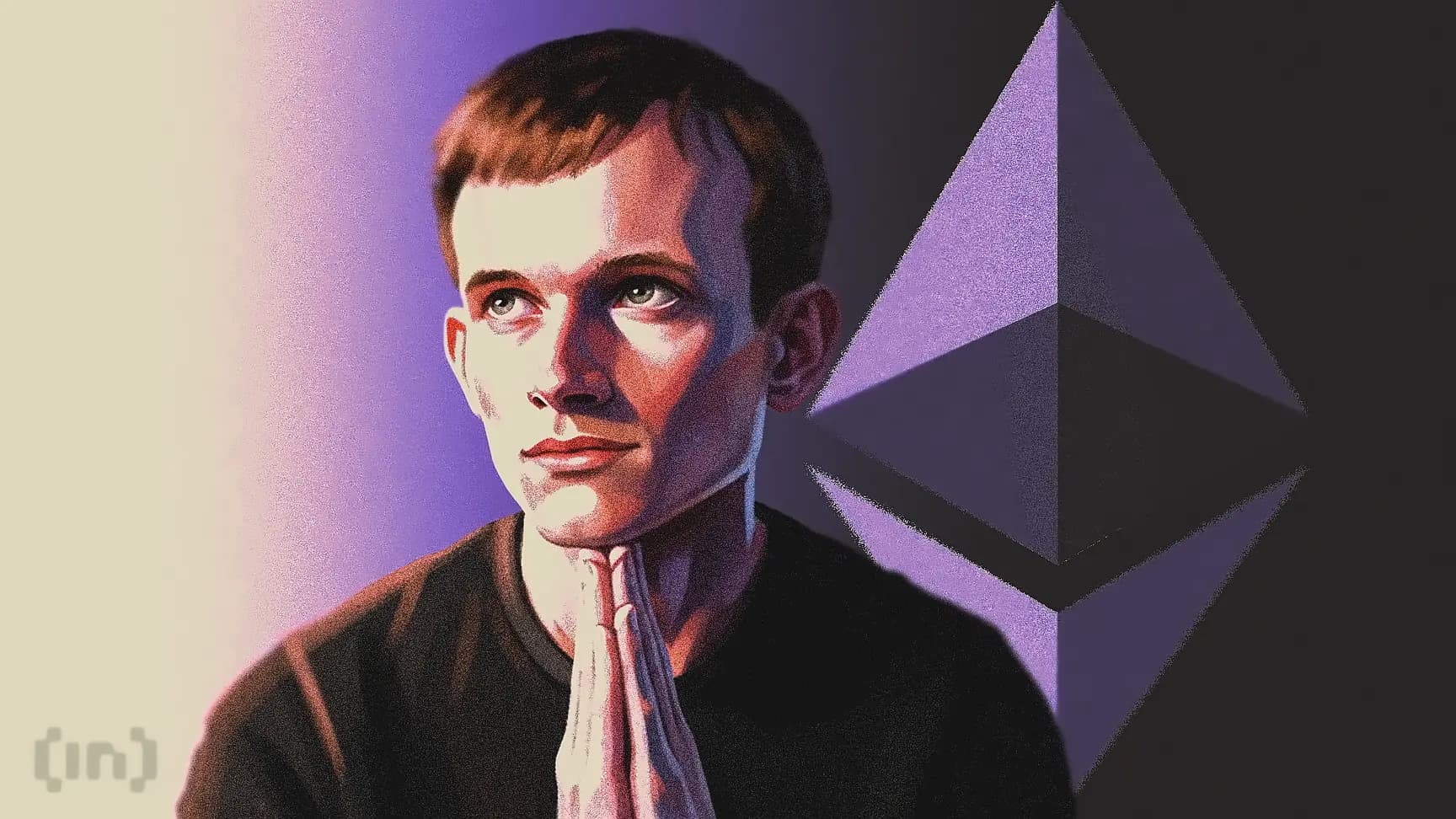
Ethereum co-founder Vitalik Buterin has tested a comprehensive privacy-focused AI setup using local Qwen, zkAPI, and Tor routing to generate personalized diet and exercise recommendations while limiting personal information sent to remote models. As reported by Buterin on October 4, the self-experiment uses his health and travel information locally, while more powerful remote models handle selected questions that require stronger reasoning or knowledge. The setup uses Alibaba's Qwen3.8-Flash-Next as the local model, with Buterin noting that the local system decides what information a remote model needs and rewrites requests before sending them, reducing the chance that personal details or writing style reveal his identity. Buterin described the design as a three-layer privacy setup covering the content of requests, payment information and internet traffic, emphasizing that "You need all three" for effective privacy protection.
The privacy setup uses three distinct layers for comprehensive protection. The local Qwen model handles the first layer by constructing queries itself instead of sending his original wording and full personal context to remote AI systems, while the second layer uses zkAPI to separate payments from individual AI requests. The Ethereum Foundation introduced zkAPI on October 1, describing it as a system that lets users pay for metered APIs without linking individual requests to their identity. The third layer uses Tor to hide the user's normal IP address from services receiving network requests. However, Buterin identified significant performance challenges, noting that Tor produced latency roughly 10 to 100 times higher than what he considered desirable, while the local Qwen3.8-Flash-Next was running at approximately 20 to 30 tokens per second, with Buterin wanting speeds above 100 tokens per second for comfort. The GitHub repository shows pull request #16 as open as of October 4, proposing Tor-routed client support with increased timeouts to accommodate slower network requests.
The Ethereum Foundation and Open Anonymity Project launched zkAPI on Ethereum mainnet on October 1, operating through an onchain vault holding USDC credits and offchain proof checks. The system enables users to pay for AI models and other metered APIs without revealing their identities, with users depositing tokens such as ETH or USDC into a vault contract that tracks their balance as a private note. However, the system maintains that IP addresses, timing, reused context and personal details can link sessions despite a hidden payment source, with official documentation stating that the upstream provider still sees prompts, while network and timing information can remain observable outside the zero-knowledge proof system. The vault contract offers onchain exit capabilities so users can close and withdraw balances even if zkAPI servers disappear, but the Foundation acknowledges that the provider can recognize what the proof cannot reveal, including user's name, employer, medical history, or proprietary code in the prompt content.

The system addresses commercial AI APIs that connect keys to accounts and payment methods, allowing providers to associate requests with billing identities even without user signatures. As reported by the Foundation, a $10 cap reserved for $3 of service consumption would charge $3, not $10, with the remaining balance staying in the private note subject to implementation rules. The vault contract offers onchain exit capabilities so users can close and withdraw balances even if zkAPI servers disappear. However, Buterin noted that the request-writing rules still need improvement because removing more personal context can reduce the usefulness of remote models, describing the direct limit: "the more careful you are" with information sent remotely, the less assistance the remote model can provide. The approach ensures service providers only see the request content, not the payer's identity, while payment providers see only the amount spent, not user or request details, with Buterin emphasizing that hiding payment information alone does not prevent an AI provider from learning details through prompt content or network metadata.
According to the Foundation, the code, server, client and vault are live as of October 2, with the project linked to a mainnet contract and public GitHub repository. The Enterprise Ethereum Alliance recently launched a Privacy Working Group focused on technologies including ZK proofs, MPC and TEEs, indicating growing institutional support for privacy-focused AI infrastructure. Buterin's testing represents a practical application of zkAPI technology, demonstrating how the system can be integrated into real-world AI use cases. The experiment aligns with Buterin's earlier focus on privacy as AI systems handle more personal information, with his April 2025 argument that growing AI capabilities and centralized data collection increased the need for stronger privacy tools. The system represents a narrower privacy claim than anonymous conversation with a model but provides payment unlinkability for legitimate use cases, addressing privacy concerns in decentralized apps and AI services by separating payments from user identity.