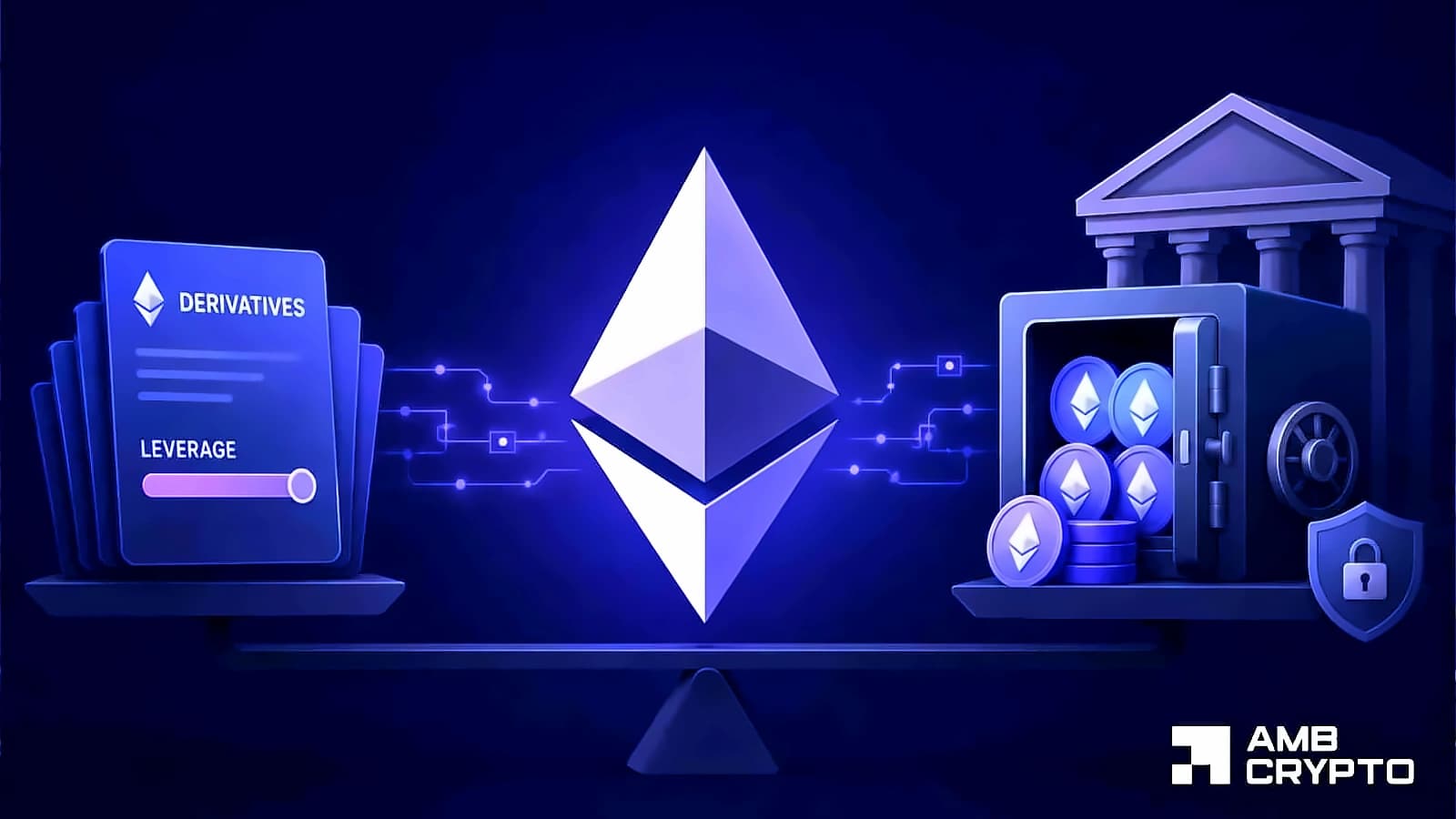
Ethereum's derivatives markets are experiencing unprecedented leverage levels as traders increasingly rely on borrowed capital over spot trading. According to reports from AMBCrypto, the Estimated Leverage Ratio (ELR) at Binance has reached a record high of 0.65, representing a sharp increase from the 0.20–0.30 range seen during the 2022 bear market. This surge in leverage reflects steadily expanding Open Interest (OI), even as Binance's ETH reserves continue to decline. Funding Rates remain close to neutral, indicating that leverage is building without clear bullish or bearish bias, creating conditions for crowded positions that can trigger larger-than-normal liquidation cascades.
Despite rising leverage, institutional investors are demonstrating strong long-term commitment through significant staking activities. As reported by AMBCrypto, Purpose Investments recently staked 42,000 ETH worth approximately $80 million into the Beacon Deposit Contract over three hours, representing 36.6% of the firm's 114,900 ETH holdings. This allocation reduces liquid supply while strengthening network security, contrasting sharply with leveraged derivatives that reflect short-term speculation rather than long-term participation. The staked ETH represents capital locked for participation rather than short-term trading, providing important structural support to the market.
The Ethereum Foundation continues to demonstrate institutional-grade treasury management despite heightened derivatives risk. According to AMBCrypto reports, the Foundation transferred 578.38 ETH worth about $1.08 million to a new Gnosis Safe Proxy wallet after depositing just 2.675 ETH worth about $5,000 to Kraken. The contrast between these transfers shows that most funds remained within self-custody rather than moving toward exchange liquidity, aligning more closely with treasury management than active distribution. This pattern complements the recent institutional staking by Purpose Investments, reinforcing continued long-term commitment across major ecosystem participants.
While leveraged positioning continues driving short-term volatility, the contrast between derivative speculation and institutional staking demonstrates a fundamental shift in market structure. As reported by AMBCrypto, market volatility appears likely to increase until leverage positions unwind or spot reserves recover, creating conditions for potential liquidation cascades. However, the growing institutional staking activity and self-custody practices by major participants suggest that long-term conviction remains intact, even as derivatives markets face increased risk of short-term price volatility.