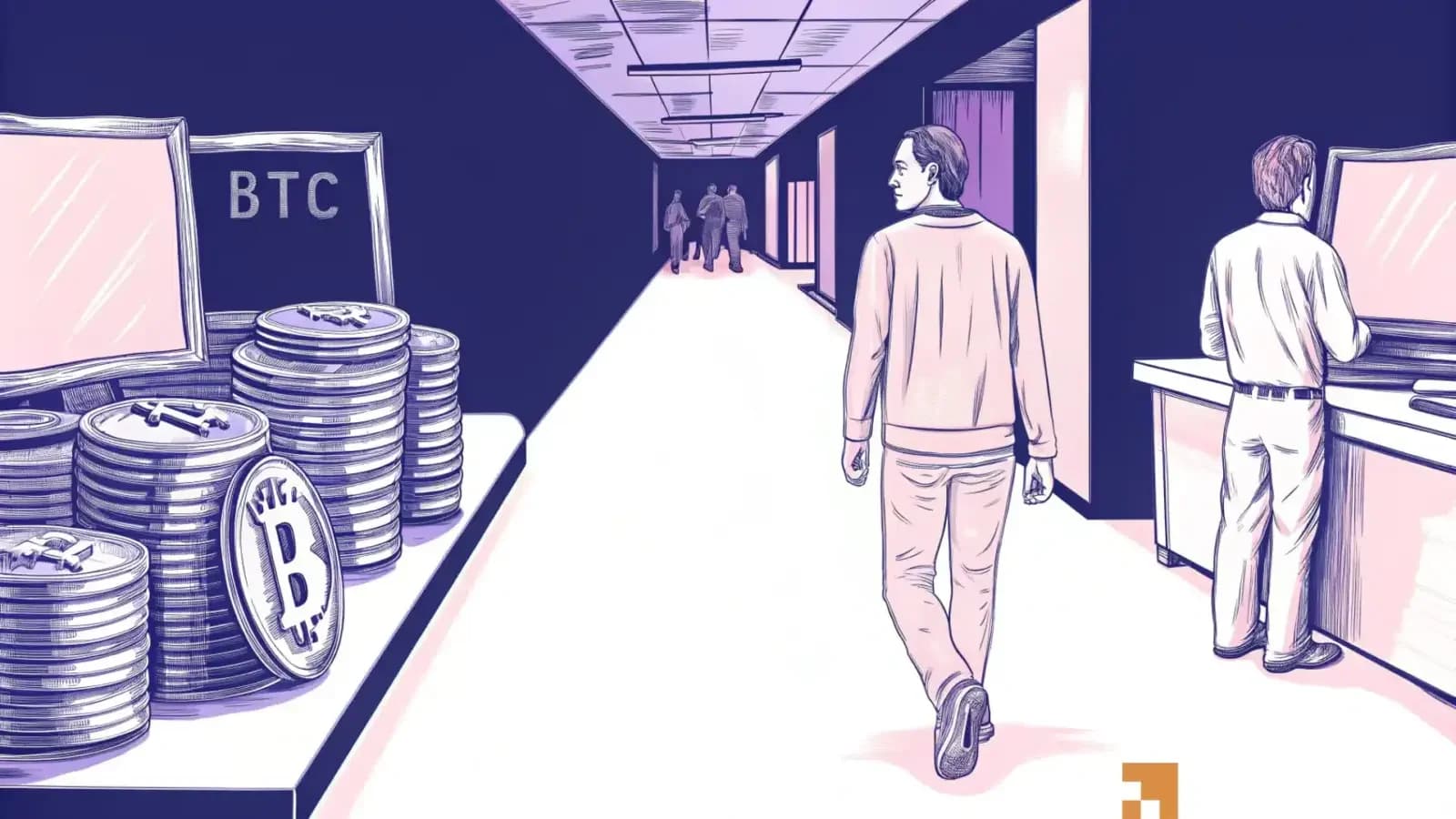
Bitcoin ETFs continued their challenging performance with over $1.3 billion in net outflows for the week, marking the seventh consecutive week of outflows according to The Economic Times. This represents a significant escalation from previous weeks, with BlackRock's IBIT leading the departures at $860 million so far this week. The selling pressure was not as severe as earlier in June but remained substantial enough to keep the category in a clear downtrend. As per CoinDesk, the scale has narrowed from earlier this month, but the absence of any sustained inflow shows institutions remain defensive as markets reassess the Federal Reserve's interest-rate path. Analysts at Glassnode noted that these outflows mark "one of the most persistent periods of capital withdrawal since the ETFs launched" back in 2024, with investors choosing to reduce exposure rather than accumulate into the drawdown.
A bigger weight is the rebounding dollar, which has lifted the Dollar Index to the 100.6-100.8 area after the June Fed meeting. The Fed's cautious message weakened expectations for near-term rate cuts, keeping Treasury yields high and favoring assets with steadier yields over volatile ones like bitcoin. With liquidity still tight, capital continues to flow toward more stable investments. Easing geopolitical tension after the U.S.-Iran deal has improved risk appetite, providing short-term support, but it has not been strong enough to offset the firmer dollar and cautious institutional flows. Bitcoin is currently trading around $64,000, still searching for a catalyst strong enough to break the range it has held for weeks.
The performance of Bitcoin ETFs has deteriorated significantly, with the $44.4 billion IBIT now showing a 40% loss for typical investors according to Bespoke Investment Group. This represents a sharp reversal from the fund's early performance, where the average dollar invested had been sitting at a 30% gain by mid-2025. The broader crypto market context reveals significant pressure, with the total crypto market value now hovering around $2 trillion, down from more than $4 trillion in early October according to CoinMarketCap. Additional selling pressure has been triggered by Michael Saylor's Strategy Inc., which sold 32 Bitcoin in recent weeks, causing anxiety among investors who had been counting on the firm to be a buyer regardless of market backdrop.
According to Simon-Peter Massabni, head of business development at XS.com, bitcoin will likely hold a $60,000 to $67,000 range in the near term. The market is "balanced between supportive and restrictive forces," he said, with eased ETF selling and better sentiment on one side and an unsupportive Fed and unconfirmed institutional flows on the other. A sustainable recovery in the second half would need more time to accumulate, a return of ETF inflows and stronger institutional demand. Until then, the current rebounds look technical rather than the start of a new uptrend. The broader context reveals significant institutional pressure, with Galaxy Research reporting that U.S. spot bitcoin ETFs posted $6.35 billion in net outflows over the past 30 days, representing the largest rolling 30-day outflow on record across 582 tracked windows.

Despite the challenging market conditions, many crypto veterans remain optimistic about a future recovery. Timothy Enneking, managing partner at Psalion, noted that "the original 'old guard' of crypto is 'quite sanguine with respect to this drop'" and "they're not worried about this because it is actually a reduction in volatility from the last four-year cycle." The industry is now facing difficulty attracting back capital as investors large and small find more enticing opportunities in AI or get distracted by prediction market platforms. However, analysts acknowledge that "those assets are hurting" for current investors, though they believe a fresh rally could turn the story around. This optimism is ingrained within crypto investors, who maintain the mantra that prices will recover, citing digital assets' role in payment rails, startup fuel, and trading innovations.