Edel has announced an expanded institutional push for its tokenized equity and commodity markets on Canton, led by board member Brad Klaas, a securities lending and prime brokerage veteran whose career spans BlackRock's predecessor firms and Franklin Templeton. According to reports from Chainwire, the company has joined the DTCC Digital Assets Solutions Industry Working Group to provide feedback on the creation of the DTCC Tokenization Service. Edel will work alongside more than 100 other members, including institutions at the core of US capital markets such as NYSE, BlackRock, Goldman Sachs, JPMorgan and Citadel Securities. The DTCC Tokenization Service is expected to launch in Q4 2026.
The expansion comes as Wall Street's largest institutions move assets onchain and confront the question of what those assets can do once they arrive. As reported by Chainwire, for most of the past decade, the question hanging over blockchain and capital markets was whether the two belonged in the same sentence. That question has largely been settled, with BlackRock having tokenized funds, JPMorgan building blockchain settlement rails, and Franklin Templeton moving investment products onchain. The Depository Trust & Clearing Corporation, the post-trade utility beneath much of the US securities market, is developing tokenization infrastructure of its own. Recent trading data shows the momentum building, with tokenized stocks growing 600 to 700 percent annually and the SEC's chair indicating all stocks could be on-chain within a couple of years.
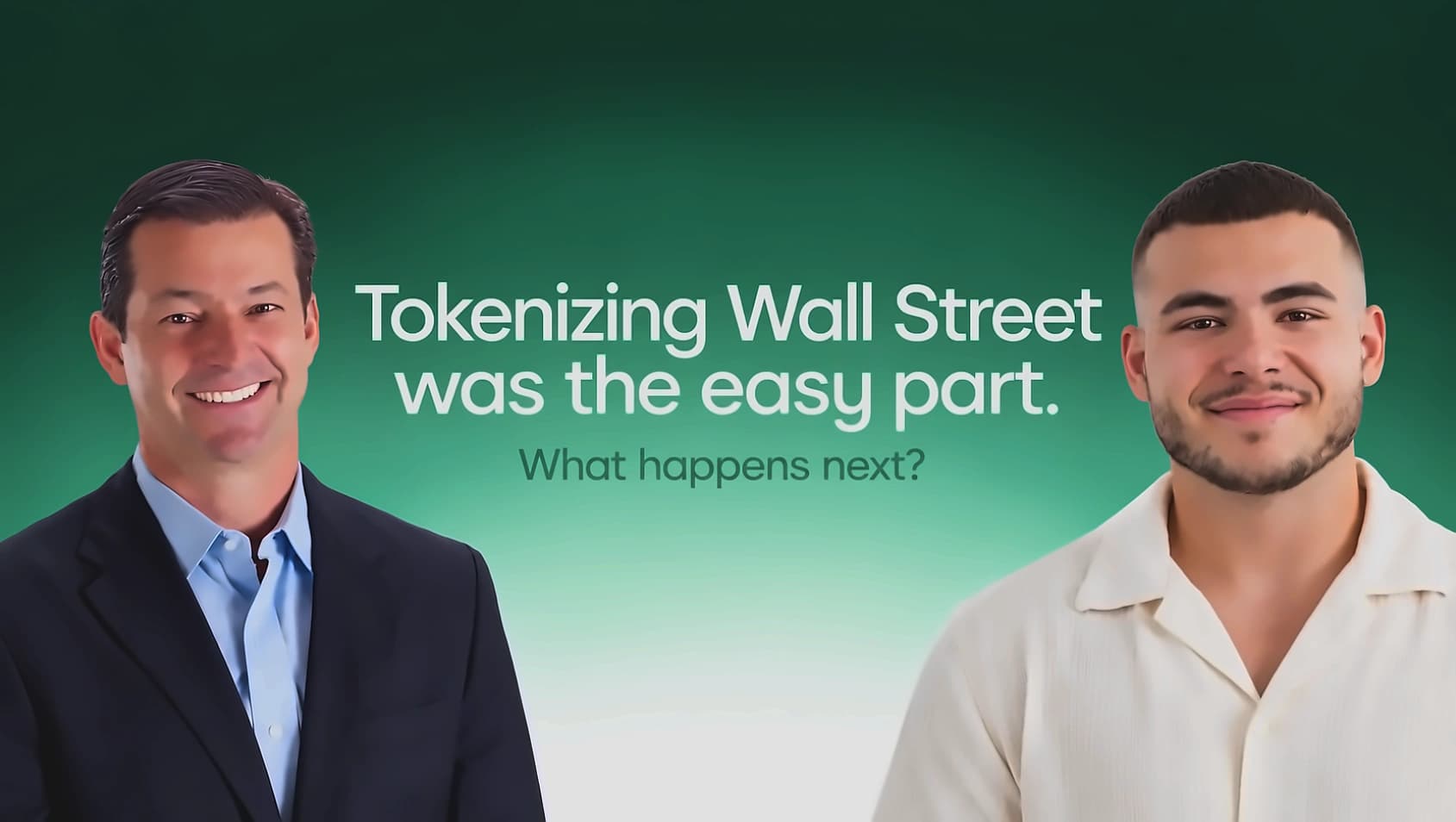
Brad Klaas brings significant institutional experience to his role, having run global securities-lending operations at Wells Fargo Investment Advisors, which became Barclays Global Investors and was later acquired by BlackRock. According to Chainwire, he scaled those operations from just over $1 billion to nearly $40 billion before leaving in 1998, during a period when the firm's assets under management grew from roughly $400 billion to $1.2 trillion. His career spans both traditional securities finance and efforts to bring those functions onchain, including more than four years at Franklin Templeton working on institutional tokenized collateral products and partnerships. The regulatory environment has shifted favorably, with the SEC under current Chair Paul Atkins dropping enforcement actions against major exchanges and ending what was described as "debanking" pressure on crypto firms.
Edel reported in August that it was generating 'tens of thousands in revenue every day', which the company attributes to Canton Coin rewards for the economic activity they bring to the network. As reported by Chainwire, Canton gives that discussion a practical dimension, with qualifying applications earning Canton Coin rewards for the economic activity they bring to the network. This offers a concrete example of the broader opportunity Klaas describes: earning from participation in the infrastructure alongside the business built on top of it. The crypto market opportunity is significant, with Bitwise's Matt Hougan pegging the crypto market at roughly $2 trillion against a global stock market worth over $150 trillion, suggesting that bringing even a fraction of that onto blockchain rails could multiply market access dramatically.
Edel is exploring one application of improved capital efficiency: whether securities tokenized by DTC could be recognized directly as margin within Edel Markets. According to Chainwire, the company's immediate focus is perpetual futures on Canton, with the broader ambition to build capital-markets infrastructure that makes tokenized assets more productive. The potential benefit would come from reducing the friction between holding an asset and putting it to work, allowing institutions to post eligible securities rather than sell them or raise separate cash to fund margin requirements. Recent trading activity demonstrates growing demand for market access outside regular hours, with $1.01 billion traded over Labor Day weekend across the 42 largest tokenized equities, matching Friday's $1.02 billion session while markets were open. This represents a fundamental shift in how financial assets move, with stablecoin transfers settling in seconds for a fraction of a cent on Ethereum, as noted by industry experts.