Bitcoin is testing the critical $80,000 resistance level after breaking out from a multi-month descending channel, currently trading around $78,318. The benchmark cryptocurrency's technical setup shows a 200-day EMA at $82,228 as the key level for sustained recovery, with analysts noting that a clean weekly close above $80K would be a powerful buy signal. The breakout comes amid conflicting institutional flows, with $238 million in daily inflows recorded through April 22, including a $238 million single-day spike - the longest streak of 2026. However, weekly ETF outflows of $490.62 million earlier in May as Treasury yields climbed and Fed officials signaled a pause on easing present immediate headwinds. Combined ETF holdings now approach 7% of total Bitcoin supply, creating a structural shift that concentrates massive liquid stakes in regulated vehicles and shrinks free float for exchange trading.
Cryptocurrency venture capital funding has reached $9.26 billion in Q1 2026 despite a significant decline in deal activity, according to CryptoRank's Fundraising Digest. The sector collected $9.26 billion across nearly 280 deals, representing a notable 13.6% year-over-year surge despite the decline in total deal numbers. Only 600 active VCs participated in the quarter, marking the lowest level witnessed in the past twelve quarters, highlighting the shifting market dynamics as established players dominate the landscape. Payments led the VC fundraising sector, collecting $2.67 billion, driven by key transfers like $94 million Series A funding of OpeenFX. The data reflects high conviction in crypto VC potential, with late-stage Series C+ rounds jumping by 320% quarter-over-quarter and 1,020% year-over-year, comprising 28.4% of cumulative venture capital despite only 9 deals.
The Pentagon has officially confirmed that Bitcoin is now a classified national security asset, marking a historic shift in how governments treat cryptocurrency. Defense Secretary Pete Hegseth told Congress on April 30 that the U.S. military is running classified Bitcoin programs designed to counter China, making him the first sitting Defense Secretary to frame crypto as a defense tool before lawmakers. According to CoinDesk, the Department of Defense is running classified Bitcoin programs on two tracks - enabling the technology and countering it. INDOPACOM Commander Admiral Paparo separately confirmed that U.S. Indo Pacific Command operates a live Bitcoin node and tests the protocol for cybersecurity. The Trump administration signed an executive order earlier in 2026 establishing a strategic Bitcoin reserve seeded with roughly 200,000 government held coins according to Bitcoin.com. This development represents the most significant institutional adoption milestone yet, with the U.S. military treating Bitcoin as a battlefield tool that could reprice the entire asset class.
On-chain analysis reveals 75% of institutions see BTC as undervalued, with the on-chain BCMI at 0.37 signaling deep value according to a Coinbase/Glassnode survey. This institutional sentiment provides a fundamental floor, suggesting a long-term accumulation thesis persists despite short-term ETF outflows. Short covering liquidity clusters are building just above $80,000, with defensive zones mapped at $75,000 and $73,000. The immediate battlefield pits institutional conviction against on-chain retail behavior, creating a classic setup where a decisive move above $80K could trigger a short squeeze, while a break below $75K would likely draw in more buyers to defend those lower clusters. The technical trigger for a confirmed breakout is a clean weekly close above $80K, which would open the path toward the 200-day EMA near $82,228.
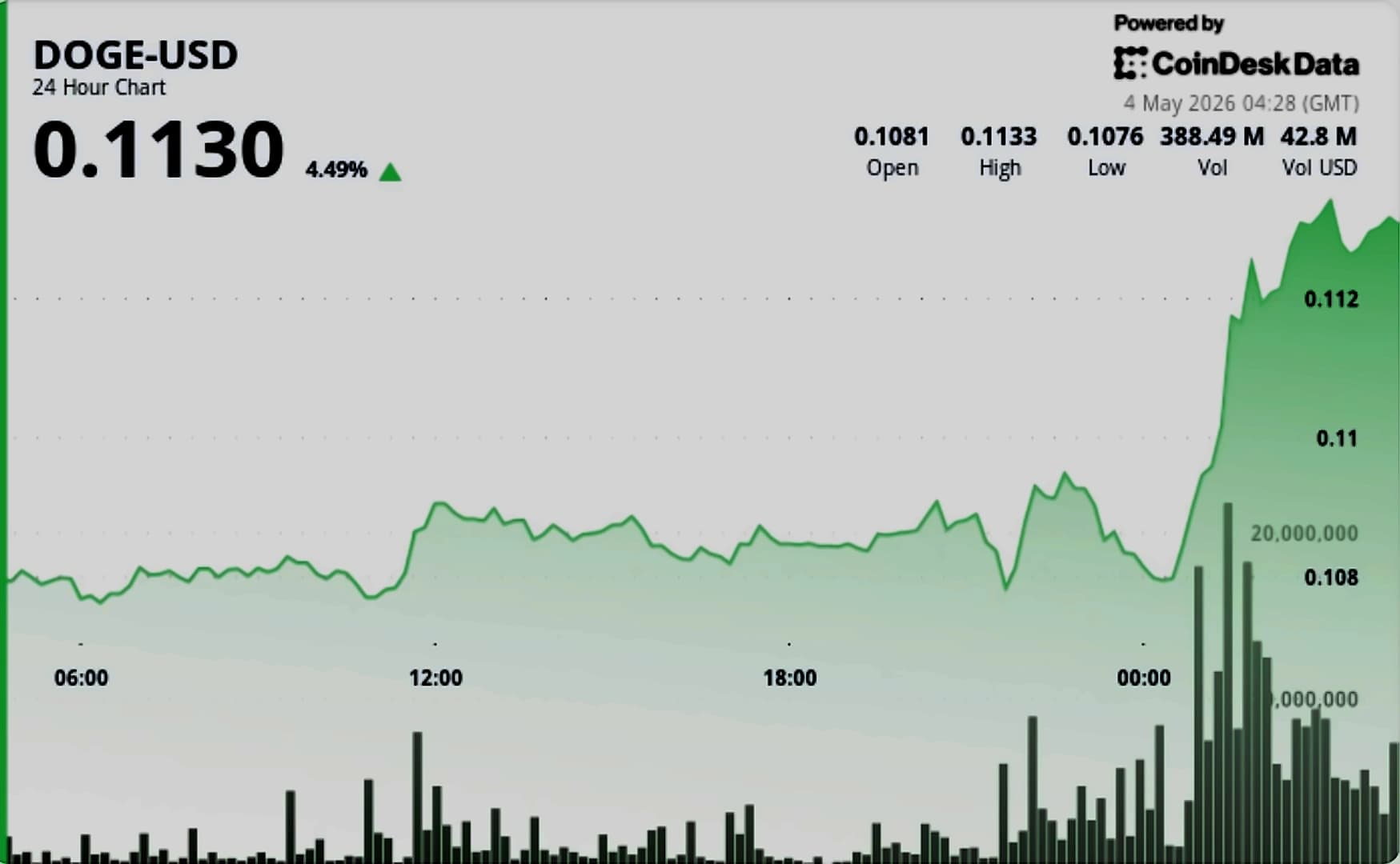
As reported by CoinDesk, bitcoin hit new highs during the same trading session as Dogecoin's gains, with BTC surpassing $80K signaling significant market activity and potential developments in the coming week. The $630 million in single day net inflows recorded by Bitcoin spot ETFs on May 1, with April finishing as the strongest ETF month of 2026 at $2.44 billion, demonstrates continued institutional interest. The $83 billion market cap means even the best case forecasts of $675-$1,000 by year end represent only 62% gains, compared to presale entries where a single listing event can deliver multiples. The next halving in April 2028 will cut Bitcoin's issuance rate in half, further supporting its scarcity thesis as a store of value. Despite the positive adoption trends and Pentagon's classified Bitcoin programs, market pricing in the 'Bitcoin Future Price Predictions' market suggests a moderate impact on Bitcoin's potential to reach $200,000 by December 31, 2026.