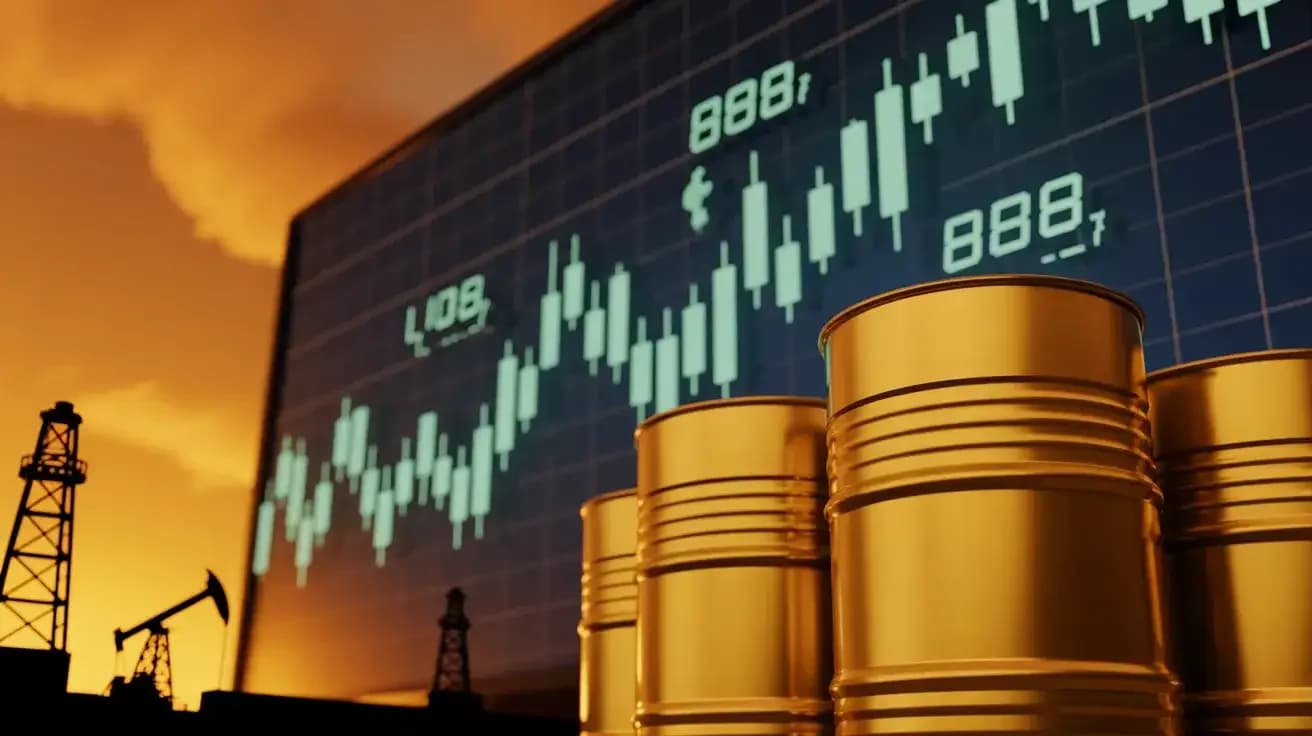
Crude oil prices have surged 8% in a week to near $110 as Iran war tensions continue to simmer, with Trump losing patience and agreeing with Chinese President Xi Jinping that Iran cannot be allowed to develop a nuclear weapon and must reopen the Strait of Hormuz. The Strait of Hormuz serves as the main export route for Gulf producers including Saudi Arabia, Iraq and Qatar, with nearly one-fifth of the world's oil and liquefied natural gas flows passing through this critical chokepoint. Recent developments show the war in the Strait of Hormuz has moved to direct attacks on tankers, causing marine insurance to become unquotable for many ships and making Persian Gulf transit too risky for standard commercial cover. Ship seizures and fire incidents like the HMM Namu have made the region unnavigable, bypassing any diplomatic efforts and stopping trade flow. Saudi Aramco CEO Amin Nasser warned Monday that disruptions to shipments through Hormuz could delay the return of stability to oil markets until 2027, potentially affecting around 100 million barrels of oil supply every week. However, global petroleum inventories are plunging, with imminent shortages threatening a dramatic oil price spike to $200 according to latest market analysis, representing a significant escalation from current levels.
Secretary Chris Wright has outlined President Trump's comprehensive Energy Dominance Agenda, emphasizing that "a good chunk of that is President Trump's Energy Dominance Agenda. The world knows he's all in on growing supply. The United States is going to grow our supply of crude oil and refined products." This strategic approach comes as the administration faces mounting pressure from Iran tensions and supply disruptions. The United States is positioning itself as a reliable alternative to Middle Eastern oil supplies while simultaneously working to expand domestic production capabilities. The Energy Dominance strategy represents a fundamental shift in U.S. energy policy, moving away from dependence on volatile international markets toward domestic energy self-sufficiency. This policy direction provides a potential counterbalance to the current supply disruptions and offers long-term stability for global energy markets.
At $103 per barrel, oil prices wipe out any wage gains or tax cuts, creating the primary driver of the 3.8% inflation that killed hopes for Federal Reserve rate cuts. As reported, the April inflation of 3.8% was the highest in three years, trapping the new Fed Chair Kevin Warsh into keeping rates high even as the stock market crashes. The interest rate on the 30-year Treasury has been hovering above 5% this week, breaking the math for high-valuation tech companies like Tesla and Nvidia whose value is based on future profits heavily discounted at these rates. The Great Rotation from overvalued tech to metals and commodities is about to begin, with investors selling tech stocks and buying real assets like silver and gold to protect their wealth. Oil prices jumped back above $100 after the failure of the one-page peace memorandum this week, demonstrating the ongoing instability in the region.
Grayscale Research indicates that rising U.S. inflation and delayed Fed rate cuts could accelerate tokenized fixed income adoption and boost stablecoin issuer revenues. The research suggests that higher oil prices push inflation up, which typically leads to central banks cutting rates, sending money back into risk assets like cryptocurrency. This inflation-rate-cutting cycle creates favorable conditions for cryptocurrency investments, particularly during periods of geopolitical uncertainty. However, the 10 risks to the global economy sit on top of the Kevin Warsh Fed chair, who is expected to cut short-term interest rates to save commercial banks from collapse while shrinking the Fed's balance sheet, pulling physical cash out of the stock market. This is bullish for physical silver, gold, large banks with strong reserves, and domestic commodity producers, while being bearish for community banks, leveraged tech stocks, and private credit funds. The Dow is close to its all-time high of roughly 50,000 and analysts believe this represents the final gasp of a market built on shaky pillars, with a Great Rotation from overvalued tech to metals and commodities imminent.

Dogecoin is currently trading near $0.11 and price predictions place DOGE in a range between $0.11 and $0.25 across 2026, with an average price around $0.14. As reported, this forecast represents approximately 123% upside from current levels at the top end. The price trajectory shows July and August peaks near $0.16, with September and October cooling off before November emerges as the standout month with a high forecast of $0.25. December is expected to settle around $0.16.
Dogecoin's daily exchange rate to INR fluctuated between ₹10.27 and ₹11.03 in the last 7 days, with the largest 24-hour price movement occurring on Monday with a 3.6% increase of ₹0.364973. The current conversion rate stands at ₹10.51 per DOGE, meaning 5 DOGE can be exchanged for ₹52.56 or ₹50.00 for 4.76 DOGE. DOGE can be traded across 368 crypto exchanges globally, with Coinbase Exchange being the most active platform for Indian traders, followed by Binance.