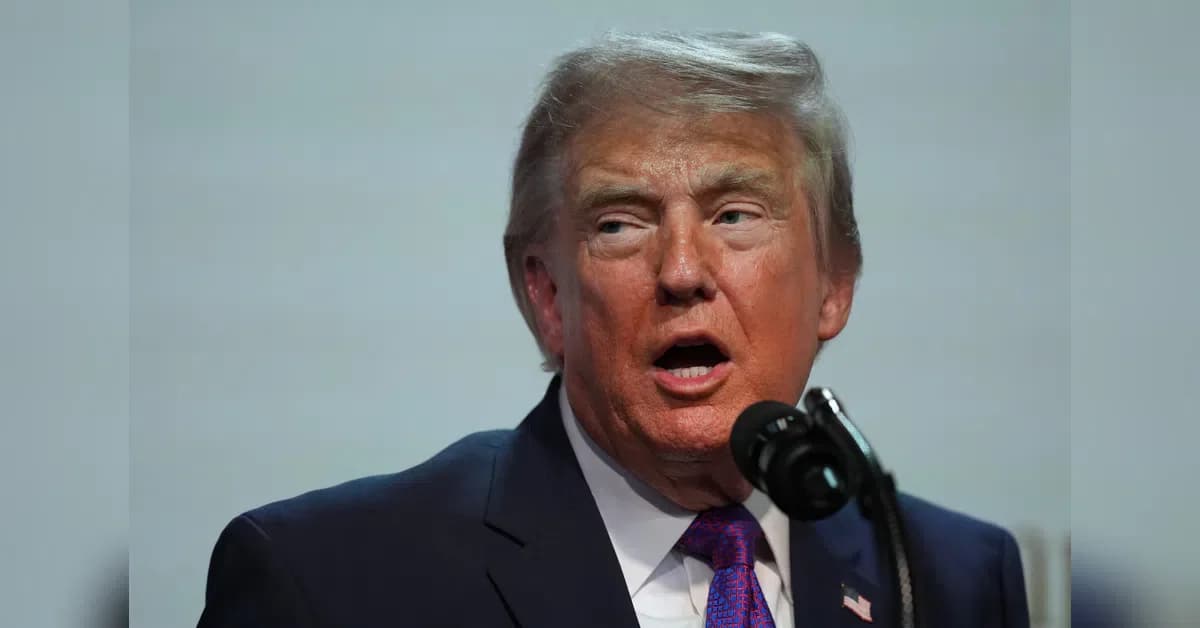
US President Donald Trump has made a bold prediction about oil prices, claiming on his Truth Social platform that oil prices will drop below $2 per gallon once the United States achieves victory in its conflict with Iran. In his post, Trump wrote 'Oil prices will drop precipitously, like everything else is dropping (but more!), when we WIN the war with Iran. Three Dollars a gallon, but ultimately, below Two Dollars a gallon.' Trump linked high energy costs directly to ongoing military operations in the West Asia, asserting that post-war markets would stabilise rapidly. This prediction represents a significant escalation from previous forecasts, with experts like Scott Bessent expecting prices to fall to $40-$60 per barrel and Mark Matthews projecting recovery to $60 per barrel over a longer timeline.

US Treasury Secretary Scott Bessent expects oil prices to experience a significant decline once the Iran conflict concludes, according to reports from Bloomberg, The Economic Times, and NDTV Profit. Speaking in an interview hosted by Stephen K. Bannon, Bessent outlined his concerns about the global oil market's future supply dynamics. The Treasury Secretary anticipates that new supply coming online will create substantial oversupply conditions in the medium term, with oil prices potentially falling to as low as $40 per barrel once the conflict ends. 'We're going to get on the other side of this Iran conflict, and I expect that oil will come down,' Bessent stated, emphasizing that 'we're going to be very much oversupplied in the oil market after this.'
Mark Matthews, Head of Research Asia at Julius Baer, provides a more conservative timeline for oil price recovery, suggesting that crude oil prices could take up to 12 months to fully normalize following the war. As reported by NDTV Profit, Matthews noted that 'I don't think the world has entered normalcy post war,' while adding that he does not expect the war to persist for a very long time. Matthews expects crude oil prices to fall to levels around $60 per barrel over the longer term, with current prices already showing signs of stabilization as Brent Crude was trading 1.51% higher at $97.73 per barrel. The UAE is expected to increase production by a couple of million barrels, adding to market supply, while relatively resilient inventory levels across Asian markets are holding up despite ongoing geopolitical uncertainty.
According to Bloomberg, The Economic Times, and NDTV Profit, Brent crude was trading above $95 per barrel on Friday, around the highest levels since July, with West Texas Intermediate near $91. These elevated prices have been driven by military strikes between the US and Iran earlier this week. The rise in energy prices in recent weeks has added to concerns about inflation, with ten-year US rates hitting their highest levels since 2023 this week. The elevated energy prices have contributed to broader market volatility, with one metric of federal debt just passing a record $40 trillion, adding to concerns about investor appetite for US government debt at a time of outsized borrowing.
The conflict has intensified with recent military developments, including US Secretary of War Pete Hegseth's claims that Iran's oil tanker fleet is defenceless and that the country has no navy or air force. CENTCOM claimed that three Iranian crude oil tankers were part of a multibillion-dollar shadow network that funds the IRGC and its regional proxies. Iranian Parliament Speaker Mohammad Bagher Ghalibaf issued stark warnings against US military operations, stating that Iran's oil and gas production chain is 'sprawling, accessible, and exposed.' The escalation has prompted Trump to reiterate his threat that the US will not let Iran have a nuclear weapon, adding 'It will all happen quickly, and Iran will never have a Nuclear Weapon. MAGA!'
Bessent highlighted the strong correlation between oil prices and bond yields, stating that 'the interest rates — this is the highest correlation they've ever had to the oil price.' As reported by Bloomberg, The Economic Times, and NDTV Profit, the rise in energy prices has contributed to concerns about inflation, boosting yields on benchmark bonds around the world. Bessent expects that 'the Iran conflict will end, interest rates and the spike in headline inflation will come down.' This correlation suggests that the projected oil price decline could have significant implications for broader financial markets, with the Treasury Secretary advocating for 'upgrading their yield with other American assets' as a solution to current market pressures.