Three U.S. Senate Democrats have intensified their opposition to the Digital Asset Market Clarity Act, with Senators Chris Murphy, Chris Van Hollen, and Jeff Merkley calling the bill 'corrupt' at a July 14 press conference organized with Americans for Financial Reform and Indivisible. Murphy stated that 'There is no reason to pass a new regulatory system for crypto if this system does not stop Trump's corruption,' emphasizing that the legislation would be 'corruption if it gives Trump's corruption the protection of law.' The trio now demand strict ethics safeguards covering President Trump, Vice President, Cabinet officials, members of Congress and their families, with Van Hollen arguing the bill needs stronger consumer, anti-crime and conflict-of-interest provisions before he can support it. Merkley called for restrictions covering the president, vice president, Cabinet officials, members of Congress and their families, while Senator Elizabeth Warren has made a similar demand, calling for restrictions on crypto profits involving senior government officials. The opposition comes as Trump's recent financial disclosures revealed more than $1 billion he made from crypto efforts in 2025, providing Democrats with significant ammunition to push back against the bill.

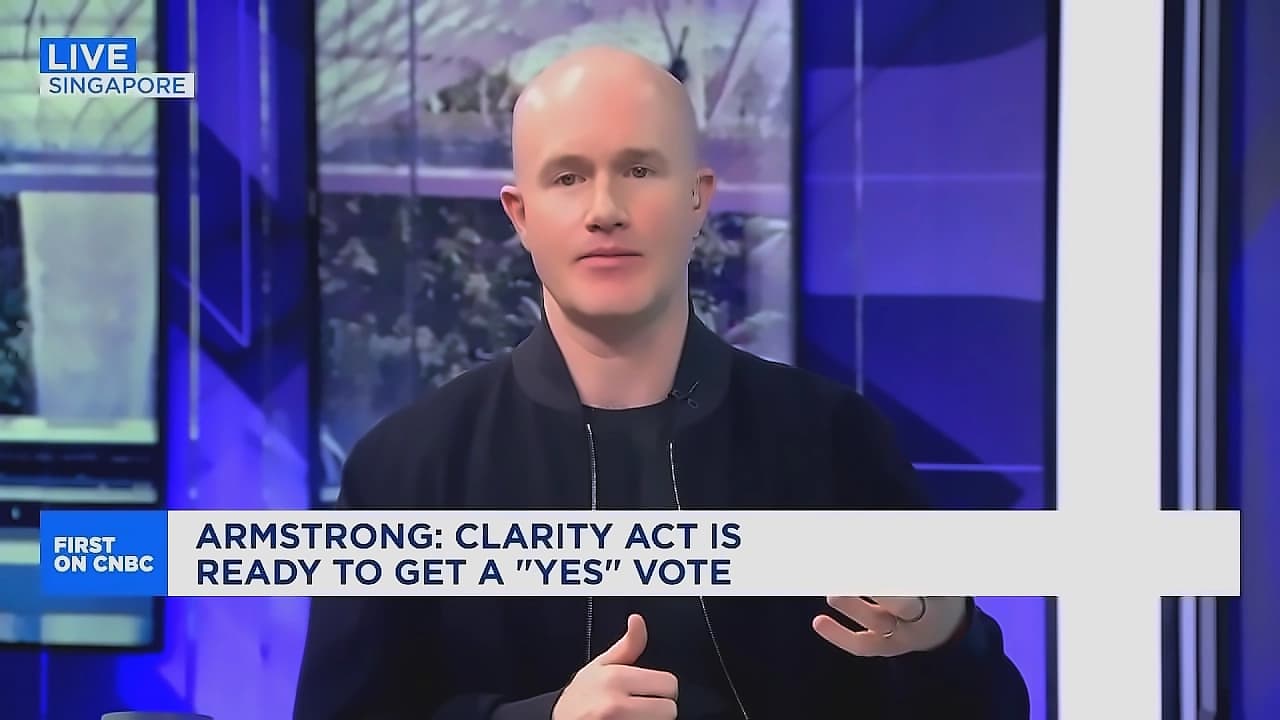
Senate Majority Leader John Thune told Bloomberg Government that the chamber will vote on the CLARITY Act during the current work period, though he only committed to action before the recess and said the exact timing remained undecided. The press conference organizers listed July 20 as the expected vote date, but as of July 15, the public Senate floor schedule did not list a CLARITY Act vote, leaving the reported timing still subject to change. The Senate's official calendar starts its state work period on Aug. 10, leaving Aug. 7 as the final scheduled session day before the break. The bill needs 60 votes, so Republicans cannot pass it without Democratic support, making the ethics dispute particularly critical given the narrow path to passage. The House approved the CLARITY Act in July 2025 by a 294-134 vote, and the measure would divide digital asset oversight between the SEC and CFTC while setting registration and custody rules for crypto firms.
Support for the bill continues to run alongside a dispute over ethics rules tied to President Trump's personal cryptocurrency business interests, with the stakes now elevated by his recent financial disclosures. Trump's latest financial disclosure showed that his family's crypto ventures generated roughly $1.4 billion in income, with Murphy describing Trump's crypto activities as 'the biggest corruption racket in the history of this country,' stating that 'his issuance of cryptocurrency as a means to make billions of dollars off of both bilking his supporters into buying a worthless token, but also providing a hidden avenue for mass scale bribery of the White House.' The ethics debate has gained urgency as senators prepare a combined draft from the Banking and Agriculture committees, with supporters wanting a durable federal framework, while opponents say the bill should not move without clear limits on financial conflicts involving public officials. The bill faces ongoing disputes over developer protections in Section 604, with four law enforcement groups warning that broad protections could make some crypto crime investigations harder.
The Federal Law Enforcement Officers Association (FLEOA) has endorsed the CLARITY Act while requesting significant revisions to address law enforcement concerns. In a July 10 letter submitted to the US Senate Banking Committee, FLEOA said the bill 'represents meaningful progress' toward balancing digital asset development with public safety, adding law enforcement support alongside the National Organization of Black Law Enforcement Executives' earlier endorsement. The association, representing more than 34,000 active and retired federal officers across over 65 agencies, has called for tighter accountability rules for decentralized finance platforms and language preventing companies from avoiding regulation through controlled services presented as decentralized. FLEOA also urged senators to replace the bill's 'specific intent' test with an existing knowledge standard and to clearly state that the legislation does not reduce current federal investigative powers. The endorsement is conditional on five specific demands: narrowing DeFi protections, making accountability clearer in decentralized finance systems, stopping firms from avoiding regulation by claiming decentralization, revising 'specific intent' language, and explicitly affirming the bill does not curtail existing federal investigative powers.
White House crypto adviser Patrick Witt will begin a months-long military leave at the end of July to complete mandatory legal training with the Georgia Army National Guard, creating a critical gap in CLARITY Act negotiations. According to Crypto In America, Witt is expected to finish his White House work on July 24 and begin Judge Advocate General training on July 27, with the program qualifying him to serve as a JAG officer. Deputy director Harry Jung is expected to assume Witt's main responsibilities during the leave, having worked alongside Witt during negotiations and attended many of the same meetings. Witt previously postponed his training from April as discussions continued, but a second delay was reportedly unavailable. Witt plans to remain involved where possible during training, though his full-time return remains unclear after completion.
Coinbase Chief Policy Officer Faryar Shirzad recently rejected claims that the CLARITY Act would weaken national security, arguing that regulatory uncertainty leaves room for bad actors to operate outside clear federal oversight. Shirzad said the proposed legislation would move more crypto activity into a defined compliance framework, requiring crypto brokers, dealers, and exchanges to comply with Bank Secrecy Act obligations, including anti-money laundering programs, customer identification checks, suspicious activity reporting, sanctions compliance, and procedures allowing platforms to pause suspicious transfers when requested by law enforcement. He argued these requirements show the legislation imposes stronger safeguards rather than reducing oversight.
Senate Majority Leader John Thune said last month he intends to bring the bill to the floor in July, with the weeks of July 20 and July 27 under active discussion for a floor vote. However, negotiators are now working to complete a merged draft before the August 8 deadline, as the Senate's published 2026 schedule places its August state work period from Aug. 10 through Sept. 11. The bill faces ongoing disputes over developer protections in Section 604, with four law enforcement groups warning that broad protections could make some crypto crime investigations harder. The Department of Justice later challenged some of these claims, viewing warnings about lost enforcement powers as inaccurate, while the Major County Sheriffs of America moved from opposition to a neutral position after further talks over Section 604. Witt called the current week 'critical' for the legislation in a July 13 post, stating that lawmakers had already lost time and 'cannot afford to delay any longer.'