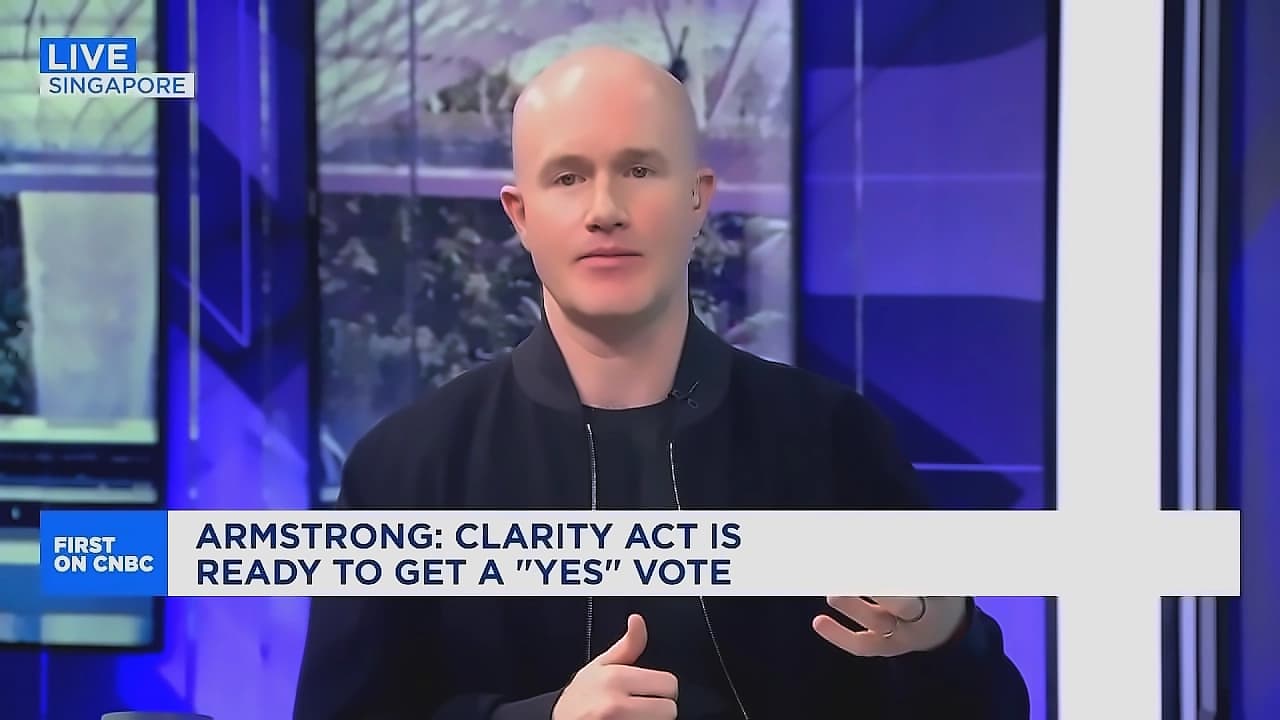
President Donald Trump has agreed to comprehensive ethics provisions that would restrict his crypto dealings as the Senate prepares for a pivotal vote on the CLARITY Act governing the $2.3 trillion cryptocurrency market. According to The Associated Press, Trump agreed to a measure that would bar him and his wife from issuing the types of meme coins they launched as he prepared to return to the White House for a second term. The president also consented to a tougher ethics proposal that several key senators had demanded, including provisions that would require him to put his crypto holdings in a blind trust and divest when those holdings reach certain values. A pivotal Senate vote on Tuesday could mark a watershed moment for the $2.3 trillion market, with the outcome hinging on whether Trump's sign-offs go far enough to secure the necessary support. Sen. Cynthia Lummis, R-Wyo., the lead author of the crypto bill, told The Associated Press that "A vote against the Clarity Act isn't a principled stand against President Trump. It's a vote against implementing tough restrictions on politicians for crypto investments."
White House crypto adviser Patrick Witt called the ethics provisions "historic and unprecedented" during a Monday appearance at the Solana Policy Institute summit, stating he wouldn't want to be a Democrat who votes against them. Witt said Republicans have granted as much as 95% of requests from Democratic negotiators in the Digital Asset Market Clarity Act, with the president's willingness to further compromise earning him a "big thank you." However, Democratic staff on the Senate Banking Committee noted Monday that the new version leaves Trump's own appointees — especially the attorney general — too much authority to shut down enforcement of the ethics section. For Democrats, an enforcement mechanism involving state attorneys general had been a red line, with Maryland Sen. Angela Alsobrooks among the Democrats seen as vital swing votes on Tuesday. The updated version also includes a requirement to either divest or place in a blind trust any "significant" financial interest in an entity that issues cryptocurrencies, expanding beyond the initial meme coin restrictions.
Trump's crypto holdings represent a significant portion of his overall wealth, with the president reporting more than $1.4 billion in crypto income for 2025, including more than $600 million from sales of souvenir-type "meme" coins stamped with his face through the crypto business CIC Digital LLC. Trump reported more than $500 million in revenue from World Liberty Financial sales of crypto products, including "governance tokens," in his annual disclosure report filed with the Office of Government Ethics. The ethics provisions could force Trump to divest from ventures such as World Liberty Financial, the cryptocurrency venture that his sons launched in 2024, potentially affecting his family's substantial crypto business interests. Trump has become a relatively recent convert to crypto, saying he was "not a fan" of cryptocurrency in his first term, calling it "highly volatile and based on thin air."
The updated bill includes a requirement for state attorneys general to have "a meaningful role" in enforcing crypto measures, addressing a critical demand from Democrats who previously refused to support legislation without independent enforcement mechanisms. According to The Associated Press, for Democrats, an enforcement mechanism involving state attorneys general had been a red line. Maryland Sen. Angela Alsobrooks, among the Democrats seen as vital swing votes on Tuesday, said "We need the state attorneys general to also have the power to prosecute if the Department of Justice refuses to." The updated version also includes a requirement to either divest or place in a blind trust any "significant" financial interest in an entity that issues cryptocurrencies, expanding beyond the initial meme coin restrictions. A senior GOP aide said the president had agreed to "about 80%" of the proposal from Senators Ruben Gallego, D-Ariz., and Thom Tillis, R-N.C., pointing mainly to the state attorneys general provision.
The industry and its supporters spent Monday cheering on the Clarity Act process, which faces a major test on Tuesday with a plan for casting the first of several votes to begin advancing the bill on the Senate floor. However, there are plenty of headwinds to this process. A large number of state attorneys general have also said they don't support the legislation's treatment of their legal powers to pursue bad actors. On the flip side, the crypto industry is uneasy about the new language's treatment of DeFi, with the banking sector expressing negative responses. A coalition of banking trade associations shared "critical concerns raised by banks of all sizes regarding the risk of deposit flight and diminished credit and lending associated with permitting yield on payment stablecoins." The way the current legislative text is drafted provides loopholes and avenues for the prohibition to be easily evaded that would still allow interest and interest-like payments to be made on stablecoin balances, according to the banking groups. Even if more than 60 senators vote yes to advance the bill, which is the threshold needed to meet the chamber's requirements for what's known as "cloture," the first vote is not the end of the process.
The end game for the Clarity Act has revolved around the ethics section that would impose restrictions on crypto ties for many federal officials, including President Trump. If the Senate advances the bill, it could support a clearer federal framework for crypto market structure, decentralized software development, and institutional participation. However, if it fails, uncertainty around token classification, DeFi developer liability, stablecoin rewards, and vertically integrated trading models could persist into the next legislative window. Representative Tom Emmer, a pro-crypto lawmaker who is majority whip in the House, argued "We can't afford to lose another year." If the Senate still gives its approval in the end, the bill then heads back to the House of Representatives, but the House isn't in session and may not be until after the November midterm elections. The complication there: The House isn't in session and may not be until after the November midterm elections, so it may be that post-election "lame duck" session in which the bill would see final action. Witt said the Commodity Futures Trading Commission and Securities and Exchange commission stand ready with a "robust" rulemaking agendas, noting there's still good news coming for the industry regardless of the Clarity Act's fate.