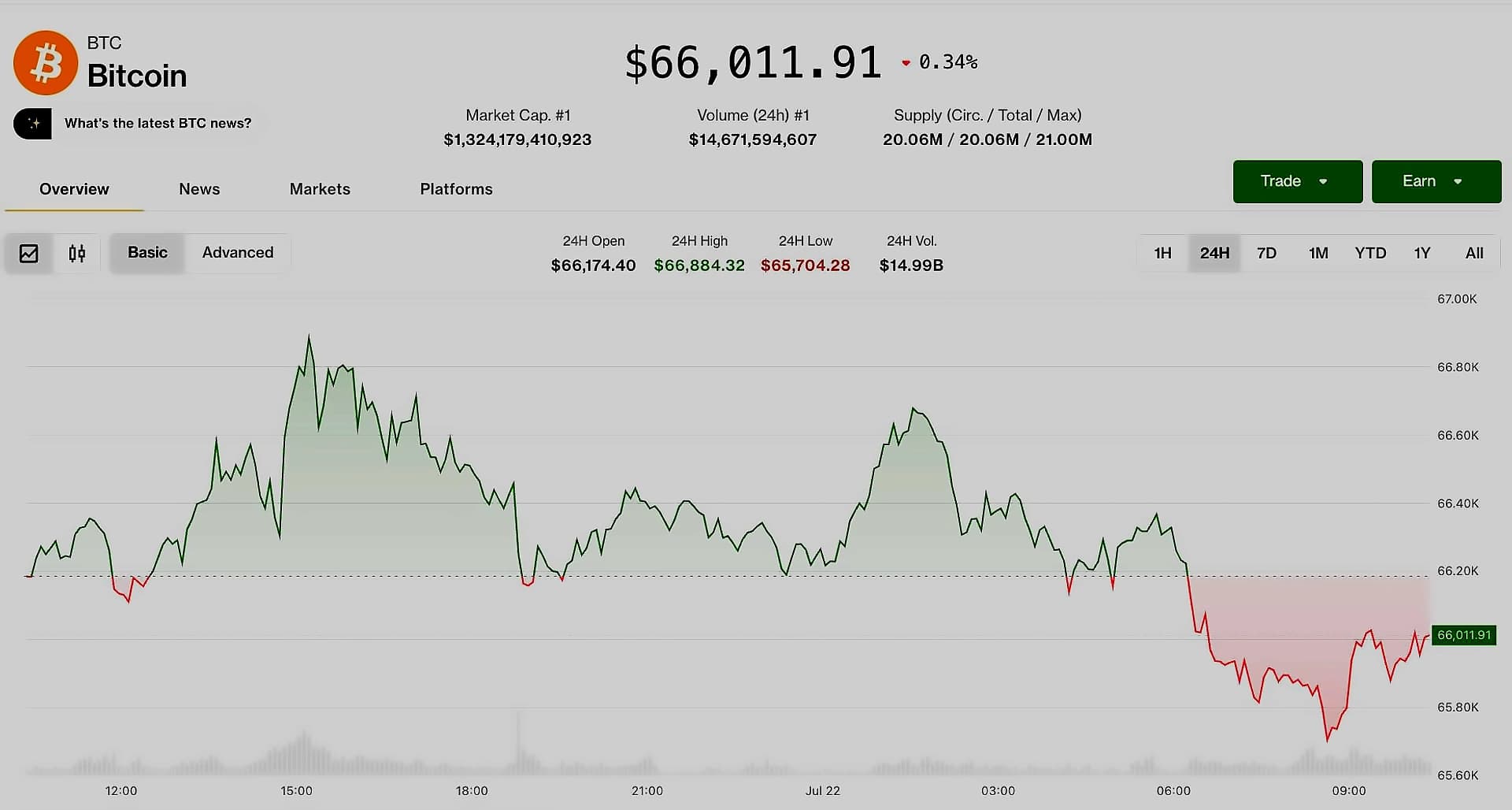
Bitcoin is holding near $80,418 after a 4.39% weekly rise, though momentum has cooled below the $81,305 resistance level. According to latest market analysis, the cryptocurrency's ability to maintain position above $80,000 represents a critical decision point for the market. The $80,000 level serves as a key support zone that combines technical significance with current market narrative, making it crucial for determining whether recent pullbacks represent consolidation or a more significant trend shift. ETF flows have shown improvement, with Friday recording approximately $433 million in net inflows, though the funds remain down on a net-flow basis for 2026, indicating selective institutional demand rather than permanent accumulation.
Cryptocurrency markets are demonstrating robust resilience to start the week following the Federal Reserve's rate hike decision and the Clarity Act's failure in the Senate. According to reports from Crypto Week Ahead, bitcoin and other major digital assets are showing strong performance despite facing multiple policy shocks. The markets' ability to maintain momentum after the Fed's decision and the Clarity Act's failure suggests growing maturity and institutional acceptance of cryptocurrency as a legitimate asset class. Latest data shows bitcoin trading near $80,500 after reaching approximately $81,859 during the latest session, while Solana is changing hands near $108 following an intraday move above $112. The Fed raised its target range by 25 basis points to 3.75%-4%, testing risk appetite yet crypto continues producing selective opportunities.
The market faced significant volatility following the Senate cloture vote failure, which triggered an immediate wave of violent liquidations. According to CoinDesk, crypto traders holding long, or bullish, futures positions saw $571 million liquidated in the first 24 hours after the vote. The failure particularly impacted U.S.-focused crypto infrastructure providers, with publicly traded firms like crypto exchange Coinbase Global (COIN) and stablecoin issuer Circle Internet (CRCL) sliding 10% in the aftermath of the vote. Both shares rebounded Friday, indicating temporary market overreaction to the legislative setback.
Bitcoin's current setup reflects three overlapping forces: macro policy, institutional demand, and technical momentum. The Federal Reserve's September 16 rate increase to 3.75%-4.00% adds macro headwinds, as higher policy rates can raise Treasury yields, strengthen the U.S. dollar, and reduce appetite for speculative assets. Circulating supply stands at 20.08 million BTC against Bitcoin's fixed 21 million maximum, maintaining the scarcity model that supports long-term thesis. Treasury holdings total 1.34 million BTC, reducing readily available supply but not removing market risk. Technical indicators show mixed signals with CRSI at 30.73 suggesting short-term selling pressure, while MACD remains negative at -73.03 indicating slowed upside momentum. The $1.61 trillion market capitalization and $21.2 billion in 24-hour volume reflect the market's size and trading activity.
Market analysts are split on what drove the recent resilience and what it means for the near-term outlook. As reported by CoinDesk, Ilya Kalchev, an analyst at Nexo Dispatch, noted that bitcoin's recovery after the Clarity vote, the Federal Reserve's rate hike, and the long liquidation event point to consolidation rather than an immediate breakout. Kalchev emphasized that 'Bitcoin's next move is now linked to a catalyst that it does not have yet' and that 'having absorbed three separate shocks this month without a real repricing, the more likely near-term path is range-bound trading rather than a breakout'. The modest spot reaction reflects a market that was already not positioned for legislative breakthrough, with few traders betting on the bill's approval ahead of the vote. Latest technical analysis suggests that a close above $81,305 could open a move toward $82,000 and then $85,000, while a sustained loss below $80,000 could expose the $79,148-$78,754 support range.