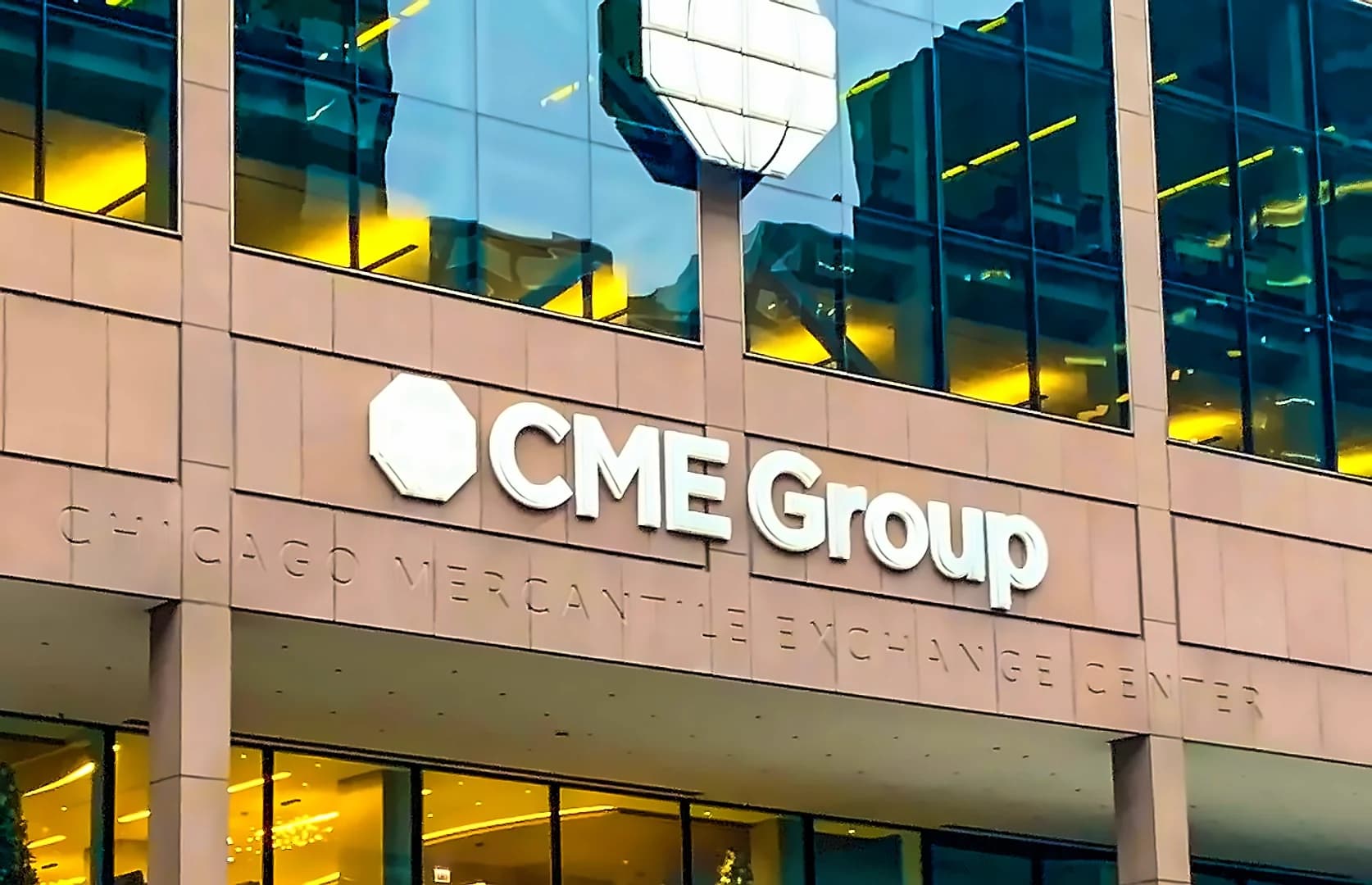
CME Group has officially launched futures contracts for Avalanche (AVAX) and Sui (SUI), extending Wall Street's regulated crypto derivatives beyond Bitcoin and Ethereum. According to CME's launch materials, the new contracts are available in both standard and micro sizes: AVAX futures at 5,000 AVAX and Micro AVAX at 500 AVAX, while SUI futures are 50,000 SUI and Micro SUI at 5,000 SUI. The contracts are cash-settled against their respective CME CF Reference Rates and cleared through CME's existing infrastructure, providing capital-efficient exposure to the underlying networks without requiring custody management on offshore exchanges.
The Avalanche and Sui contracts join CME's growing crypto product suite, which now includes Bitcoin, Ether, Solana, Cardano, Chainlink, and Stellar. As reported by CME, beginning May 29, CME's cryptocurrency futures and options will trade on a continuous 24-hour, seven-day schedule to match the always-on nature of spot crypto markets. The first block trades in AVAX and SUI futures were executed between digital-asset specialists FalconX and G-20 Group in early May, signaling institutional adoption of regulated altcoin derivatives.

According to CME's detailed explainer, the new contracts are designed for relative-value and inter-commodity spreads, allowing traders to pair AVAX or SUI futures against Solana or Bitcoin and Ether to isolate specific architectural risks and capture performance divergence driven by network adoption. The contracts enable arbitrage and basis trading with centrally cleared futures offering a transparent benchmark for basis trading, capturing the spread between spot market prices and the futures curve. A KuCoin analysis framed the launch as 'a new era for regulated crypto derivatives,' arguing it could draw more conservative investors into Avalanche and Sui by providing risk management tools without touching unregulated spot platforms.
For Avalanche and Sui, being listed on CME places both networks in the same risk-management toolkit as Bitcoin, Ether, and Solana for macro funds, CTAs, and market-neutral shops. As reported by CME, this signals that AVAX and SUI have graduated from speculative side bets into assets that deserve a line item on institutional risk screens. The symbolism is significant, as regulatory status and access to traditional derivatives matter almost as much as technology in the current market environment, indicating that both networks have achieved institutional credibility through this major exchange listing.
While CME's altcoin futures launch represents positive institutional development, the broader crypto market has witnessed significant structural changes in the derivatives space. Hyperliquid's protocol revenue has scaled sharply in 2026, with the platform now regularly beating Ethereum and Solana on weekly blockchain fee generation. The protocol now generates $41 billion in 7-day perpetual volume with open interest above $9 billion, creating substantial fee-based revenue streams. Most notably, the AQAv2 framework announced May 14, 2026, represents a major shift where Coinbase and Circle agreed to integrate USDC into Hyperliquid, redirecting reserve yield back to the protocol and HYPE holders. This arrangement is estimated to cut up to $80 million from Circle and Coinbase's combined annual EBITDA, fundamentally changing how stablecoin economics flow through major DeFi protocols.