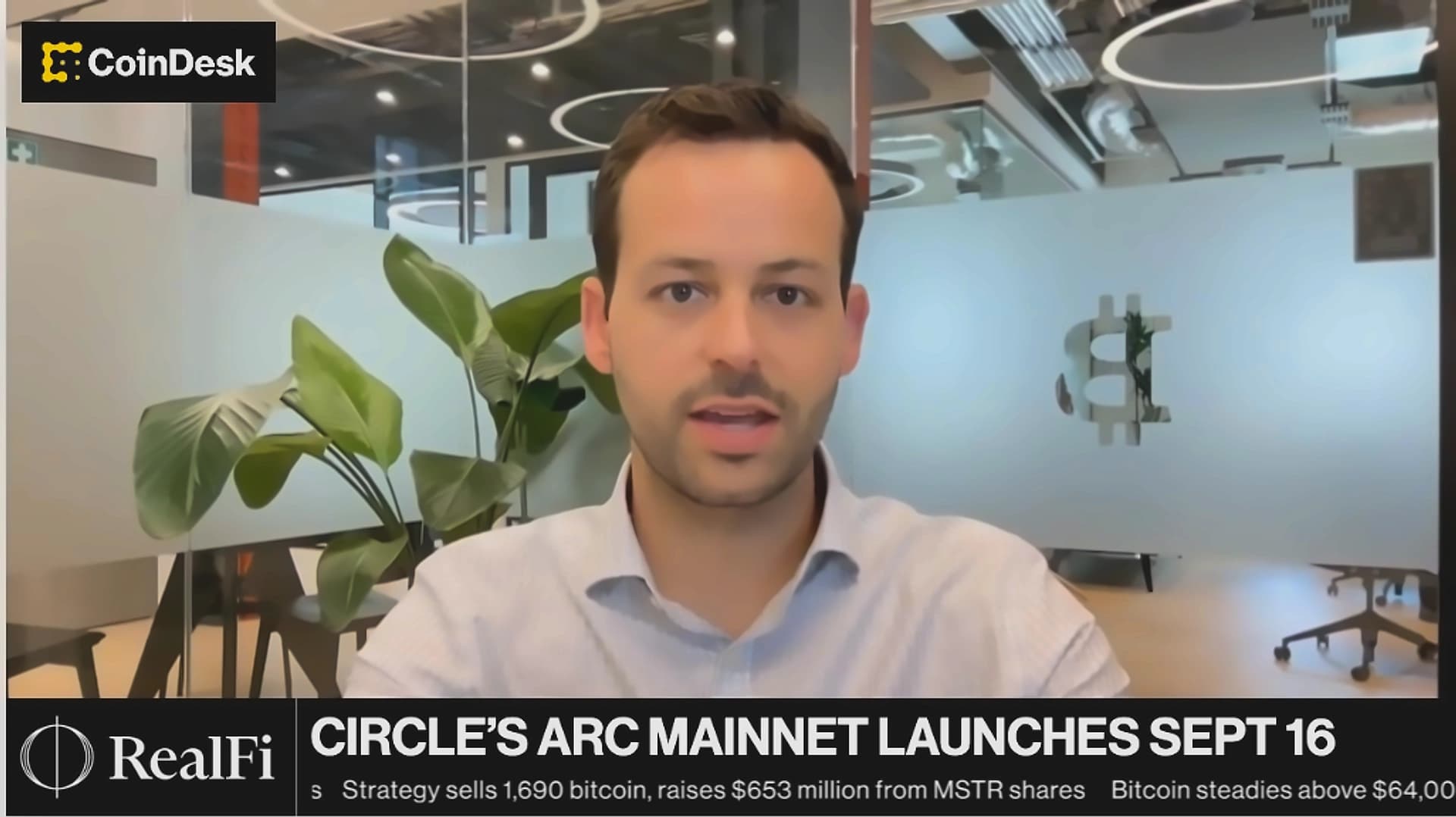
Circle has successfully defended against an arbitration claim by Heka Funds, a crypto fund backed by Tether, with an arbitrator rejecting the fund's $49 million damages claim over the USDC ban. The court-backed arbitration win came after an arbitrator ruled that Circle acted within its rights to block Heka's accounts at the end of 2023. According to court documents, retired judge Robert L. Dondero found that Circle acted within its rights under the parties' agreements with Heka. The ruling comes as Circle continues expanding its institutional business with new banking initiatives and partnerships in the United States and South Korea.
Circle President Heath Tarbert has sold approximately $30.8 million worth of Circle shares through 10 transactions since June 2025, with most trades executed under predetermined schedules rather than market timing. The latest filings show Tarbert completed stock sales and option exercises between June 2025 and July 2026, generating about $30.77 million while maintaining significant ownership. Tarbert has sold shares in 7 of the 13 months since Circle went public, with his largest sale of 122,007 shares worth $11.5 million on March 2, 2026. Eight of the ten sales were executed under Rule 10b5-1 plans - written trading schedules that executives adopt while unaware of material nonpublic information, providing automatic execution and insider trading defense.
At the center of the case was Heka Funds, managed by London-based Abraxas Capital Management, which opened a Circle account in January 2022 for its Elysium Global Arbitrage Fund. According to the arbitration record, Heka disclosed only investor Simon Grima during onboarding, while Tether had become the fund's dominant capital provider with an investment reaching about $800 million by the time of arbitration, accounting for roughly 75% of Elysium's assets. Dondero concluded the omission was intentional and wrote that the missing disclosure appeared designed to avoid revealing Tether's involvement in the fund. Heka founder Fabio Frontini disclosed a single investor, Simon Grima, rather than the fund's actual capital providers, with Circle Chief Business Officer Kash Razzaghi testifying that the company would not have opened the account had it known about the Tether connection in January 2022.
The trading dispute emerged after Silicon Valley Bank's collapse in March 2023 temporarily pushed USDC below its dollar peg. According to court filings, Heka bought discounted USDC in secondary markets and redeemed the tokens with Circle at face value after many other arbitrage firms had stopped once the spread narrowed. Circle alleged that Heka exploited discounted USDC during the Silicon Valley Bank crisis to help rival stablecoin Tether gain market share, with the arbitrator finding that the redeemed dollars were flowing to Tether, helping USDT grow at USDC's expense. Internal Circle communications presented during arbitration showed executives disagreed over whether the trades represented legitimate arbitrage, with Circle Chief Business Officer Kash Razzaghi describing the activity as "a manufactured arb not a market-driven one," attributing it to Tether waiving its normal fees. Circle's own staff were initially divided, with Razzaghi telling colleagues in May 2023 that the trade was "a manufactured arb not a market-driven one," while another employee, David Norton, pushed back saying Frontini's trades made rational sense.
Circle allowed Heka to redeem more than $587 million in USDC over a two-week period while testing whether the trading opportunity depended on Heka's activity. Court records showed Circle reduced Heka's minting and redemption limits to zero in November 2023 before suspending the account on December 1 under Section 9(c) of the parties' master services agreement after Heka founder Fabio Frontini threatened legal and regulatory action. Heka's request to redeem $100 million in February 2024 was rejected, and the master services agreement expired the following month. The dispute also revealed that Coinbase became uncomfortable dealing with Heka because of the fund's Tether ties and unique fee structure, placing its own restrictions on the account, adding weight to Circle's concerns that the issue was not limited to one issuer's internal interpretation.
Applying Delaware law, Dondero found Circle did not breach either agreement because the user terms allowed the company to adjust transaction limits and suspend services at its discretion. The arbitrator also ruled Circle was not required to prove market manipulation had occurred, only that it had reached a reasonable conclusion that such activity might be taking place. Although Circle requested about $5.15 million in legal fees and costs, Dondero awarded only $166,643.25 related to expert work. Meanwhile, Wall Street has grown increasingly skeptical about Circle's prospects. Mizuho cut CRCL to Underperform this month, lowering its price target to $50 from $85, about 21% below recent levels. Analyst Dan Dolev flagged Open USD as the main threat, noting the rival launched June 30 with backing from more than 140 firms, including Visa and Mastercard. On Fox Business, Tarbert addressed the stock's 76% drop from about $260 to $62, pointing to Circle's Arc blockchain build-out and focus on building infrastructure for a "full-stack internet platform," telling investors "Circle is playing a long game... in the long run, the stock is going to take care of itself."

Circle has announced a strategic partnership with Argentine financial group Grupo BIND to provide institutional USDC access through BIND's BEN platform, marking Circle's expansion into one of the world's most inflation-ravaged economies. The partnership, announced on July 14 during Circle CEO Jeremy Allaire's visit to Buenos Aires, will channel USDC access through BEN on a peer-to-peer basis. BIND operates as a registered virtual asset service provider (PSAV), which means it's a licensed financial institution building rails for companies that need dollar exposure but face a currency that has lost 99.8% of its value against the USD since 2009. The collaboration aims to provide companies with transparent, secure, and efficient access to digital dollar infrastructure within a framework designed to support regulatory compliance and operational integrity. Circle's simultaneous push into Argentina, Brazil, Mexico, and Colombia suggests the company sees the entire region as a strategic priority for USDC distribution, targeting the institutional and corporate segment where compliance requirements make USDC's regulatory positioning a genuine advantage over less transparent alternatives.