Kalshi CEO Tarek Mansour warned that state-led oversight of U.S. prediction markets would force the industry offshore, stating 'It's not a choice of state versus federal market. It's a choice of whether prediction markets exist in the U.S. or whether they go offshore.' Speaking at the DC Fintech Week event near Washington, Mansour expressed confidence about the company's legal standing, saying 'We feel pretty good about where we stand overall.' The CEO rejected arguments that sports betting doesn't have significant economic consequences, countering that 'The notion that sports does not have economic consequence is ludicrous.' Mansour argued that Kalshi's regulatory relationship elegantly fits under commodity definitions, describing the Commodity Exchange Act as 'a truly beautiful statue' that allows shifts from agricultural futures to financial products like swaps.
The Commodity Futures Trading Commission has proposed adding event contracts covering four categories - sports, politics, cultural events, and weather - to its swap definition, marking a significant expansion of federal oversight. According to the latest proposal announced on October 9, the CFTC describes event contracts as 'financial instruments commonly recognized in the derivatives industry as swaps' that would resolve uncertainty about their classification under the Commodity Exchange Act. The proposal sets a 30-day public comment period after publication in the Federal Register, with the agency arguing that explicitly including these products would resolve classification uncertainty. Under the CFTC's interpretation, sports, political, cultural and weather events can carry potential financial, economic, or commercial consequences that satisfy the statutory requirement for swap classification.
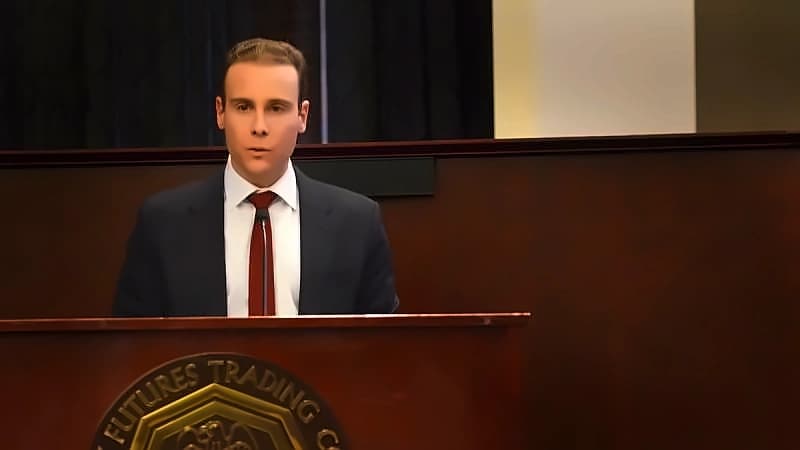
The CFTC has approved an interim final rule that excludes casino-style gambling products from its swap definition, effective immediately upon publication in the Federal Register. Chairman Michael S. Selig stated that 'casino-style gambling products are not derivatives' and emphasized the agency's commitment to providing clarity regarding regulatory boundaries. The rule specifically excludes wagers placed on sportsbooks and casino games from the swap definition, preventing prediction market operators from offering event contracts around casino-style gambling products. As reported by the CFTC, this action removes regulatory ambiguity and clarifies the limits of the commission's jurisdiction over derivatives markets versus state and tribal jurisdiction over casino-style gambling.
The regulatory push comes amid intensifying legal disputes with several states that have accused prediction market platforms of running illegal gambling operations. New Jersey has asked the Supreme Court to review whether federal commodities law prevents states from applying their sports gaming laws to contracts traded on CFTC-registered markets. In an October 8 brief supporting New Jersey's petition, the NFL argued for state oversight and additional safeguards, citing concerns about consumer protection, inside information, and game integrity. According to league coverage, NFL-related markets accounted for $1.8 billion of $3.3 billion in prediction market trading on the season's first Sunday. The Supreme Court docket gives Kalshi until November 9 to respond to New Jersey's petition, while Robinhood Derivatives petitioned for review of a Ninth Circuit decision involving Nevada gaming officials, arguing that federal law gives the CFTC exclusive authority over covered contracts.
Federal appeals courts have reached conflicting decisions on state authority over sports event contracts, creating regulatory uncertainty. On September 25, the Sixth Circuit rejected Kalshi's injunction requests in disputes involving Ohio and Tennessee, upholding denial of preliminary protection in Ohio and vacating an injunction in Tennessee. According to the opinion, Kalshi had not established that the sports contracts qualified as swaps, with judges considering alternative arguments assuming the products were swaps and still finding insufficient grounds to displace state gambling laws. In August, the Ninth Circuit similarly allowed Nevada to enforce its gaming rules during litigation. By contrast, the Third Circuit's April decision preserved a preliminary injunction protecting Kalshi against New Jersey enforcement, with its majority finding that the sports contracts qualified as swaps and that the exchange had shown reasonable likelihood of succeeding on its federal preemption argument.
Companies such as Kalshi are supporting the CFTC's position to establish it as their sole regulatory watchdog while simultaneously pursuing state-level influence. As reported by The Wall Street Journal, the actions were submitted for White House review on September 28, showing an especially speedy process. According to OpenSecrets reports, prediction market companies including Kalshi, its competitor Polymarket, and the Coalition for Prediction Markets have spent at least $3 million on lobbying and campaign contributions across federal and state levels in 2026. The regulatory framework expansion addresses legal critics who argue that the CFTC's definition of swaps would make federally illegal any wager made at state or tribal casinos or sportsbooks. The agency's recent clarification that existing exchange and trader duties would remain intact provides additional clarity for market participants.