Blockrise has officially launched Europe's first Bitcoin-native neobank offering IBAN accounts through a partnership with bunq's Banking-as-a-Service platform. As announced by CEO Jos Lazet at BTC Prague on June 11, 2026, this development represents a significant milestone in what he calls anarchistic neobanking - a full-service bank account where users actually own their assets through self-custody rather than holding an IOU from an institution. The partnership allows Blockrise to handle the Bitcoin-native user experience while bunq provides the licensed banking infrastructure, including deposit protection up to €100,000 per user under the Dutch Deposit Guarantee Scheme. This makes Blockrise the first company in Europe to deploy bunq's BaaS infrastructure.
The platform operates under a multisig system where users control one key and the company holds another for management, enabling withdrawals at any time. This aligns with Bitcoin's principle of not your keys, not your coins. The service combines euro banking with Bitcoin self-custody, allowing users to hold their own keys while accessing traditional banking features. Blockrise offers services such as payments and asset management, and allows users to withdraw their Bitcoin at any time. The company earns from access and execution rather than holding clients' assets, with current support for Bitcoin and Ethereum and custody and management fees of up to 1% each, plus a 15% performance fee on managed strategies.
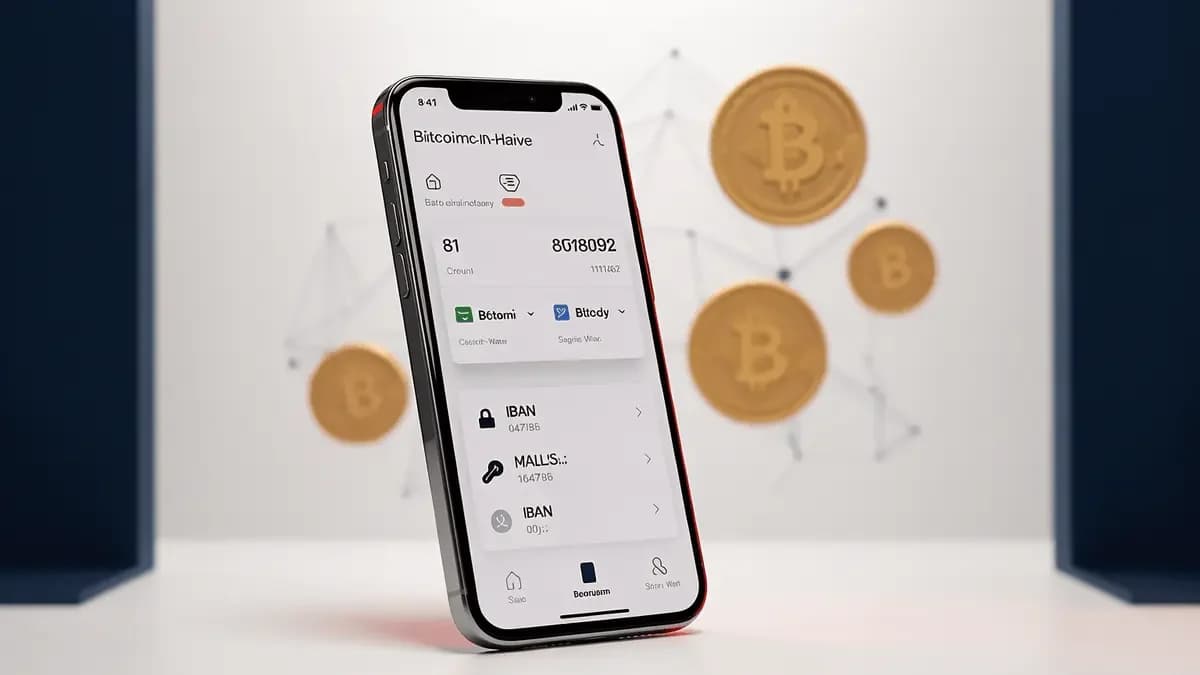
The launch comes as neobanks like Revolut continue to face criticism for their custodial models, with campaigns highlighting that banks still freeze accounts and block crypto transfers. Lazet argues that existing neobanks like Revolut merely improved the interface while maintaining custodial ownership structures, maintaining the same fractional reserve system used by traditional banks. Blockrise is fully regulated under the EU's MiCAR framework and registered with the Dutch central bank as an asset manager, positioning itself as a Bitcoin-native alternative to traditional banking infrastructure. The company's vision emphasizes a Bitcoin bank where users hold their own keys in segregated, on-chain wallets with a multisig structure, representing a fundamental shift from legacy banking systems.
Lazet highlights Bitcoin-backed loans as a key priority, enabling users to borrow against their BTC without selling, and they are collaborating with lending partner Arkade to develop these products. The bunq partnership allows Blockrise to outsource the licensing and compliance burden while focusing on self-custody and Bitcoin-specific features. Users receive a single account that bridges their Bitcoin holdings and day-to-day euro banking, with salaries in and bills out managed alongside their cryptocurrency. The pricing model is evolving toward a subscription structure similar to Revolut's tiered plans, targeting mainstream users who want simplicity without surrendering control. Blockrise is also collaborating with lending partner Arkade to develop Bitcoin-backed loans that enable users to borrow against their BTC without selling, with the platform currently supporting Bitcoin and Ethereum.