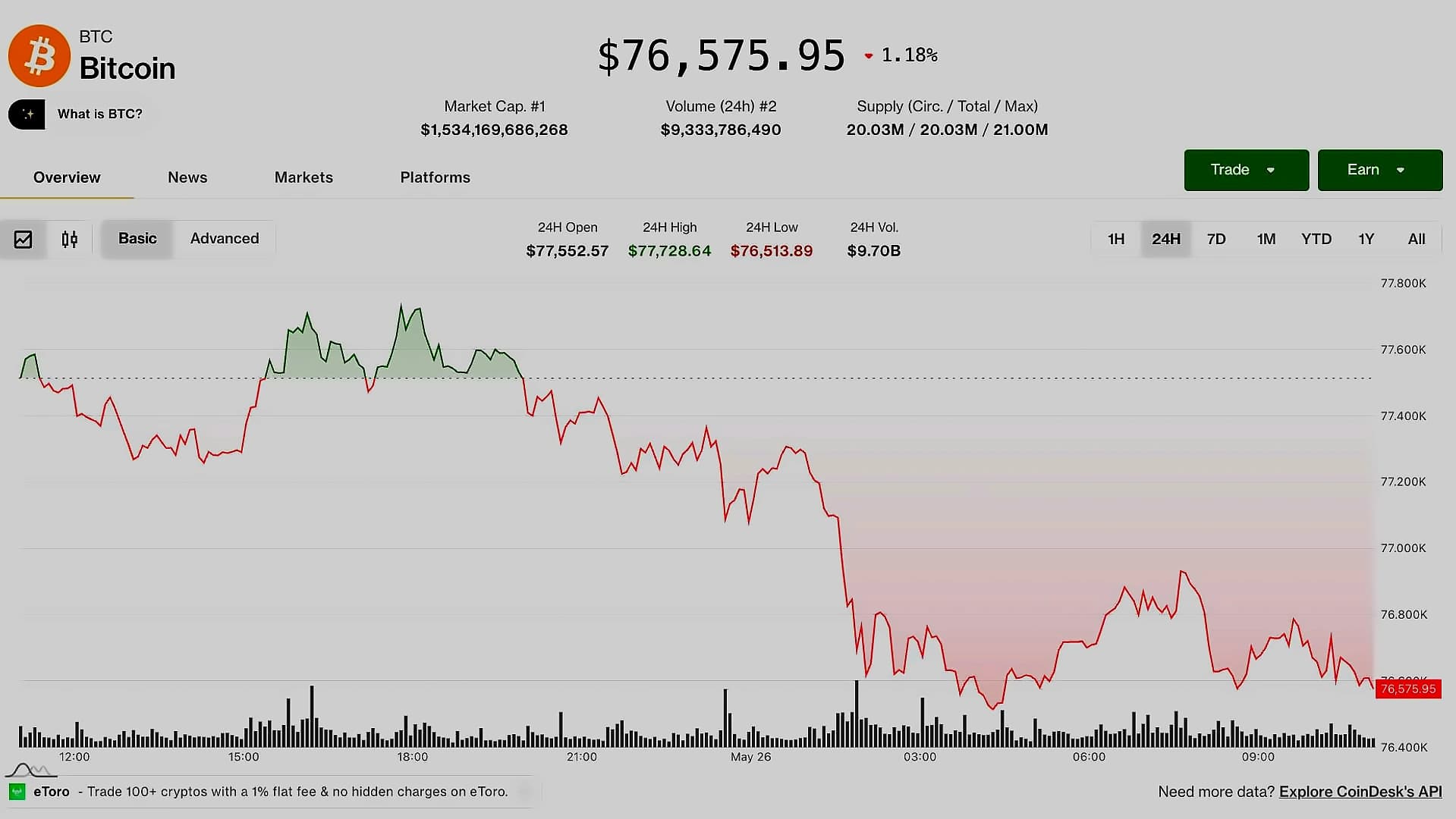
Bitcoin experienced significant volatility on Monday after President Donald Trump rejected Iran's latest response to a U.S. peace plan. According to reports from crypto.news, Bitcoin first fell from $81,430 to $80,520 within 45 minutes of Trump's post, then climbed to $82,347 less than three hours later. The rebound wiped out nearly $410 million over 24 hours, as reported by Coinglass data. Trump called the Iranian counterproposal 'TOTALLY UNACCEPTABLE' after Tehran pushed for compensation, sanctions relief, an end to the blockade, and recognition of its control over the strait. The latest data shows this volatility was accompanied by a significant short squeeze, with $64 million in short positions wiped out over four hours.
The Strait of Hormuz remains central to the market reaction, with Reuters reporting that the waterway carried one-fifth of global oil and liquefied natural gas flows before the war began on February 28. Oil prices jumped more than $4 a barrel after Trump rejected Iran's proposal, with the latest data showing oil prices up 4.6% to $98.7 per barrel. The dollar also gained for a second day in Asian trading as strong U.S. jobs data and safe-haven demand supported the currency. This mix of higher oil, a stronger dollar, and war uncertainty left Bitcoin trading in a tight but volatile range, with the broader market context showing a flight to perceived safe havens.
The volatility coincided with unprecedented institutional accumulation in Bitcoin ETFs. U.S. spot Bitcoin ETFs pulled $2.44 billion in net inflows during April, marking the strongest month of 2026. BlackRock's iShares Bitcoin Trust (IBIT) captured 70% of these flows, with a staggering $505.7 million in inflows over just two days in mid-April. The total assets under management across all U.S. spot Bitcoin ETFs now sit above $102 billion, representing roughly 6.5% of Bitcoin's entire market capitalization. This institutional buying creates a direct supply shock, absorbing multiples of what miners produce at the current 3.125 BTC block reward.
Analysts are now watching whether Bitcoin can turn $80,000 into support, with Crypto Tony posting that there was a 79% chance Bitcoin could hit $85,000 this month. CoinsProbe said a channel breakout placed the $85,000 target in play. The downside level remains clear, with several traders watching $78,000 as the first major support if Bitcoin fails to hold the $80,000 area. A confirmed move above $82,450 could support another attempt toward $85,000, but a fresh breakdown in U.S.-Iran talks may keep BTC exposed to fast reversals. The price surge is being underpinned by a powerful, structural flow that suggests institutional interest was already present before the geopolitical whipsaw.

Prediction markets now price a 38% chance of Bitcoin hitting $100,000 by December 31, representing a significant shift from deep skepticism just weeks ago when the market for Bitcoin reaching $94,000 by May 3 showed only 0.1% YES. The bullish thesis faces a critical liquidity test, with the key watchpoints being whether the ETF inflow streak continues and Bitcoin defends the $80,000 psychological level. The record institutional buying has created a deep, persistent floor for the price, but sustained accumulation is essential for further price appreciation. Any sign of a stall in ETF subscriptions or failure to hold key technical levels would challenge the bullish setup and likely cool the speculative bets priced into prediction markets.