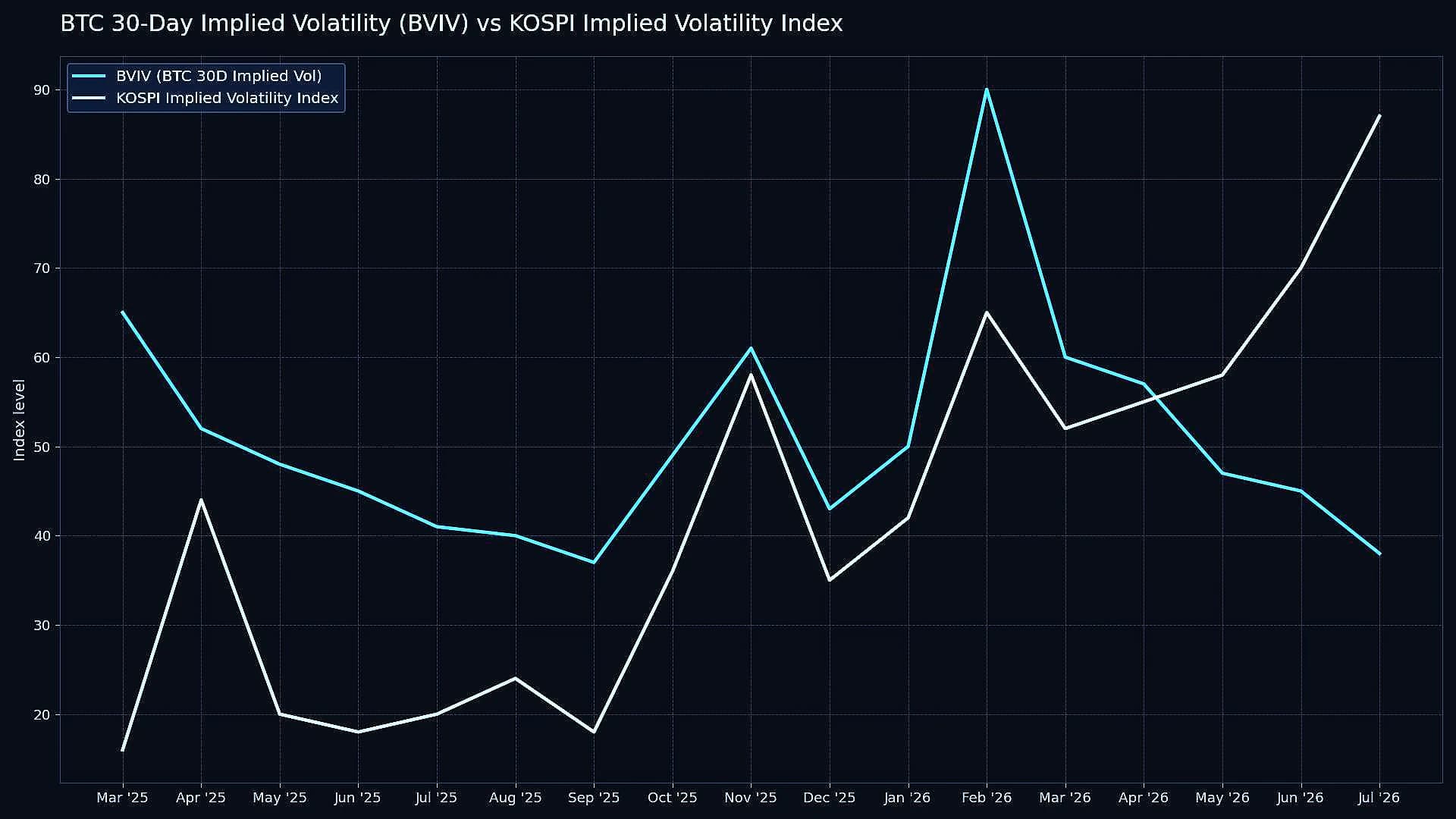
**Bitcoin's volatility has compressed to its lowest levels in two years, with the Bollinger Bands width measuring just 3.8% - some of the tightest readings the metric has shown in two years. According to crypto analyst Axel Adler Jr, this sharp volatility compression is a warning of strong band compression, suggesting that a similarly violent volatility expansion tends to follow. The BVIV volatility index has crashed to 35.59% over the weekend, marking the lowest level since September and representing a dramatic decline from 90% in early February when Bitcoin tumbled from $90,000 to nearly $60,000. This metric, known as a 'fear index' because options activity reflects demand for protection against price moves, has fallen to multi-month lows amid weak demand for directional bets and heavy option selling.
A wallet tied to Paxos offloaded another 800 BTC (roughly $50.72M) through Wintermute, according to on-chain tracker Lookonchain, marking the same entity that's now sold 2,500 BTC over two months, close to $154M total. This continued whale distribution comes as Bitcoin trades near $63,500, down around -0.6% on the day, still unable to clear the $65,000 ceiling that's capped every rally attempt this month. Analyst Ted Pillows flagged that BTC couldn't hold above $65,000 even as stocks and metals climbed, calling momentum 'fading' and pointing to $60,500–$61,000 as the next likely test zone. The grinding, steady sell pressure rarely triggers a crash on its own, but paired with thinning spot volume and a market waiting on the next CPI print for Fed-rate-cut clues, it creates a setup that punishes complacent longs.
Bitcoin is trading around $63,500 with a -0.6% decline in 24 hours, still boxed inside the $62,000–$66,000 range that's held since the July CPI release. According to latest analysis, this $67,073 area represents the single most important line on the daily chart - it capped the bounce in mid-June after the crash, rejected Bitcoin again in early August, and now sits directly above current price levels. A clean break and hold above $67,073 opens the door to $74,000, with the $74,000 area being where the June sell-off began and marking the origin of the large breakdown candle that took Bitcoin out of the low $70,000s. However, the 200 EMA sits at $72,339 and is still sloping down, creating the $72,000 to $74,000 band as the real test of whether this represents a genuine trend change or another lower high. The $65k-$67k zone represents a key supply zone, and Bitcoin's inability to climb past this barrier hinted at bearish control in the market.
CoinLore pegs immediate support at $62,238 and resistance at $65,059, with a 24-hour expected range of $62,388–$64,832, a tight band that mirrors the record-low volatility traders keep pointing to. The bull case scenario involves a reclaim above $65,059 that flips sentiment and opens a run back toward the low $70,000s, while the base case sees Bitcoin keeping chopping inside the range while whale supply gets absorbed. However, the bear case involves a break below $62,238 support that confirms Pillows' thesis and sends price toward $60,500–$61,000, a zone option markets are already pricing in as a live scenario. A market stuck between $62,000 and $66,000 for weeks isn't generating conviction, with steady whale distribution pushing some capital toward earlier-stage plays where entry prices haven't already priced in years of adoption.
US-listed spot Bitcoin ETFs have attracted approximately $754.7 million this week, putting the products on pace for their strongest weekly inflow since April, according to SoSoValue data. This recovery follows a prolonged period of uneven demand as Bitcoin struggled to regain momentum through the summer. However, the turnaround in spot ETF flows was another warning sign for market participants. The positive Exchange Netflow, despite whale activity, raised potential selling pressure, creating a mixed outlook for the cryptocurrency's near-term performance. The current inflows are particularly important as they show that Bitcoin's largest institutional demand channels continued drawing capital through a security scare that might otherwise have weakened appetite for the asset. The compressed volatility could make Bitcoin's price action more interesting in the coming weeks, with the direction of the next volatility expansion likely to settle the cycle bottom debate.
Despite Bitcoin's volatility crashing to multi-month lows, downside protection remains expensive with put options still trading at a premium to calls, signaling persistent concern about further price weakness. According to FalconX derivatives head Griffin Sears, this 'put skew remains elevated' despite the weaker overall BVIV, indicating that while traders don't expect massive swings, they remain wary of potential deepening bear market conditions. The current market structure reflects 'systematic overwriting programs' where growing numbers of market participants, including bitcoin miners and corporate treasuries, are utilizing systematic overwriting strategies to write call options and generate yield on their spot BTC holdings. This systematic selling of options effectively suppresses volatility by flooding the market with options supply, creating the current imbalance between weak demand and elevated supply. While sophisticated traders are pivoting to betting on when, rather than if, Bitcoin will move, the overall market sentiment remains cautious with volatility-focused participants finding relative value in Bitcoin's steep term structure.