Bitcoin has demonstrated resilience by holding above the critical $84,000 support level, trading at $84,580 according to The Economic Times data, after briefly moving above $85,600 following softer US inflation data that eased concerns about another US Federal Reserve rate hike. The cryptocurrency fell 1.6% over the past 24 hours but remains above the $82,700 24-hour low, with experts noting that Bitcoin's ability to hold key support levels points to underlying demand. As per Giottus CEO Vikram Subburaj, Bitcoin is trading around $83,461 in a constructive but consolidating daily pattern, though it remains below the $87,000 area reached earlier this month. The market is balancing strong institutional demand with a more challenging macro backdrop, with experts advising investors to avoid chasing short-term rallies and watch the 82,000-83,000 zone closely for support.
Bitcoin is on track for a third straight monthly gain, marking a significant break from historical patterns. The cryptocurrency has gained approximately 7% in September following a 25% surge in August, putting it on track for its first positive quarter since Q3 2025. According to CoinGlass data, since 2013, every previous positive August has been followed by a negative September, making this potential breakthrough particularly noteworthy. With just two calendar days remaining in September, a positive close would represent the first time Bitcoin has followed a positive August with a positive September since 2013. The fourth quarter historically represents Bitcoin's strongest period, with average gains of roughly 77% according to CoinGlass data, though upcoming events including the Anthropic IPO in November and US midterm elections could introduce additional volatility.
The current market weakness is being driven by rising US Treasury yields, with the 10-year Treasury yield reaching 5.27%, its highest print since 2007, dragging risk assets lower. The 30-year Treasury yield moved near highs not recorded since the early 2000s, providing a difficult backdrop as the Federal Reserve raised its target range by 25 basis points on September 16 to 3.75%-4.00%, citing elevated inflation and resilient economic activity. However, recent developments show New York Fed President struck a notably dovish tone, pushing October rate-hike odds below 50% from around 70% a week ago, according to Mudrex Head of Business Prateek Gupta. Traders are now pricing roughly a 70% probability of another Fed hike in October, making risk assets less attractive as safer options start paying more. The US 10-year Treasury yield climbing to its highest level since 2007 is providing a difficult backdrop, with rate-hike expectations climbing alongside Brent crude near $100 per barrel, keeping the Dollar Index firm.
Institutional flows have offered a mixed picture for Bitcoin markets, with US spot Bitcoin ETFs seeing net outflows of $125.6 million in daily terms, according to The Economic Times data, ending a nine-day inflows streak that pulled in $3.08 billion. However, Giottus CEO Vikram Subburaj noted that US spot Bitcoin ETFs saw strong inflows through September, helping support the recovery, even as spot demand has moderated more recently. The Bitfinex Absorption-to-Emission Ratio (BAER) has compressed from 25.6x on September 21 to 1.8x on September 29, indicating reduced ETF demand. Analysts note that absorbing the 1.39M BTC breakeven supply (which sits between $84,000 and $86,500) requires the BAER to recover toward 5.0x (~$190 million/day). Despite the ETF outflows, WazirX Founder Nischal Shetty noted that Bitcoin remained near $83,461 and Ether gained 0.17% to around $2,689, indicating that institutional flows did not directly determine price direction. According to The Economic Times, crypto ETFs recorded approximately $1.9 billion in overall net inflows, with positive flows outweighing an outflow of around $200 million on September 30, showing strong institutional interest despite late reversals.
Bitcoin is consolidating in a tight band after briefly tagging $84,200 on September 28, with profit-taking and muted ETF demand capping the bounce. Immediate support sits at $83,000-$83,300, with a clean break below opening the door to the $82,620 Fibonacci level, and further down, analysts have flagged $80,000 and $77,000 as structurally important floors. Resistance clusters at $85,500-$86,000, reinforced by the spot-ETF cohort's average cost basis near $84,700. WazirX Founder Nischal Shetty notes that Bitcoin trades near $83,461 in a constructive but consolidating daily pattern, with immediate support around $83,200-$83,400 and resistance at $84,200-$84,500. A breakdown would weaken the setup and shift attention toward secondary support around $81,900-$82,100 if selling pressure expands further. The reported 24-hour range was $82,735-$84,527, with a post-release break below $82,735 being an early sign of meaningful downside pressure. Technical indicators show the RSI at 62.14, above neutral but below overbought levels, while the MACD presents a bearish crossover with both lines remaining above zero but showing weakening momentum. Delta Exchange Research Analyst Riya Sehgal notes that Bitcoin's rejection from the 86,000-87,200 supply zone has brought the price back near $84,500, with leverage remaining an important source of near-term volatility alongside Treasury yields.

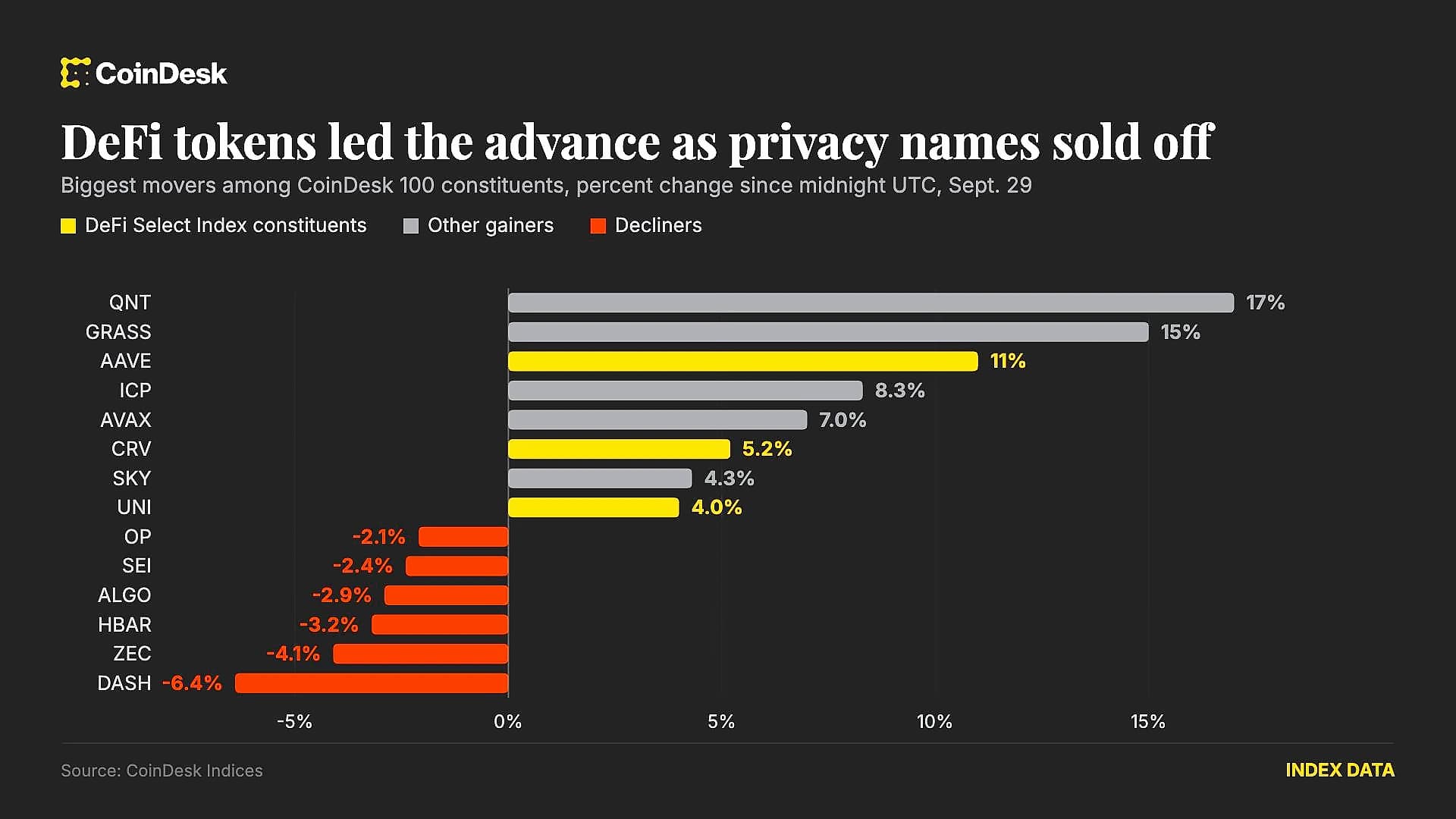
The leverage risk in Bitcoin markets has become increasingly mechanical as the distance between entry and forced liquidation narrows with rising leverage. Rough long-position estimates show how quickly the buffer narrows as leverage rises, with 1:2 leverage at $41,700, 1:10 at $75,000, 1:20 at $79,200, and 1:50 at $81,700. At 50x leverage, the estimated liquidation level sits within the ordinary daily trading range, meaning a sharp reaction could force closures even without a large, sustained move. Delta Exchange Research Analyst Riya Sehgal notes that crypto markets saw a sharp macro-driven whipsaw after September U.S. nonfarm payrolls rose by just 29,000 versus 90,000 expected, while unemployment increased to 4.2% from 4.1%. WazirX Founder Nischal Shetty emphasizes that the crypto market remained steady this week, despite changes in interest-rate expectations, Treasury yields, commodities, and global equities. The global crypto market capitalization stood near $2.87 trillion as of latest data, with market sentiment remaining in the greed zone according to the Crypto Fear and Greed Index. Over the last week, Bitcoin was up 0.8% whereas Ethereum was down 0.2%, with major altcoins like BNB, XRP, Solana, Tron, Dogecoin, Hyperliquid and Cardano correcting up to 4.6%.