According to latest analysis, Bitcoin's realistic peak for this cycle is expected between $135,000 and $150,000, representing a more conservative approach than previous seven-figure predictions. The 2024 halving played out differently from previous cycles, with the initial peak hitting in October 2025 at $126,000 before the current correction began. As reported by CoinDesk, the Spot Bitcoin ETF issuers currently hold roughly $104 billion in assets under management across the United States, with institutional demand now permanently pulling coins off exchanges. The 2021 cycle showed Bitcoin can hit a second high months after the first major top, especially when institutional demand absorbs remaining float, making the current institutional era fundamentally different from previous retail-driven cycles.
Bitcoin is trading at $77.5k as the third week of May draws to a close, recovering quietly from the $75k–$76k support zone after last week's failed breakout attempt above $80k. According to CryptoPotato analysis, the bounce from the $75k–$76k support zone has lifted the 4-hour RSI from the low-to-mid 30s back to approximately 50, with the asset now tracking toward the bearish Fair Value Gap marked near $80k. This represents a price imbalance left by the sharp sell-off from the $82k highs, which the underlying asset typically returns to fill before resolving direction. A clean move through the FVG would signal that the pullback is fully absorbed and the next push toward the $82k supply zone is building, while failure to trade through the FVG and a rollover back below $75k would suggest selling pressure from the failed breakout is not yet exhausted.
The Net Unrealized Profit/Loss has recovered from its February low of approximately 0.12, which was the deepest reading since October 2023 and briefly demonstrated a capitulation period, now rising back to the current reading of 0.29. As per CryptoPotato analysis, this puts the market above the green zone, with the average BTC holder sitting on moderate unrealized gains but the kind of euphoria that precedes major tops is nowhere in sight. The historical parallel is precise, as NUPL crossed 0.29 in late 2023 near $40k on its way to the bull market peak, with the journey from that level to the 0.50 threshold corresponding to a price move from roughly $40k to $80k. At $77.5k with NUPL at 0.29, the on-chain sentiment structure suggests the market is in a similar position, likely past capitulation and rebuilding confidence with the majority of the cycle's unrealized gains still ahead rather than behind.
According to Deribit's Chief Commercial Officer Jean-David Péquignot, the $76,000 to $77,000 price zone is the immediate critical support level for bitcoin. "A clean breakdown here brings $70,000 to $72,000 into view; the next major level below that is the $60,000 level," he told CoinDesk. The 100-day moving average is now sloping upward to approximately $72k and is converging with the same support zone, likely creating a strengthening combined support floor that rises a little further every week. A recovery back above $80k and a breakout above the 200-day moving average nearby are the immediate requirements to restore bullish momentum, with the $88k–$90k band as the structural target above. The old ways of trading the cycle no longer apply as Wall Street now dictates daily momentum, with institutional funds comfortable holding through deep volatility.
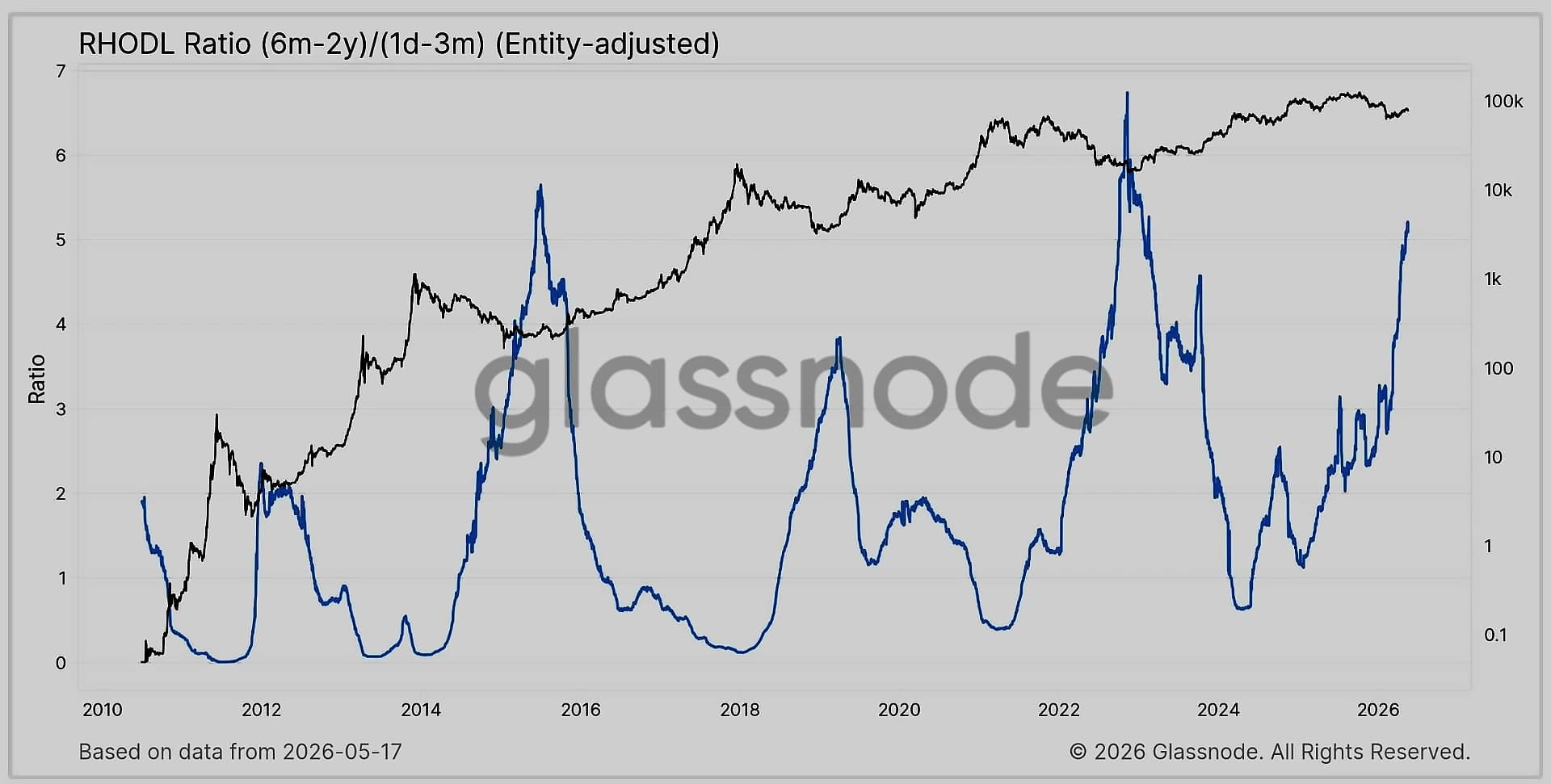
As reported by CoinDesk, the RHODL Ratio, which compares wealth held by longer-term holders (six months to two years) with newer market participants (one day to three months), is now above 5, its third-highest reading on record. The only higher readings occurred during the 2015 and 2022 cycle bottoms, indicating that long-term holders continue to dominate supply. Since February, long-term holder supply has increased by over 400,000 BTC, demonstrating continued accumulation during the market downturn. According to K33 research, institutional investors cut Bitcoin exposure by 26,733 BTC in the first quarter, while retail investors added 19,395 BTC, showing a cautious approach to market positioning amid current volatility. The 2024 halving played out the way most expected, with retail excitement and institutional capital pushing Bitcoin to $126,000 in October 2025 before the current correction.