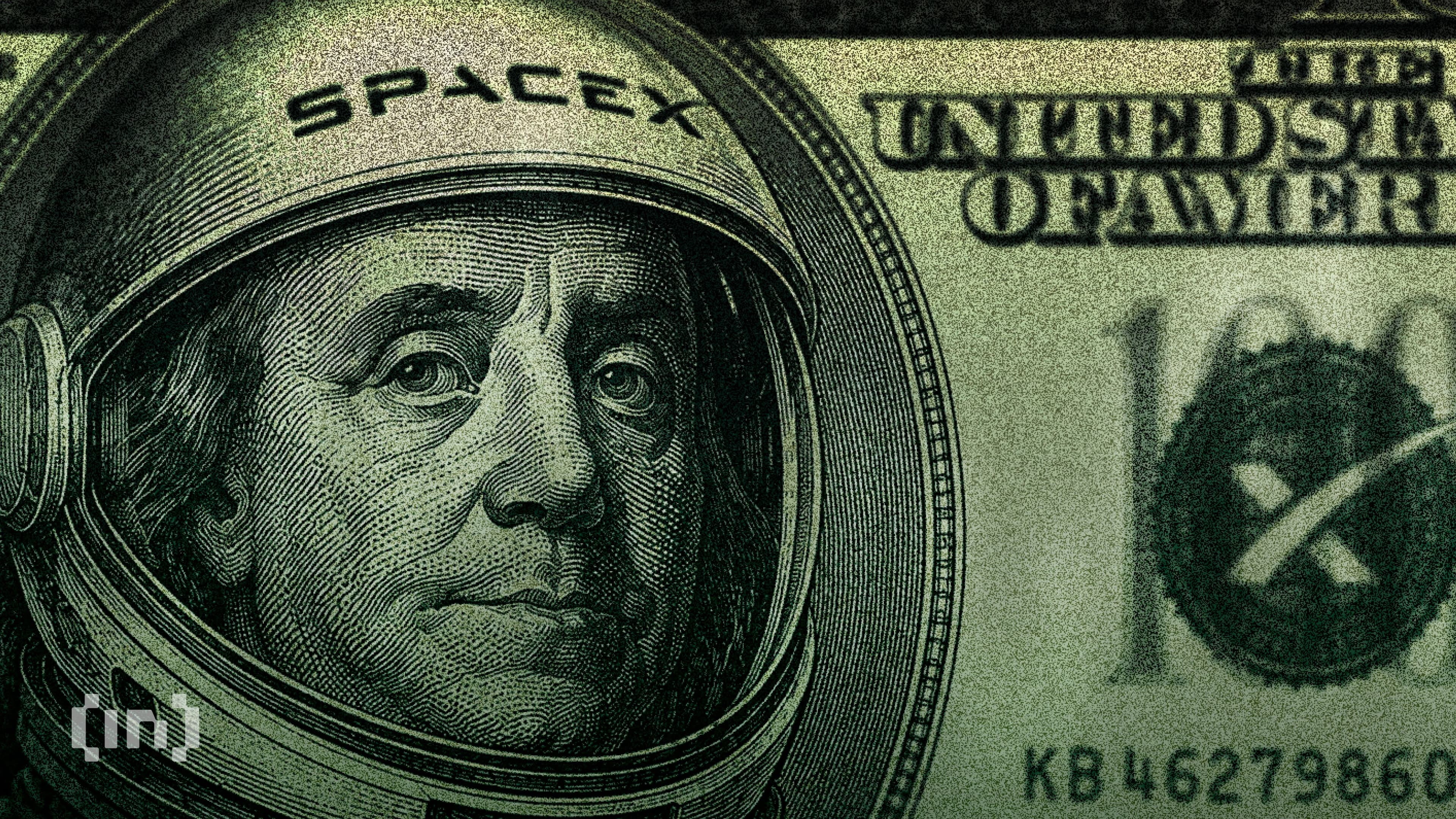
SpaceX's $75 billion IPO has attracted over $250 billion in orders, nearly four times the amount it aims to raise, raising concerns about potential capital rotation from cryptocurrency markets. The IPO is expected to price Thursday at about $135 per share, with retail investors potentially receiving up to 30% of the offering - far above normal IPO allocations. The scale of demand has renewed questions about whether the June 12 listing will pull capital from crypto markets, as early indicators show crypto losing about $250 billion during the June selloff and Bitcoin briefly falling below $62,000. The timing supports claims that some investors are rotating toward major technology listings, with South Korean investors reportedly generating about $1.5 billion in dollar purchases linked to the IPO, adding pressure to the won before those orders cleared.
Bitcoin is experiencing its worst performance for this point in the year in at least a decade, with prices tumbling around 15% this week and losing a third of its value so far in 2026. According to LSEG data, bitcoin has fallen to around $63,000, representing its most significant decline since November 2022 when trading platform FTX imploded. The cryptocurrency is now 40% lower than where it was when U.S. President Donald Trump took office in January 2025, having vowed to make the U.S. the crypto capital of the world. This decline coincides with the $2.7 billion in net outflows from bitcoin ETFs in the week to Thursday, bringing total 2026 outflows to $3.1 billion. Market commentator Bull Theory noted that "that combined selling is what you are seeing right now," with geopolitical tension, weaker rate-cut hopes and leveraged liquidations also weighing on Bitcoin and altcoins.
SpaceX has confirmed it accepted Dogecoin as payment for the DOGE-1 lunar mission, marking a significant milestone as the first cryptocurrency in space. According to Geometric Energy Corporation, SpaceX VP of Commercial Sales Tom Ochinero framed the mission as setting "the foundation for interplanetary commerce." The financial value of the contract was not disclosed, but the mission represents a historic moment for cryptocurrency adoption in space exploration. This development comes as Dogecoin trades in a tight corridor between $0.080-$0.085, with selling pressure emerging following Musk's payment confirmation. The mission has sparked renewed interest in Dogecoin, though historical data shows immediate surges of 2% typically reverse once retail buying exhausts.
Aside from the potential for capital rotation, SpaceX's shares have already fueled significant trading activity across crypto markets even before the stock begins trading publicly. According to Talos, SpaceX perpetuals are trading at about $155, above the $135 IPO price, generating more than $385 million in open interest and $2.7 billion in cumulative volume across exchanges including Hyperliquid, Binance and OKX. The company noted that "crypto-native markets are enabling around-the-clock trading and transparent valuation signals ahead of major public listings." Additionally, Bitget's tokenized SpaceX IPO subscription was oversubscribed, growing from an initial $3 million allocation to $13 million as demand surged. This crypto-native trading activity suggests meaningful demand for tokenized exposure to high-profile companies, with Kraken, Bybit, Binance, and Robinhood also offering access to SpaceX IPO shares on their platforms.

Bitcoin's market dominance has declined significantly, with the cryptocurrency now accounting for 56% of the crypto market compared to 63% a year ago, according to CoinGecko data. The rise of stablecoins has been particularly damaging, with their market share increasing to almost 13% versus roughly 7% a year ago. Even on a daily basis, volume in top stablecoin tether exceeds that of bitcoin and ether combined, while USDC volume equals the next 10 coins combined. The AI-driven stock surge has further diverted capital, with U.S. semiconductor stocks surging 170% in the last year while bitcoin has lost 40%. The four largest semiconductor ETFs have attracted over $21 billion in the year to date, highlighting the scale of capital rotation away from cryptocurrency.