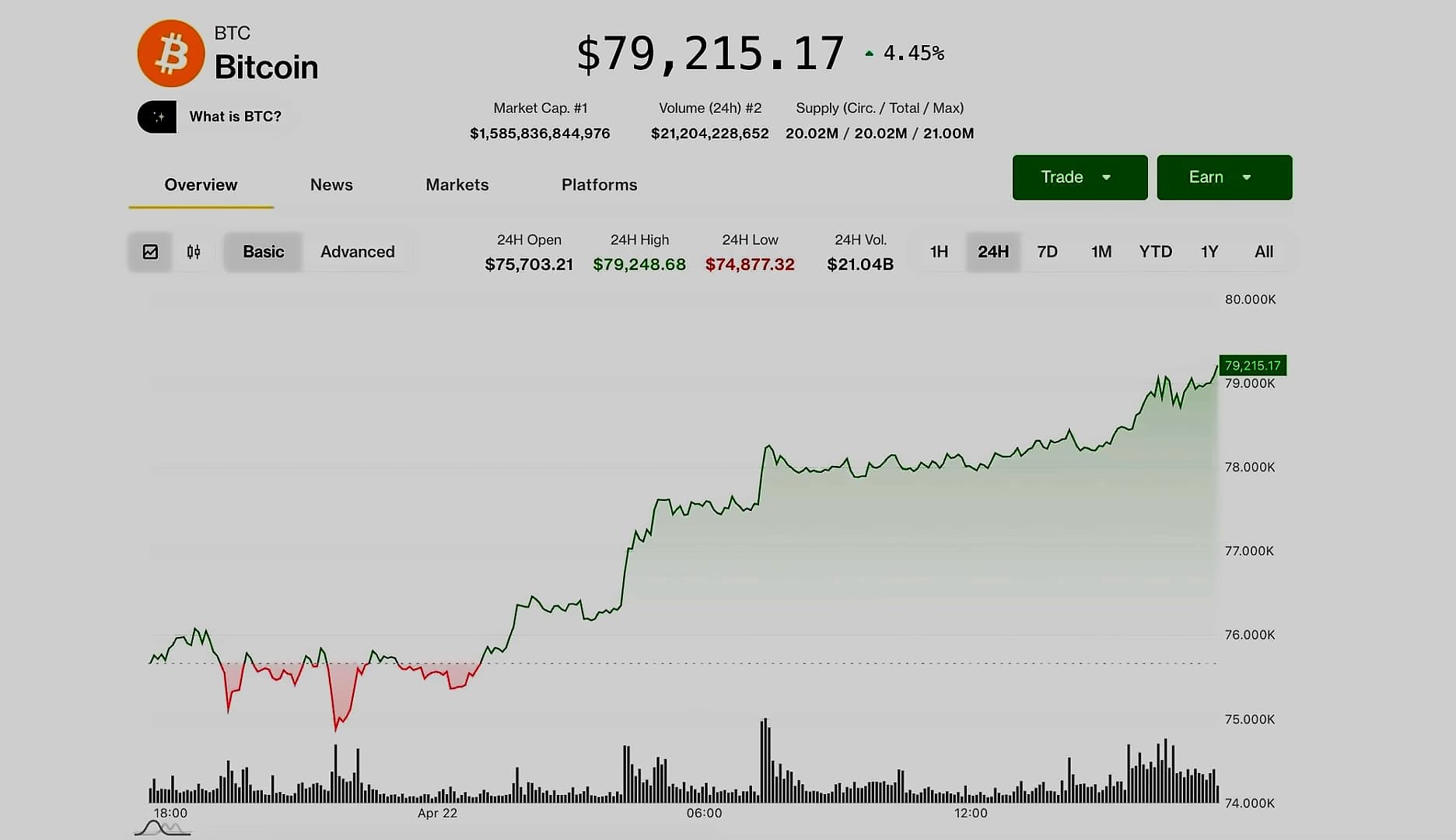
Bitcoin opened at $74,335, down 1.6% over 24 hours, demonstrating significantly better resilience than traditional assets during the latest Iran escalation. According to Yahoo Finance, Bitcoin absorbed the weekend's Iran escalation significantly better than oil, which surged over 5%, and European equities, which fell over 1%. This represents the smallest BTC drawdown relative to oil of the entire Hormuz crisis, with the cryptocurrency showing remarkable strength compared to previous conflict responses. When Iran first closed the Strait of Hormuz at the end of February, Bitcoin dropped into the low $60,000s alongside every other risk asset. The same event replaying now, nearly 50 days into the conflict, produces a fraction of that drawdown, reflecting the institutional demand floor that has built continuously through ETF inflows since January 2024.
The latest Bitcoin spot ETFs attracted nearly $597 million in inflows over two days on ceasefire hopes, according to SoSoValue data. That demand did not evaporate when the ceasefire began unraveling Saturday. Strategy added 34,164 bitcoin for $2.54 billion, its third-largest single purchase on record, demonstrating continued institutional confidence despite geopolitical uncertainties. The combination of sustained ETF buying and corporate accumulation means Iran headline selling is absorbed before it reaches significant depth in spot markets. The Crypto Fear and Greed Index rose to 29, its highest reading since late January, even as Iran's IRGC threatened retaliation for the Touska seizure. Bitcoin's key support sits between $73,000 and $74,000, where ETF inflows accelerated last week and where institutional buyers are expected to defend spot prices if selling resumes.
The catalyst for the latest crypto sell-off was the Strait of Hormuz being fully closed for the first time in history, according to Kabar Bursa. This critical waterway, which handles roughly 20% of global oil trade, was shut down completely, sending shockwaves across financial markets. Thirteen oil tankers reportedly reversed course the day before the official closure announcement, immediately pushing oil prices higher and amplifying inflation concerns worldwide. The closure represents a significant escalation from Iran's previous partial closures, with the Strait of Hormuz previously being closed in early 2026, when Bitcoin fell from above $100,000. Recent developments show the Navy of the Islamic Revolutionary Guard Corps (IRGC) announced the closure on the evening of April 18 local time, citing the continued U.S. blockade of Iranian vessels and ports in violation of previous ceasefire agreements.
Ethereum traded near $2,310, down less than 1% over 24 hours, holding the level it reclaimed after the April 8 ceasefire announcement. According to CoinDesk, Ethereum at $2,310 is holding above the $2,200 level it reclaimed on the April 8 ceasefire announcement, though it sits below the $2,440 peak briefly reached Friday when Hormuz was declared open. The $130 gap between Friday's high and Monday's price represents the ceasefire premium that has since unwound. The $2,310 level represents a significant psychological support zone that has held despite recent volatility. Ethereum is holding well above its post-Islamabad lows near $70,600, supported by nearly $1 billion in ETF inflows recorded last week. The $2,200 level represents a critical support zone that traders are closely watching for potential breakdown if selling pressure intensifies.
Bitcoin's potential to break $80,000 hinges on upcoming negotiations on Tuesday, April 22, according to TradingKey, with the cryptocurrency failing to breach the $80,000 psychological barrier despite surging past $78,000 last Friday. If the second round of US-Iran negotiations succeeds, Bitcoin is expected to swiftly break the $80,000 mark, driven by 'risk-on' sentiment and short-term short covering'. However, if negotiations collapse, it could trigger an escalation of the conflict and eliminate prospects for future talks, potentially sending Bitcoin back down to $65,000. U.S. officials have revealed that Vice President Vance will lead a negotiating team to Islamabad, hoping to hold a new round of talks with Iran before the ceasefire expires on Tuesday night to reach an agreement or extend the truce. The April 22 ceasefire expiry is now two days away with no Iranian delegation confirmed for the Pakistan talks, creating a crucial 24-hour window that will determine Bitcoin's near-term direction. The Fear & Greed Index currently sits at Extreme Fear at 21, signaling intense selling pressure across the crypto market as traders remain cautious amid the ongoing geopolitical uncertainty.