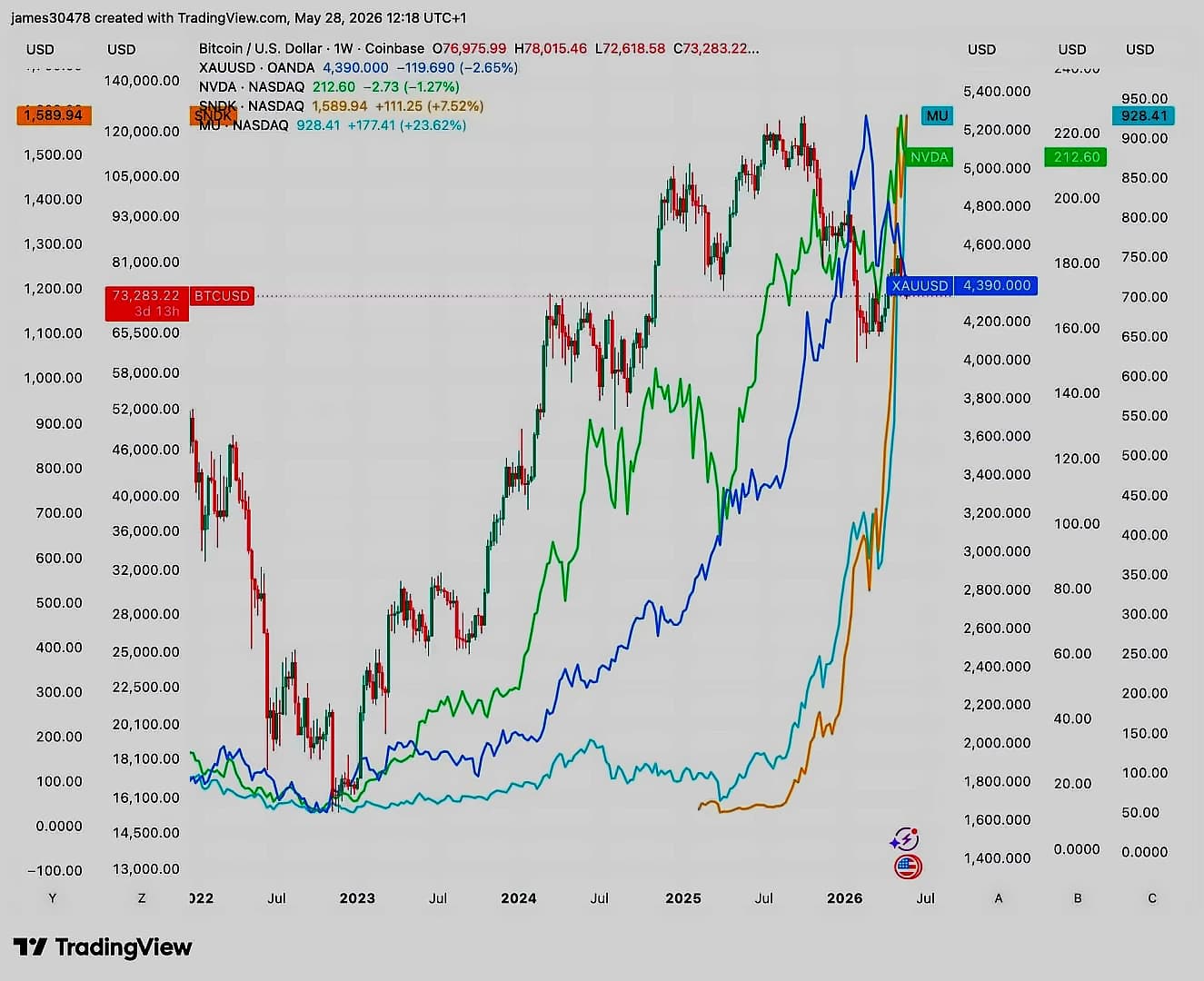
Bitcoin has surged to $80,393, breaking above the critical $80,000 psychological barrier that had previously proven challenging to break. The cryptocurrency is now consolidating around this new higher level, with the latest surge driven by the massive build-out of artificial intelligence infrastructure. According to latest reports, the cryptocurrency has a market cap of approximately $1.57 trillion with a 24-hour trading volume of $21 billion. The asset had previously reached a three-month high of $80,393 in January, marking its highest level since January 31, but has since retreated from that peak. Other tokens including Ether also participated in the rally, indicating broad-based cryptocurrency strength as AI demand continues to shield Asian tech hubs from geopolitical uncertainties.
Strategy, the world's largest public holder of Bitcoin with 818,334 BTC bought at an average price of $77,906, announced this week it would stop buying ahead of its Q1 earnings report expected Tuesday. As reported by Arslan Butt, Executive Chairman Michael Saylor stated on X, "No buys this week," marking an unusual pause in the company's aggressive buying plan. Wall Street anticipates Strategy to report a loss of $18.98 per share and $4.72 billion in revenue for the quarter, compared with a loss of $16.49 per share and $3.57 billion in revenue in the same time last year. The corporation is also feeling pressure on its STRC preferred security, which has an 11.5% dividend yield.
The primary engine behind this year's surge has been the massive build-out of artificial intelligence infrastructure, with key suppliers based in South Korea and Taiwan seeing their valuations soar. South Korea's Kospi benchmark has climbed 57% in 2026, while Taiwan's Taiex is up 34%. Industry heavyweights like Samsung and Taiwan Semiconductor Manufacturing Co. (TSMC) have recorded double-digit gains, with Samsung alone posting an 84% climb so far this year. The tech gains have helped those specific markets offset the impact of higher energy prices, particularly notable for nations like South Korea, which imports roughly 70% of its crude oil from the Middle East. The rally came as MSCI's Asian equities gauge neared an all-time high set in February, just before the US-Israel war on Iran began, after stronger-than-expected corporate earnings from technology companies last week kept the sector buoyant.
Outside of Asia, investors are increasingly favoring oil-exporting nations that maintain low dependence on Middle Eastern energy supplies. Brazil has emerged as a standout performer, with its Bovespa index adding 16% this year after becoming a net oil exporter in 2017. Brazil is projected to reach a production capacity of 4.76 million barrels of crude a day by 2030, representing the fastest production growth on the continent. This insulation from energy shocks has allowed Brazil's materials and financial sectors to return substantial cash to investors via dividends. Consequently, the iShares MSCI Brazil ETF has nearly quadrupled in size over the last year to approximately $12 billion. Even with the recent run-up, emerging-market stocks remain fundamentally cheaper than their U.S. counterparts; the MSCI EM ETF trades at roughly 18.4 times earnings, compared to 28.9 times for the S&P 500.
Bitcoin has gradually regained ground from its February lows of approximately $60,000, driven in part by improved institutional demand. April was a good month for Bitcoin with 12% gains, thanks to institutional buying and ETF inflows. As reported by Bloomberg, US Bitcoin exchange-traded funds saw $630 million of net inflows on Friday. The token had reached a record of over $126,000 in October last year before experiencing a months-long decline that brought it down to the February lows. Despite the current consolidation, institutional buying and ETF inflows continue to contribute to Bitcoin's overall recovery, with the latest surge reflecting broader institutional confidence in AI infrastructure investments. Optimism that a US deal may be reached on a key stablecoin yield provision, potentially clearing a path for sweeping crypto legislation to move forward in the Senate, has also lifted traders' spirits, according to Richard Galvin, executive chairman at DACM.