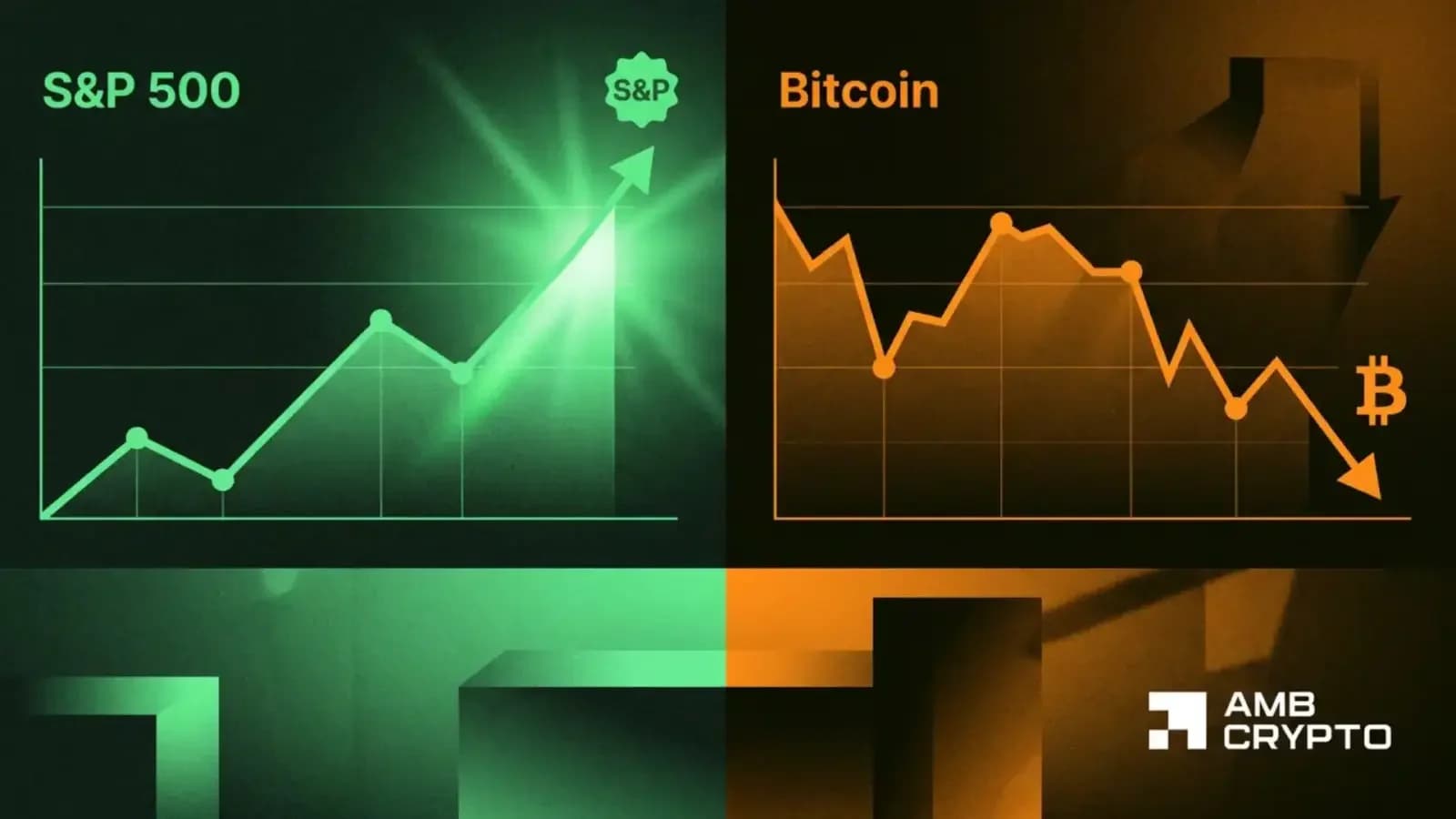
Bitcoin was trading around $72,648.22 at press time, representing a 1.46% decline in the past 24 hours and an over 16% drop year-to-date. In contrast, the S&P 500 closed at a record 7,580.06 on May 29, marking its ninth consecutive weekly gain and completing a 16% two-month advance across April and May - the fifth-strongest two-month stretch in the index's history since 1950. According to reports from AMBCrypto, this significant disparity suggests Bitcoin is functioning as a risk-off asset during periods of strong performance for traditional U.S. stocks. The S&P 500's surge to new highs during Bitcoin's brief decline further highlights this divergence in market performance, with the index closing its fifth straight winning week - the longest streak since 2024.
The S&P 500's remarkable performance is being driven by a global shortage of memory chips and the AI buildout that is creating unprecedented demand for semiconductor products. The PHLX Semiconductor Index closed May 29 at 12,829.4, completing the strongest first 100 trading days of any year in the index's history, surpassing the previous record set in 1995 when the SOX gained 62% over the same window. Individual semiconductor stocks are experiencing extraordinary gains - Micron Technology approached the $1 trillion market capitalization mark after UBS raised its 12-month price target from $535 to $1,625, while SanDisk closed at an all-time high of $1,694.98. Intel reached a 26-year record high in May after gaining more than 225% year-to-date through mid-May, supported by a preliminary chip-making agreement with Apple and surge in demand for Xeon server CPUs in AI data centers.
Despite the recent divergence, correlation data from CryptoQuant shows a moderately positive movement between Bitcoin and the S&P 500 between January and May 2026. The short-term 30-day correlation experienced enormous volatility, falling to almost 10% before rising to roughly 48% by the end of May. However, the longer-term 90-day and 180-day correlations remained comparatively steady at 45% to 60%. As reported by AMBCrypto, this recovery and stability in longer-term metrics imply Bitcoin continues to act like a risky asset despite the brief divergence, with the 30-day correlation's recovery suggesting some normalization in the relationship between the two assets. The current market data shows Bitcoin trading 38% below its October 2025 record of $126,000, while the S&P 500 sits at all-time highs.
Bitcoin ETFs recorded $2.44 billion in net inflows in April 2026, marking Bitcoin's best monthly performance in nearly a year with a 14% gain. On May 1, spot Bitcoin ETFs absorbed $629.8 million in net inflows, with BlackRock's IBIT alone pulling in $284.4 million and every one of the 13 ETFs ending positive. This represents a sharp reversal after four straight months of outflows that began in November. According to AMBCrypto, this institutional activity suggests that despite the current market weakness, major investors are continuing to accumulate Bitcoin through ETF products. The data contradicts the narrative of big money rotating out of crypto into stocks, as the biggest buyers actually increased their Bitcoin exposure on the same day the S&P 500 reached record highs.
Despite the bearish on-chain indicators and current market data showing Bitcoin's weakness against traditional equities, analysts suggest the bigger move from current levels is likely to come from Bitcoin rather than stocks. Key catalysts include potential resolution of the Iran war that could ease inflation pressure and the CLARITY Act passing the Senate, which would set rules for crypto operations in the U.S. If both events occur before year-end, Bitcoin running back toward the $120,000–$170,000 range is well within reach. The crypto community continues to defend Bitcoin's long-term value proposition, with some noting that Bitcoin's hard supply cap through code provides structural support, unlike traditional stocks that depend on corporate earnings and buyback programs. Bitcoin's current supply dynamics show around 12% of circulating BTC in spot ETFs and public company treasuries, with the protocol limiting total coins to 21 million and approximately 1.1 million still to be mined.