The Federal Reserve delivered its first rate increase in 1,148 days, raising the benchmark range by 25 basis points to 3.75% to 4.00% in a unanimous 12-0 FOMC vote. According to reports, this marks the end of an extended easing cycle that began after the Fed's previous hike in July 2023, when rates were pushed to 5.25% to 5.5%. The Fed's previous rate increase occurred on July 26, 2023, making Wednesday's decision a significant shift in monetary policy direction. Markets had been pricing in this move, with the decision coming after years of rate cuts that had reduced the target range to 3.5% to 3.75% by July 2026. 16 of 18 Fed officials projected at least one more increase before the end of 2026, with the median implying a year-end range of 4-4.25%, unchanged at the end of 2027.
Despite absorbing a Federal Reserve rate hike and the failure of U.S. market-structure legislation, Bitcoin held near $75,000 level while broader derivatives markets faced steep liquidations. According to Bitfinex head of derivatives Jag Kooner, derivatives traders largely anticipated the Senate's failure to approve the law, with modest spot reaction reflecting a market that was already not positioned for legislative breakthrough. In the first 24 hours after the vote, crypto traders holding long futures positions saw $571 million liquidated, while U.S.-focused crypto infrastructure providers like Coinbase Global (COIN) and Circle Internet (CRCL) slid 10% in aftermath. However, Bitcoin's spot price remained resilient, with market analysts viewing the price stability as evidence of Bitcoin's fundamental independence from Washington, maintaining that global liquidity and adoption cycles remain the primary growth drivers.
The Senate's failure to advance the CLARITY Act has emerged as a major source of market uncertainty, with senators voting 49-50 on Tuesday, falling well short of the 60 votes required to move the legislation forward. The bill's failure to advance immediately weighed on crypto markets, with crypto-linked stocks such as Coinbase (NASDAQ: $COIN) and Circle (NYSE: $CRCL) coming under pressure. Polymarket's probability of the bill becoming law in 2026 fell from 31% to 7% after the vote, although Senate leaders could attempt another procedural vote. Negotiations had stalled over government ethics rules, stablecoin rewards, protections for software developers and the treatment of event contracts. The CLARITY Act aims to establish a federal framework for digital assets and clarify the regulatory roles of the Securities and Exchange Commission and Commodity Futures Trading Commission. However, analysts expect the SEC and CFTC to continue using their existing authority to set rules for the industry, with the regulatory progress beginning Thursday when the SEC issued a temporary, conditional Innovation Exemption for eligible crypto platforms.
Market experts view Bitcoin's price stability as evidence of its fundamental independence from Washington, with analysts expecting near-term range-bound trading rather than an immediate breakout. Ilya Kalchev from Nexo Dispatch identified $77,950 as the first level Bitcoin needs to clear, followed by $79,300 and $80,000, with a move above $80,000 potentially opening the way to $81,400. A fall below $75,000 would put the recovery in question, while a drop below $73,695 (the 50-day EMA) would signal a more significant correction. The regulator story favors upside, with digital-assets executives expecting the SEC and CFTC to continue using existing authority to set rules for the industry. Matt Hougan from Bitwise Asset Management remains bullish, noting that the U.S. still has two and a half more years of pro-crypto regulatory regime, during which the industry can continue moving forward.
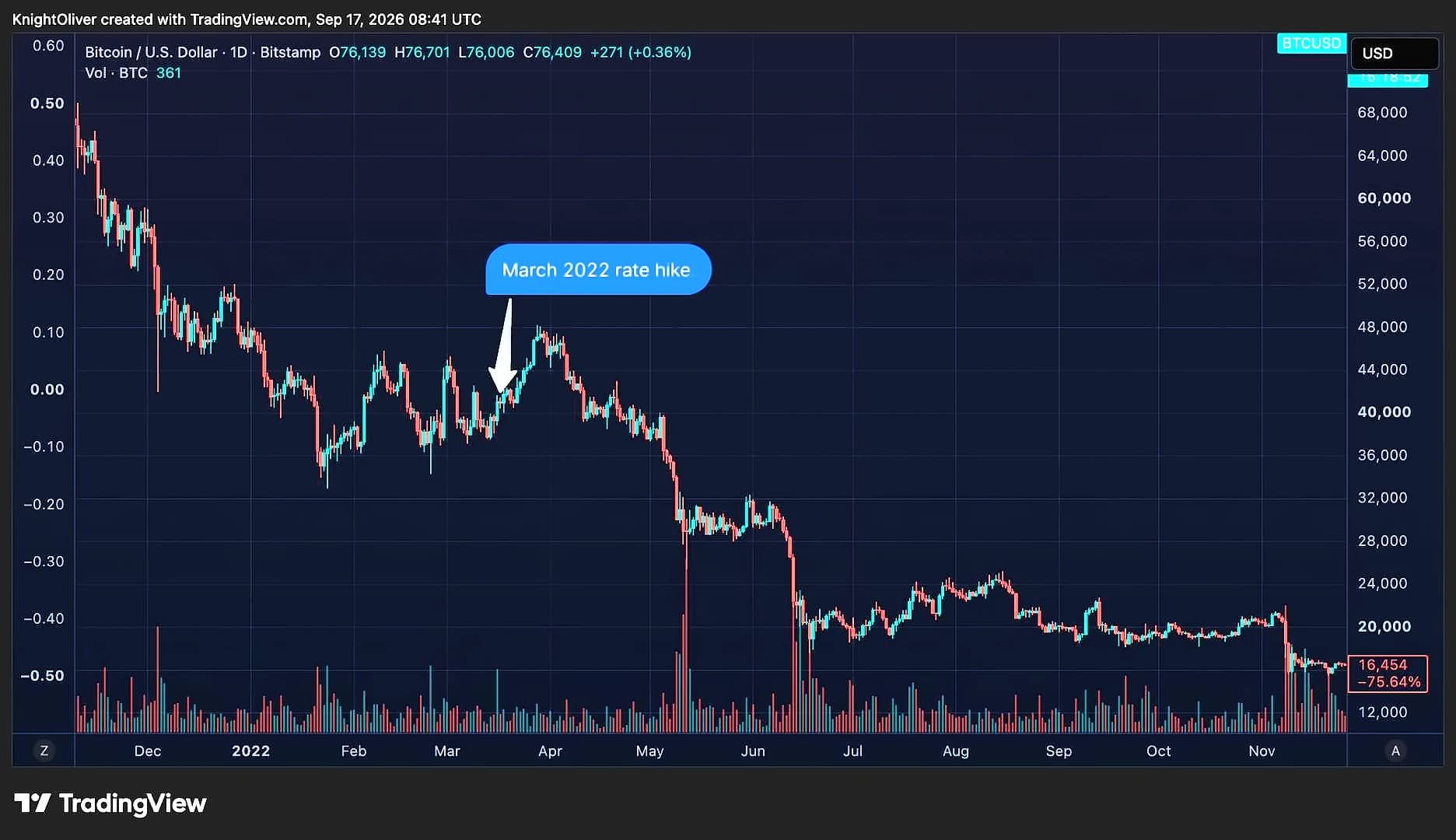
Crypto volatility is likely to remain elevated as investors weigh the Federal Reserve's monetary policy decision and the CLARITY Act's failure, with analysts identifying September jobs report on October 2 and Consumer Price Index release on October 14 as the next key tests. Vineet Budki from Sigma Capital cautioned that Bitcoin's recovery and long liquidation flush do not yet establish that the bottom is in, recommending a quarter-long wait before taking firm directional views. Market analysts note that Bitcoin is like a honey badger that does not rely on regulation, with historical data showing stronger price performance during periods of regulatory pressure than during periods of regulatory clarity. The community closely monitors regulatory developments, but for Bitcoin, the failure to pass regulation in the U.S. is not a make-or-break moment, with potential opportunities emerging from current market conditions.