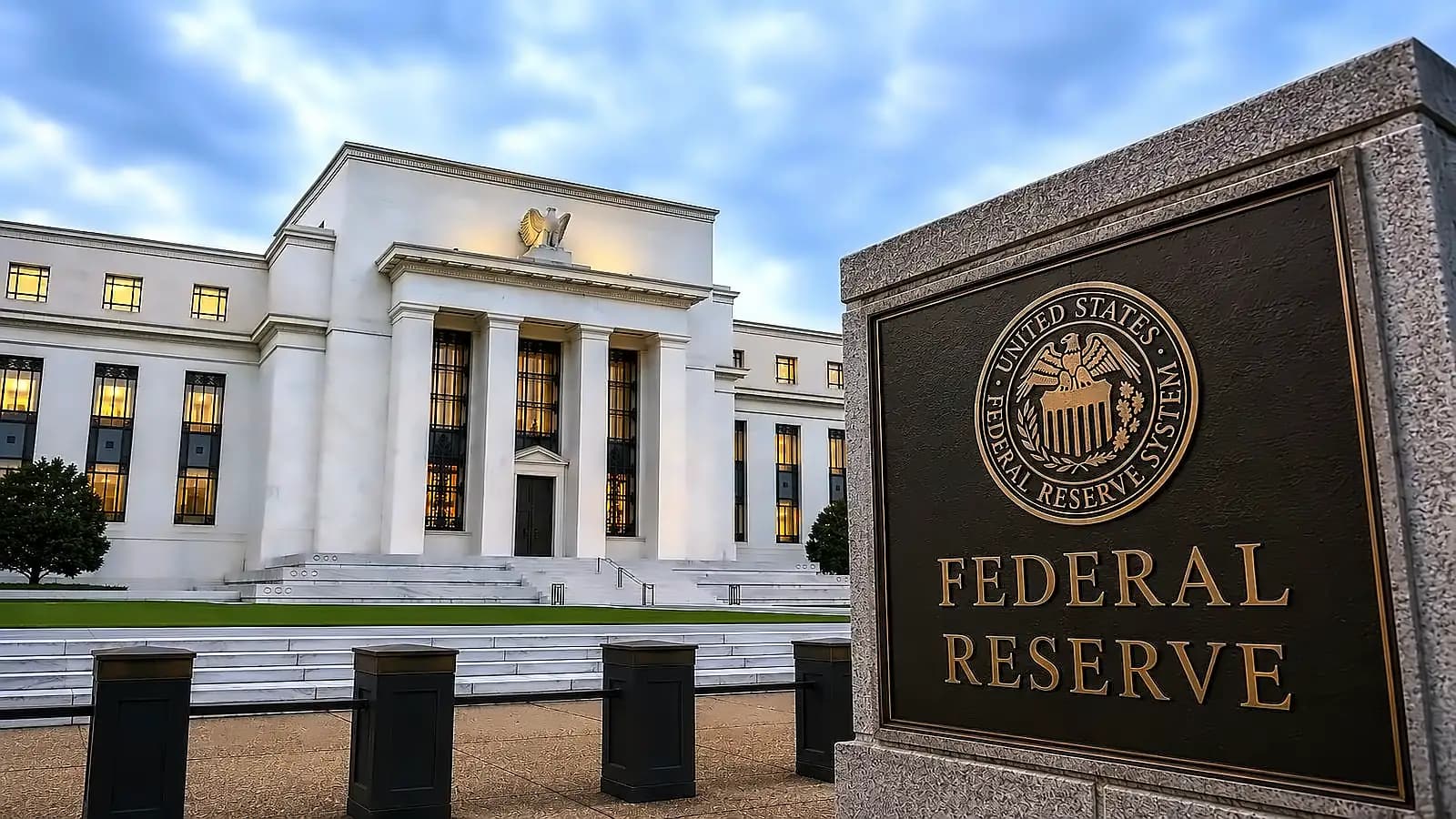
Federal Reserve Governor Christopher Waller signalled that interest rates may need to rise in the near term if inflation remains elevated, marking a significant shift from the Fed's current stance. In remarks prepared for delivery to the New York Association for Business Economics, Waller warned that broadening price pressures and a potential surge in energy costs could delay progress toward the 2% target, keeping the Fed at a critical policy crossroads. According to The Economic Times, Waller said the direction will be determined by new information starting with a consumer inflation report on Tuesday, and the Fed is at a point where it should not be "lackadaisical" if the data break in the wrong direction. "There is still a credible case for inflation to begin to fall back to our 2% goal with policy at its current setting. But I am concerned about the equally plausible case that data in the coming weeks will show that inflation will remain at its elevated level or even trend higher, requiring tighter monetary policy in the near term," Waller stated. "I don't take the inflationary signals I have discussed today lightly. If we get another hot reading on core inflation this week, then the FOMC will need to consider tightening monetary policy in the near term," he added, noting it would take "several months of lower readings to feel that inflation is moving in the right direction."
U.S. inflation accelerated further during the spring as higher tariffs, rising energy costs linked to geopolitical tensions and heavy investment in artificial intelligence added to price pressures, according to the Federal Reserve's latest monetary policy report to Congress. As reported by Reuters, the Personal Consumption Expenditures (PCE) Price Index, the Fed's preferred inflation gauge, was running at roughly twice the central bank's 2% target as of May. The findings underscore the central bank's continued struggle to bring inflation back to target despite holding interest rates steady since December. Latest economist surveys show inflation expectations have risen to 3.4% through December, above April's 3.2% estimate, with core PCE projected at 3.2%. The Fed's updated economic projections reflected growing concerns about inflation persistence, with officials raising their median forecast for 2026 PCE inflation to 3.6%, up from 2.7% in March. New rate projections released following the gathering showed nine officials foresaw at least one quarter-point hike this year, with six anticipating at least two, while nine of 19 officials penciled in at least one rate hike before the end of 2026, representing a reversal from earlier projections that showed no hikes at all.
Fed staff raised inflation forecasts for 2026 and 2027, citing tariff pass-through, Middle East supply shocks, and surging AI infrastructure investment. According to The Economic Times, the immediate surge in demand for electricity, advanced semiconductors and other inputs required for AI expansion has added to price pressures before productivity gains have fully materialised. Core inflation ran at 3.3% in April and was estimated near 3.4% in May, well above the Fed's 2% target. Real consumer spending had been solid, and the AI buildout continued to boost real investment spending on data centres, high-tech equipment, and software, as noted in the minutes. Data for April showed continued strength in both imports and exports of high-tech goods and a jump in energy exports. While Warsh has argued that AI should ultimately improve productivity and help reduce inflation over time, the report acknowledged that the immediate surge in demand for AI-related inputs has created near-term inflationary pressures. The committee discussed various scenarios for how the US economy might evolve, with most participants saying they expected the central bank would "maintain or eventually lower the target range for the federal funds rate" in a scenario featuring moderating inflation. However, in another scenario in which inflation remains elevated due to strong AI-driven demand, high energy prices and tariffs, most said "some policy firming would likely be warranted".

Overall U.S. economic growth was moderate during the first few months of 2026, with Gross Domestic Product expanding at an annualised pace of 2.1%, supported by robust investment in artificial intelligence infrastructure, according to the Federal Reserve's latest monetary policy report. However, growth was restrained by a stagnant housing market and only modest increases in household spending. The labor market has largely stabilised, with labour demand and supply broadly in balance, as noted in the report. The unemployment rate stood at 4.2% in June, while job openings have remained largely unchanged and layoffs have stayed subdued. However, the report noted that labour force growth has slowed sharply due to weaker immigration and an ageing population, both of which have reduced the number of people available to work. Despite the slower expansion in the workforce, the Fed said the economy's productive capacity continues to grow at a healthy pace because of strong gains in labour productivity. The Fed has kept benchmark interest rates unchanged since December, but inflation concerns have persisted, particularly following the escalation of the U.S.-Israeli conflict with Iran earlier this year. Investors have increasingly priced in the possibility of rate increases later in 2026.
The report marked the first detailed reference to money supply since 2016, with the Fed noting that growth in M2, a broad measure of money including cash and readily accessible deposits, has returned to levels commonly seen during the 2010s. According to Reuters, the Fed noted that the unusually large increase in money balances accumulated during the COVID-19 pandemic has largely been reversed, suggesting that excess liquidity generated during that period has diminished. This could help restrain inflationary pressures going forward. The report also reviewed various monetary policy rules that currently imply the need for higher interest rates, but the Fed cautioned that such formula-based prescriptions should not be interpreted mechanically because they do not account for how the economy would have evolved under different policy paths. The next FOMC meeting is scheduled for July 28-29, with inflation still running above target and rate hike odds climbing above 59%. The Fed's June minutes reinforced the divide, with officials voting unanimously to hold rates while splitting on future policy direction. Policymakers remain divided on the outlook for future interest rate adjustments, with projections released after the June meeting showing officials split between those favouring additional rate hikes and those expecting rates to remain unchanged or even decline.