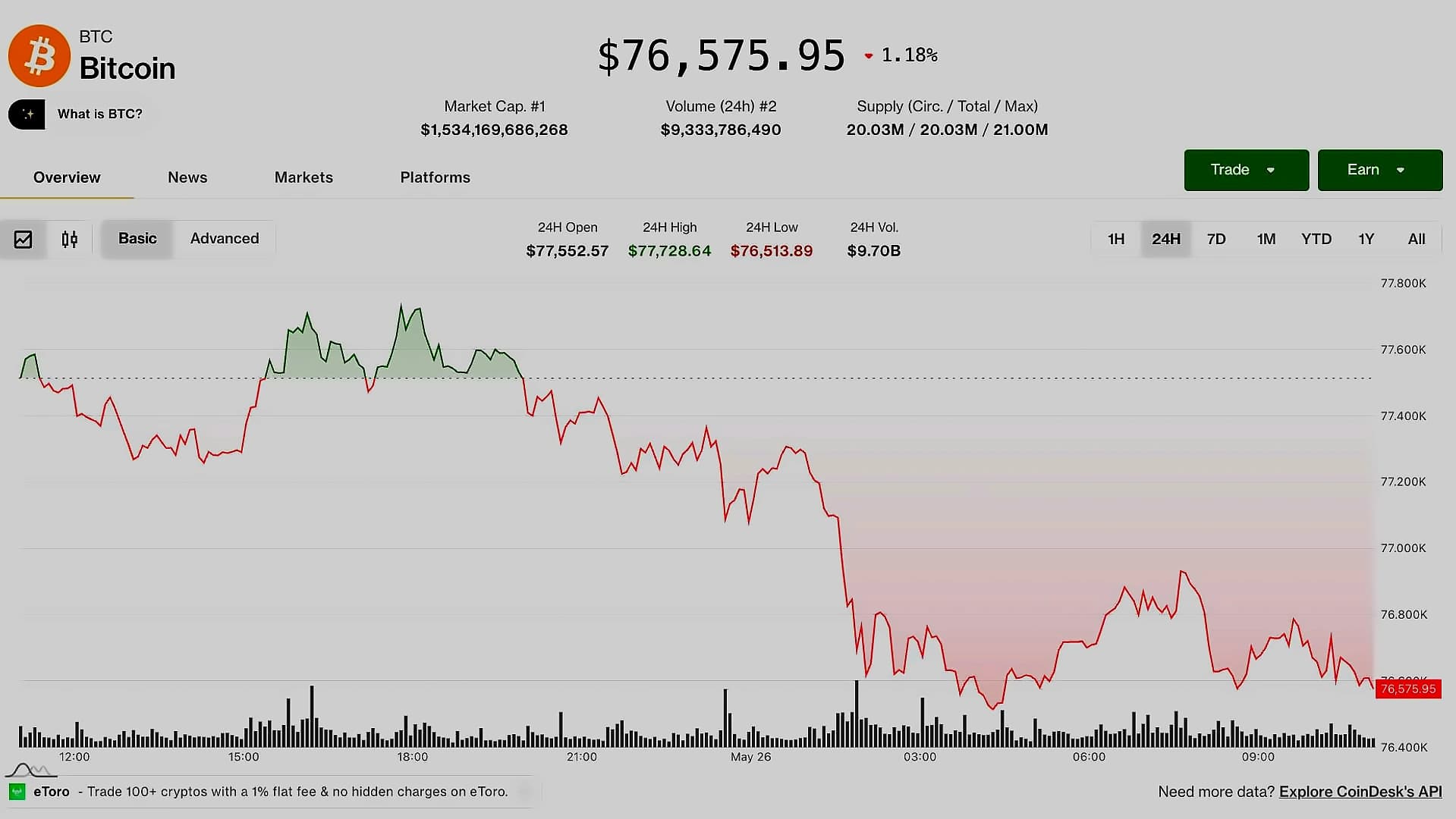
Bitcoin opened at $74,335 on Monday, declining 1.6% over 24 hours as reported by CoinDesk. According to Crypto.news, this represents the smallest Bitcoin drawdown relative to oil during the entire Hormuz crisis, with BTC proving more resilient than both oil and equities to the latest Iran-related flare-up. The cryptocurrency's performance contrasts sharply with traditional assets, as Brent crude surged 5.7% to $95.50 a barrel and WTI crude jumped 6.9% to just under $90 a barrel, while S&P 500 futures dropped 0.6% and Dow futures fell around 0.7%. This marks the fourth major Iran-related scare crypto has absorbed since the conflict began, with each sell-off becoming smaller than the last. As per TokenPost, Bitcoin is demonstrating growing resilience to geopolitical shocks, outperforming traditional assets like oil and equities amid renewed Middle East tensions. Latest developments show Brent crude futures jumping about 7% to $96.85 per barrel in early Asian trading, while S&P futures fell about 0.9% and the dollar weakened around 0.2%.
Bitcoin spot ETFs attracted nearly $597 million in inflows over two days last week on ceasefire hopes, according to SoSoValue data as reported by CoinDesk. Strategy added 34,164 bitcoin for $2.54 billion, marking its third-largest single purchase on record. The sustained ETF buying and corporate accumulation means Iran headline selling is absorbed before it reaches significant depth in spot markets. When Iran first closed the Strait of Hormuz at the end of February, Bitcoin dropped into the low $60,000s, but the same event replaying now produces moves of $3,000 to $4,000. Among the top 10 cryptocurrencies, only Ether dropped 2.6% to $2,272, Solana fell 1.5% to $84, and BNB stayed flat at $618, with none falling more than 3%. Analysts believe much of the geopolitical risk may already be priced into Bitcoin, or that consistent inflows from spot Bitcoin ETFs are providing a stronger price floor.

Oil markets reacted sharply to the weekend escalation, with Brent crude surging 5.7% to $95.50 a barrel and WTI crude jumping 6.9% to just under $90 a barrel. European natural gas futures rose as much as 11% as the U.S. Navy intercepted an Iranian ship called the TOUSKA over the weekend. President Trump posted on Truth Social that U.S. Marines now have custody of the vessel and warned of attacks on Iranian power plants and bridges if talks fail. Tehran responded by reimposing controls on the Strait of Hormuz, a key global oil shipping route, reversing three weeks of easing war risk across markets. The weekend escalation has created a critical juncture for crypto markets, with the April 22 ceasefire expiry now two days away. Latest data shows Brent crude futures rose about 6% to $95.36 per barrel in early Asian trading, while S&P futures dropped around 0.6% and European futures fell by 1.2%.
Bitcoin's key support sits between $73,000 and $74,000, where ETF inflows accelerated last week and where institutional buyers are expected to defend spot prices if selling resumes. According to Crypto.news, the Crypto Fear and Greed Index rose to 29, its highest reading since late January, even as Iran's IRGC threatened retaliation for the Touska seizure. The weekend escalation has reversed three weeks of easing war risk across markets, with investors also facing a packed earnings week ahead. Looking ahead, traders are watching whether the 10-year Treasury yield, sitting near 4.27%, and a stronger dollar will pull Bitcoin lower through broader risk channels. If Bitcoin maintains support above $74,000 despite further geopolitical strain, it could reinforce its emerging role as a hedge against geopolitical risk. However, a drop below $73,000 on new developments may challenge this narrative and signal renewed vulnerability.