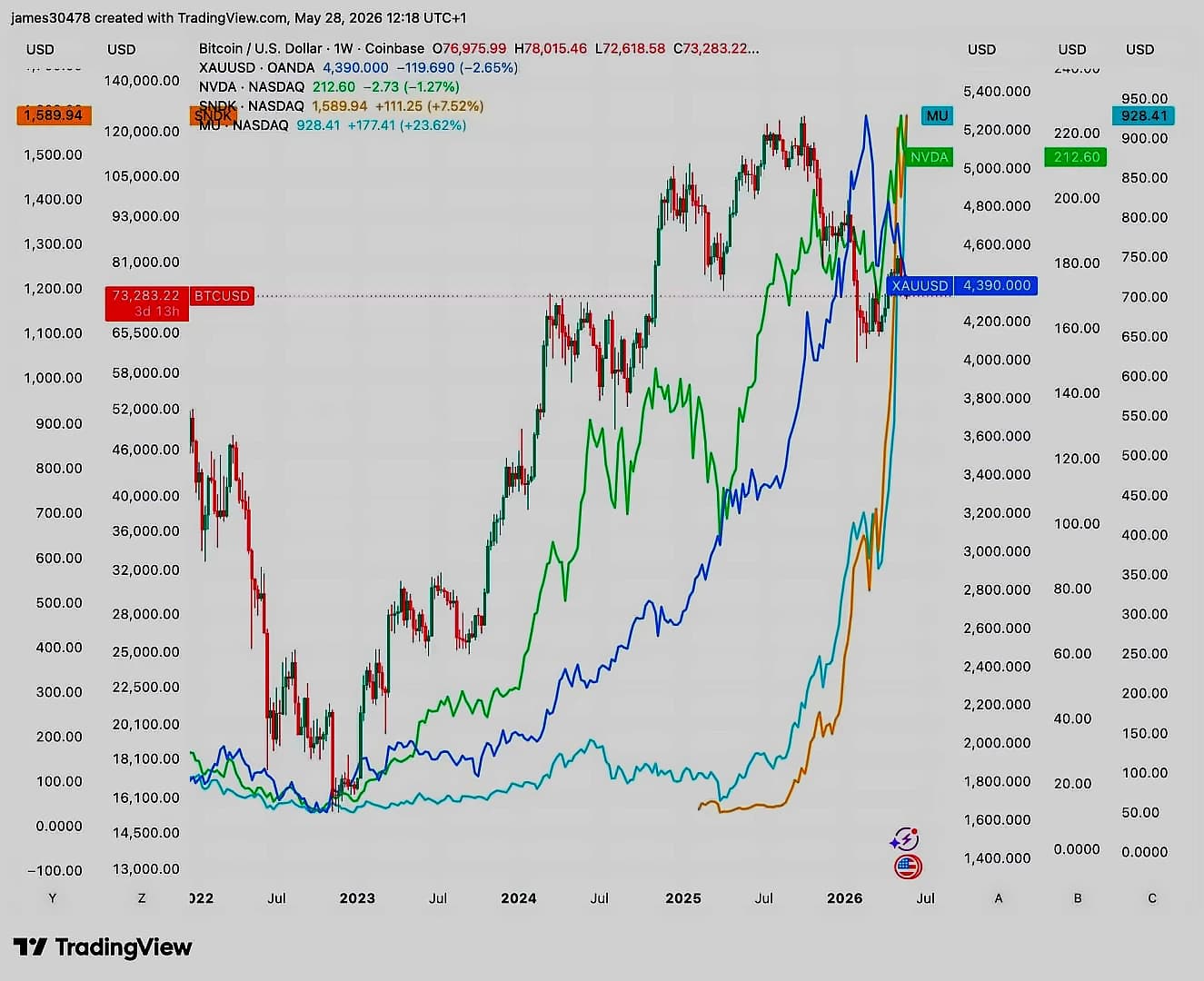
Bitcoin researcher Plan C argues that the latest US manufacturing data signals the true start of a Bitcoin bull market, countering forecasts of a 50% drop toward $50,000. According to reports from Plan C, two separate factory gauges confirm sector expansion, with the ISM Manufacturing PMI printing 52.7% in April - a fourth straight month above 50. The S&P Global US Manufacturing PMI was revised up to 54.5%, its strongest reading since May 2022. As reported by Plan C, the ISM Manufacturing PMI surveys hundreds of US factory purchasing managers, with readings above 50 signaling sector expansion while readings below 50 point to contraction.

The researcher traces this relationship back to 2009, showing that Bitcoin's biggest rally phases have always aligned with PMI moves above the 50 line. According to Plan C's analysis, the 2023 to early 2026 stretch marked the longest sub-50 run in the series. The New Orders sub-index climbed to 54.1%, indicating that incoming demand is accelerating into the spring. A January 2026 statistical study echoed this pattern, showing a strong correlation between PMI readings and BTC returns. As reported by Plan C, Bitcoin has never had its full bull market while the PMI was below 50 throughout the entire period.
Standard Chartered argues that Bitcoin could revisit $50,000 before any sustained recovery, pointing to weakening ETF demand and fading institutional flows. According to Standard Chartered's analysis, past PMI prints have not always tracked Bitcoin - the ISM rose in 2014 while Bitcoin fell, and the index slumped through 2015 even as BTC pushed higher. Other analysts treat the index as a proxy for future Federal Reserve policy rather than a direct Bitcoin trigger. The S&P report flagged an 11th straight export decline and the first factory employment drop in nine months, with input cost inflation hitting a ten-month high.
Bitcoin currently sits pinned between $78,000 and $80,000. The next ISM release on June 1 will test whether Plan C's bull cycle thesis still holds. According to S&P Global's report, the surge was partly attributed to stockpiling ahead of fresh tariffs and supply pressures from the Middle East conflict. Business confidence also reached its highest level since February 2025, while new orders posted their fastest growth in four years.