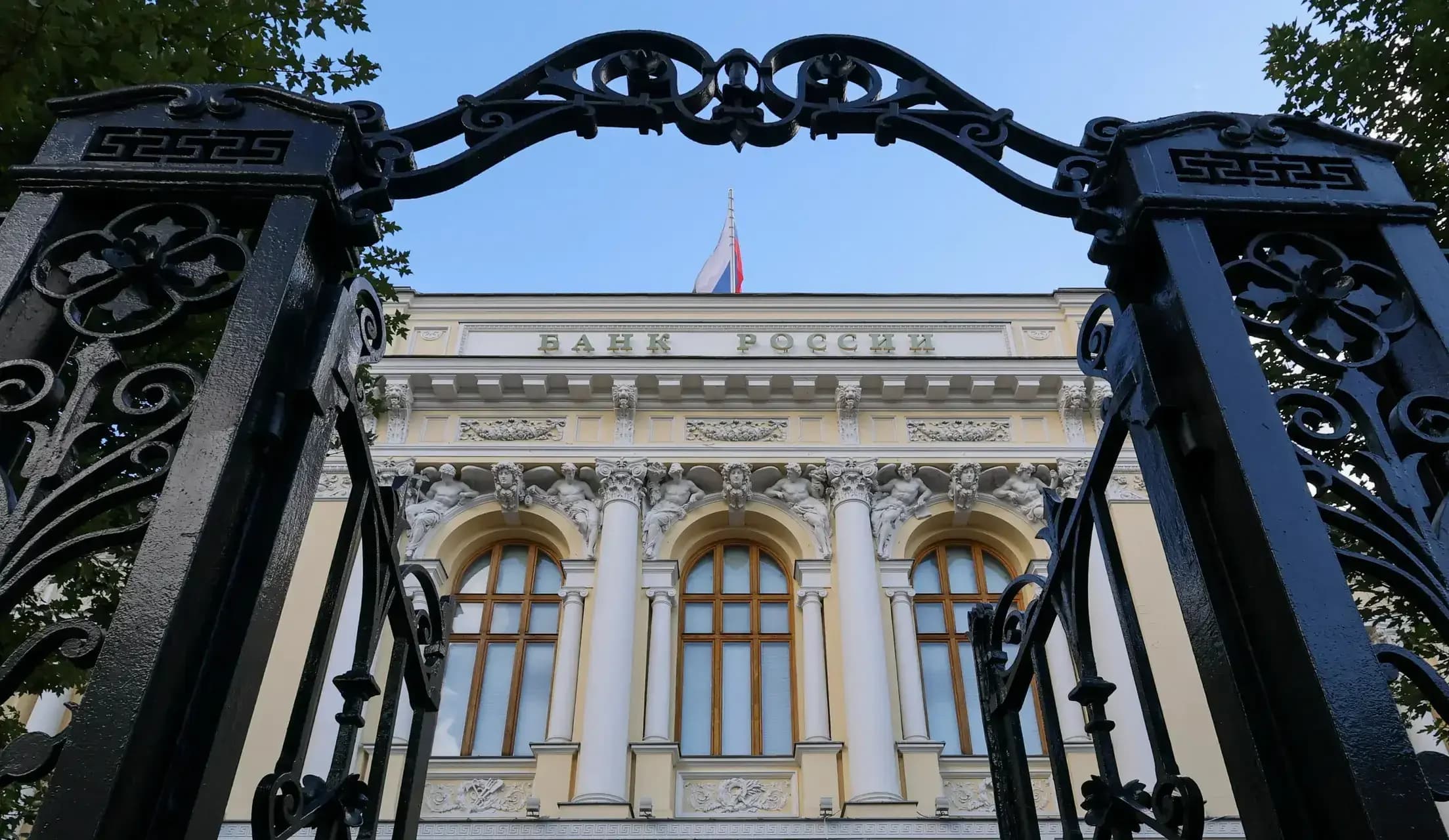
The Bank of Russia has proposed capping banks' total risk from cryptocurrencies and foreign digital instruments at 1% of their capital as part of its prudential regulation for the newly regulated crypto market. According to the central bank, the draft regulation would introduce two maximum risk ratios, N31 for individual credit institutions and N32 for banking groups on a consolidated basis, both limited to 1% of the institution or group's own funds. Banks would be required to remain within the 1% ceiling on every operating day, with any breach on any such day counting as noncompliance. The proposal represents a significant regulatory shift that turns crypto from a largely policy-tolerated activity into a tightly bounded banking risk class, with the central bank signaling it wants to prevent digital assets from becoming a material channel of capital consumption, funding stress or sanctions exposure in the financial system.
Russia's cryptocurrency market has reached significant scale with 20 million users collectively holding approximately 3.7 trillion rubles in digital assets, according to Deputy Finance Minister Ivan Chebeskov. Daily crypto transactions total about 50 billion rubles, as reported by TASS, with the holdings estimate covering direct cryptocurrency ownership alongside certain crypto-linked financial products. The figures represent expert estimates used by the Finance Ministry, not a complete government count of every wallet or transaction. Officials expect the new regulated framework to provide more precise data as activity moves through licensed exchanges, brokers and digital depositories. Russian banks have been preparing their infrastructure, with Sberbank targeting a December 1 launch for crypto trading services and Alfa Bank testing cryptocurrency trading through its brokerage application with qualified investors.
Foreign stablecoin issuers pose significant risks that Russian infrastructure cannot always control, according to Deputy Finance Minister Chebeskov. Foreign-issued stablecoins create a risk that Russian infrastructure cannot always control, using USDT and USDC as examples. Under the framework, a Russian digital depository remains responsible for failures in its own accounting, custody and transfer duties, including unauthorized disposal of customer assets. However, Federal Law No. 282-FZ permits contracts to state that market operators are not liable for customer losses caused by foreign-law persons that seize digital assets or restrict transactions. Starting May 2, 2027, Russian tax residents must submit reports to tax authorities on crypto operations involving addresses not administered by Russian digital depositories. The reporting framework covers transactions using addresses that Russian digital depositories do not administer, with the rule not banning self-custody as residents can open non-depository-administered addresses without restriction.
Capital treatment under the proposal would impose a 1,250% risk weight on a bank's aggregate crypto exposure and certain client positions for which the institution assumes responsibility. Customer assets held in custody by digital custodians within the bank or group that bear losses will be included in the relevant risk calculation, while assets not bearing losses will be excluded but subject to a 50% risk weight. Positions in proprietary accounts and customer positions for which the bank assumes responsibility will be subject to a 1,250% risk weight. For covered bank and group capital-adequacy calculations, the draft assigns non-liable client custody positions a 50% risk weight, while own-account exposure and client positions for which the bank is liable receive a 1,250% risk weight. Banks would be expected to absorb losses of about 5% for operational risk charges tied to custody and cyber incidents. The draft regulation reaches beyond coins held outright, with client custody staying outside N31/N32 only where the depository does not bear seizure or restriction-loss liability.
The prudential proposal arrives weeks after Russia's regulated cryptocurrency framework took effect on September 1, 2025, bringing trading, custody and cross-border crypto transactions under formal oversight by the Bank of Russia. Under the new framework, both qualified and nonqualified investors may trade crypto through regulated intermediaries, with nonqualified investors permitted to purchase eligible liquid cryptocurrencies worth up to 300,000 rubles per year through each intermediary after passing a suitability test. The Bank of Russia has begun publishing secondary regulations, outlining rules covering organized crypto trading, digital accounts and depositories with required depository capital ranging from 50 million to 250 million rubles depending on services provided. Market participants receive a transition period running through July 1, 2027, to obtain required approvals and bring operations into line with the framework. The move adds another layer of crypto-related analysis for financial institutions worldwide, as the Bank of Russia noted that cryptocurrencies remain a financial-market risk because they can be used as a substitute for national currency and are anonymous, decentralized and extraterritorial, raising risks of illicit use and capital loss.