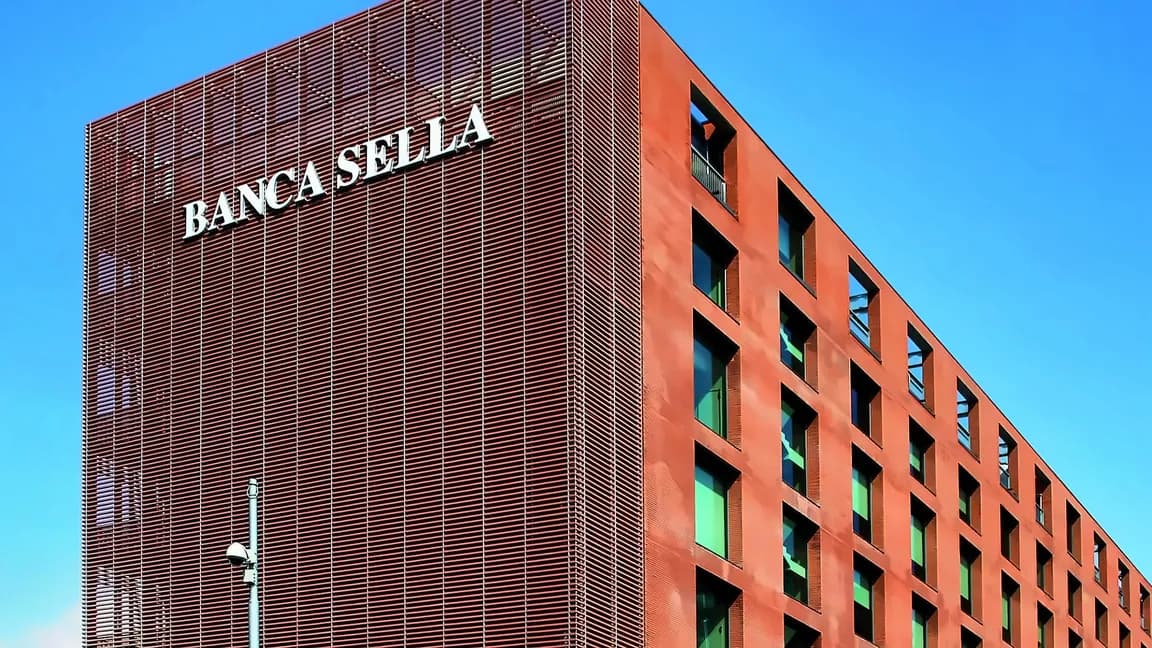
Banca Sella has achieved a landmark regulatory milestone by becoming the first Italian bank to receive final approval from the Bank of Italy to provide cryptocurrency services. According to the bank's press release, the private bank has completed the 40-day notification process and is now cleared to roll out crypto services to clients by the end of 2026. The bank, which manages €50 billion in assets and serves more than 3.1 million customers, will launch a dedicated solution for custody and transfer of digital assets aimed at selected corporate categories. The new offering will be available only to a limited list of clients initially, with the bank reportedly having already prepared the necessary infrastructure to move into crypto services.
The new corporate-facing crypto infrastructure relies on strategic partnerships with blockchain intelligence firm Chainalysis and an internal digital asset pilot initially built alongside Fireblocks. As reported by Banca Sella, while the bank's initial retail crypto plans were routed through its mobile-banking venture, Hype, this new infrastructure targets corporate clients. The bank joins approximately 20 major European banks already offering crypto asset services under MiCA, including Germany's Commerzbank and LBBW, France's Société Générale FORGE, and Spain's BBVA. The MiCA regulation establishes a single rulebook for crypto assets across the EU and gives traditional financial institutions a clearer legal framework for entering the digital asset market.
Beyond traditional crypto services, Banca Sella is actively involved in EU tokenization projects aimed at strengthening the bloc's financial autonomy. According to the bank's statement, it is among the founders of Qivalis, a consortium of 37 European banks working to issue a euro-denominated stablecoin expected to go live in the second half of 2026. The asset will be issued by Qivalis, which is registered in the Netherlands and has already applied for an electronic money institution (EMI) license. The bank is also involved in EU tokenization of deposits and payments projects such as Pontes and Appia, which are designed to bolster the bloc's financial independence and infrastructure resilience. Banca Sella has already taken part in fintech initiatives run by the Bank of Italy, including Milano Hub, demonstrating its commitment to regulatory compliance and innovation.
As reported by Banca Sella, Andrea Tessera, the bank's managing director of digital banking, emphasized that the evolution of payments toward instant, interoperable, and programmable models - driven by tokenization of currencies and assets - is reshaping financial infrastructure at European and global levels. The MiCA approval represents an important step in Europe's shift toward new digital finance models, with the bank focusing on custody, receipt and transfer of digital assets rather than explicit buying or selling services. This regulatory approval supports the bank's strategic push into stablecoins and blockchain-based settlement infrastructure, positioning it at the forefront of digital asset adoption among Italian financial institutions while reducing regulatory risk through controlled banking environment services.