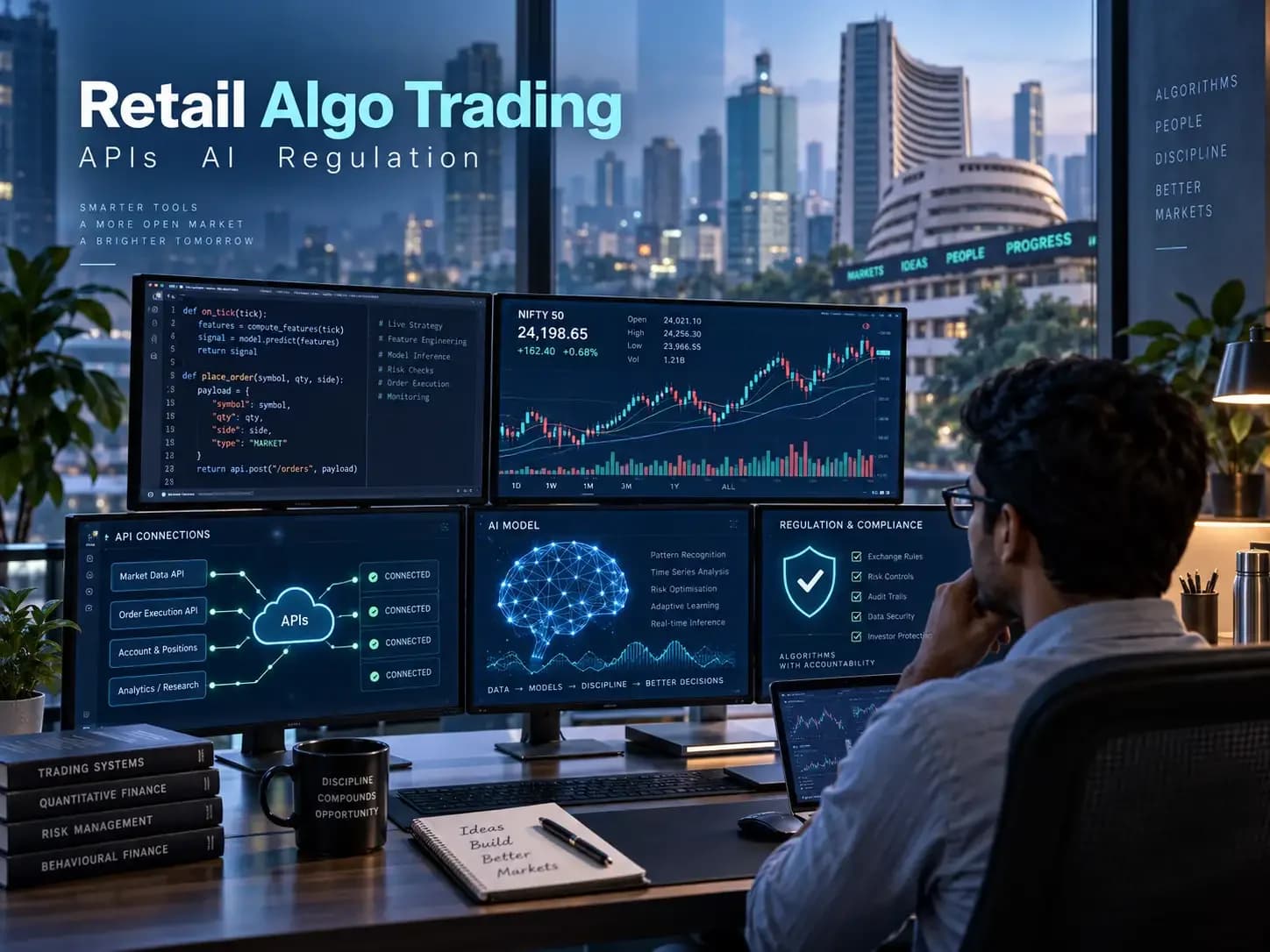
According to reports from AMBCrypto, AI trading platforms are no longer merely market-watching tools but essential infrastructure for investors. As reported, in 2026, these platforms are becoming tools that help users build strategies, identify opportunities, manage risk, and execute trades. The evolution represents a shift from quantitative trading being associated with professional institutions to becoming accessible to retail investors through intelligent trading tools powered by AI technology. This trend is accelerating as investors seek more efficient ways to navigate complex markets, with Juniper Research projecting that AI-powered investment platforms are expected to manage over $3 trillion in assets by 2028. The growing overlap between blockchain technology, artificial intelligence, and digital finance is reshaping how investors, startups, and institutions view the future of financial systems.
TruTrade has launched an AI-powered trading platform that embodies the philosophy of one-click activation, allowing users to engage with AI-driven systems that handle execution automatically once activated. According to PRNewswire, co-founder Brian Nutt explains that this approach shifts the user's role from active decision-maker to system operator, enabling participation without the need for continuous oversight. The platform supports operating multiple trading systems within a single environment, enabling users to manage execution across different strategies while maintaining a centralized and organized approach. As part of TruTrade's broader ecosystem, QuickFund AI complements the platform's focus by helping qualified users access funded accounts more efficiently, creating a more accessible pathway into the markets. The platform is designed to create a more streamlined and accessible experience through structured execution combined with AI-driven systems.
According to BCC Research's Global AI Investment Trends & Spending Outlook, global corporate investment in artificial intelligence reached $218 billion in 2024, representing a 22% increase from the previous year. The analysis reveals unprecedented capital commitments exceeding $800 billion in private sector AI infrastructure investments, fundamentally reshaping competitive dynamics across industries. OpenAI's valuation soared from $20 billion in 2022 to $500 billion in 2025, establishing it as the world's most valuable privately owned company. This surge is driven by pharmaceutical companies accelerating drug discovery timelines and automotive manufacturers pivoting toward software-defined vehicles, with China projecting $84-98 billion in AI capital expenditure for 2025 including $56 billion government investment, while the EU mobilizes over $200 billion through InvestAI initiative. The economic impact of AI is being quantified across multiple dimensions, with Oxford Economics combining proprietary economic models with insights from over 450 experts to deliver quantitative analysis of AI's economic and business impact.
According to the AMBCrypto review, Trade Ideas is positioned as an AI-powered market radar for short-term and day traders, while Composer offers no-code strategy building for automated stock and ETF investing. QuantConnect provides professional-grade algorithmic trading development capabilities, and TrendSpider focuses on automated technical analysis. Alpaca functions as a trading infrastructure platform for developers rather than a ready-to-use AI trading bot. The competitive landscape is intensifying as established fintech firms and emerging startups invest heavily in AI-driven trading solutions, with the startup ecosystem surrounding AI and digital finance becoming highly competitive as founders race to build platforms capable of improving efficiency and reshaping traditional financial services.
As reported by AMBCrypto, the review identifies that while some platforms excel in professional capabilities or development flexibility, they face issues such as high learning barriers, complex strategies, and heavy reliance on technical knowledge. According to Deloitte's 2026 trading outlook, strategy automation is emerging as a key competitive differentiator in financial markets. The future of investing may no longer be defined solely by capital and experience but also by tools, efficiency, and the ability to execute strategies effectively. Early user feedback from markets such as the UK, Singapore, and Brazil suggests improved execution consistency and reduced manual monitoring, aligning with the platform's value proposition of automating not just trades but the logic behind them. Many industry leaders believe the next generation of financial infrastructure will combine blockchain technology, artificial intelligence, and programmable digital assets, with automated settlement systems, tokenized ownership structures, and AI-driven financial tools increasingly viewed as long-term industry trends rather than short-term experiments.