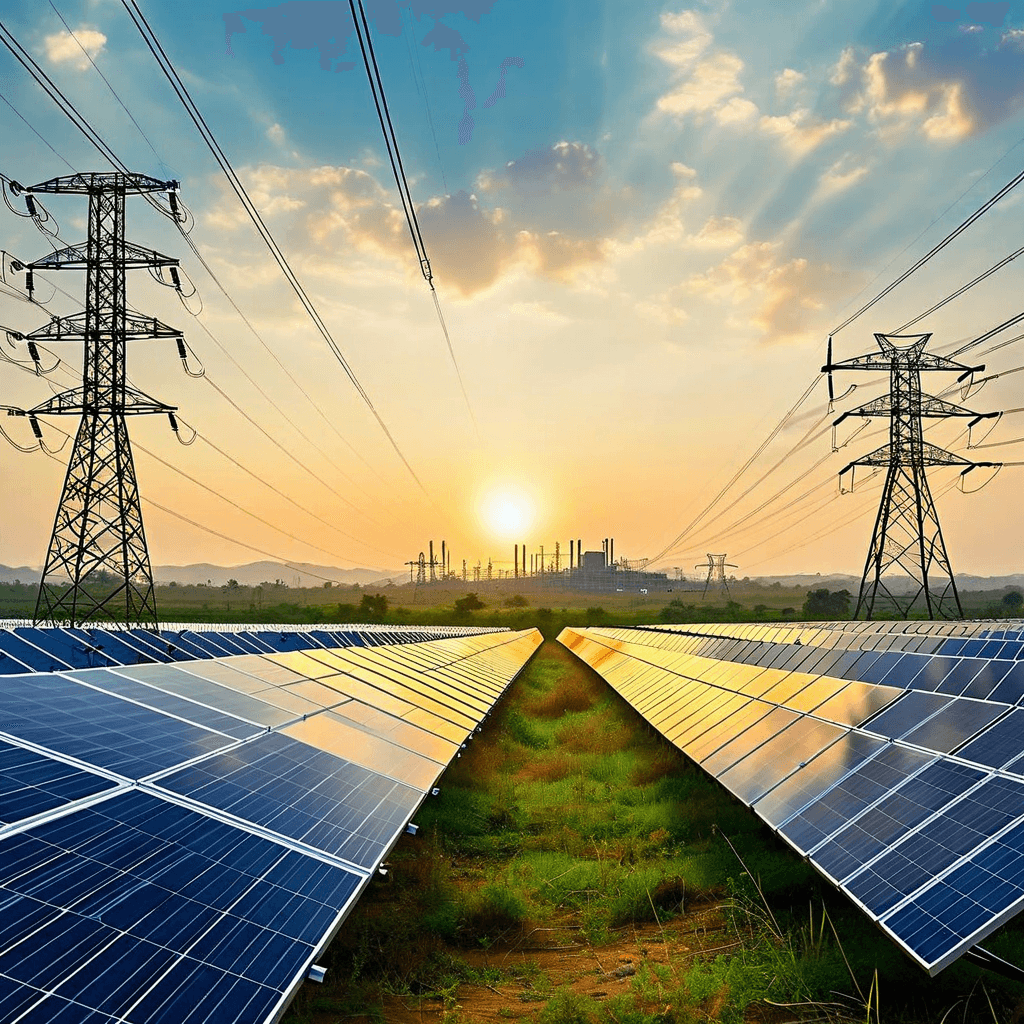
India's power sector is facing a perplexing paradox. Even as the nation grapples with record-breaking electricity demand, prices on the Indian Energy Exchange (IEX) have crashed to zero. This phenomenon, driven by a massive surge in solar capacity, structural rigidities in renewable policy, and a critical shortage of energy storage, is creating financial headaches for everyone from renewable developers to power distribution companies.
The Solar Surge and Daytime Glut
The primary culprit behind this price collapse is the explosive growth of solar power.
However, solar panels generate electricity only when the sun shines, creating a massive peak in supply during midday hours. This creates a classic "duck curve" problem where generation peaks just as demand may not be at its highest.
The issue isn't just the volume of power; it's the inability to move or store it. Transmission bottlenecks prevent power from flowing efficiently from solar-rich states like Rajasthan and Gujarat to demand centers. Without adequate storage infrastructure, this excess daytime power cannot be saved for the evening peak. Consequently, the market is flooded with electricity during solar hours, driving prices down to zero or even below ₹1 per unit.
The 'Must-Run' Trap
A key policy feature designed to protect renewables is now exacerbating the problem. Renewable energy projects enjoy "must-run" status, meaning grid operators cannot curtail their generation except for grid security reasons. This ensures clean energy isn't wasted, but it also forces all available solar power onto the grid even when demand is low.
When this inflexible supply meets weaker demand—due to milder weather, unseasonal rains, or lower industrial consumption—the mismatch is severe.
The "must-run" classification, while well-intentioned, leaves the grid with few options to manage this oversupply other than letting prices crash.
The Storage Vacuum
The most glaring gap in this energy transition is the lack of battery storage. While solar capacity has surged, battery storage remains critically limited at approximately 0.7 GWh.
This storage vacuum forces power distribution companies (DISCOMs) into a financial bind. Locked into long-term Power Purchase Agreements (PPAs) for renewable power at ₹2-4 per unit, they often find themselves with excess power during solar hours that they cannot use. With no storage to bank it for later, their only recourse is to sell it on exchanges at distress prices, sometimes as low as ₹0.50 per unit. This results in massive losses, as they effectively pay generators for power they then give away for free.
Financial Fallout
The financial impact is cascading through the system. For renewable developers with long-term PPAs, the zero prices are largely irrelevant as their revenue is contractually protected. However, merchant power developers and those without firm offtake agreements face severe revenue uncertainty during these periods.
The real pain is felt by DISCOMs.
This threatens to undermine the fragile financial recovery the sector achieved in FY 2024-25, when DISCOMs posted their first collective profit of ₹2,701 crore in years. The recurring losses from selling power below cost could reverse this progress and force a rationalization of India's ambitious 500 GW renewable target.
Policy Solutions on the Horizon
Recognizing the crisis, policymakers are deploying a multi-pronged response. A ₹5,400 crore Viability Gap Funding (VGF) scheme aims to support 30 GWh of battery storage capacity. This investment, expected to catalyze ₹33,000 crore in private capital, will allow excess solar power to be stored and discharged during evening peaks, directly reducing the surplus that causes zero pricing.
Simultaneously, the government is considering rules mandating 20% domestic content in battery storage projects to boost local manufacturing and reduce import dependence. This addresses supply chain constraints that have slowed storage deployment.
Another potential game-changer is the introduction of negative electricity prices, a mechanism used in Germany and Australia. Under this system, generators pay buyers to consume electricity during oversupply. This would create powerful financial incentives for industrial consumers to shift demand to solar hours and for storage operators to charge batteries when prices are negative, accelerating storage deployment through market signals rather than just subsidies.
Grid Management and Future Outlook
Grid managers are also adapting. While renewables have "must-run" status, mechanisms like Emergency Tertiary Reserves Ancillary Services (TRAS) allow curtailment for grid security, with generators receiving compensation. In April 2026, an average of 23 GWh of solar power was curtailed daily to maintain stability.
Better forecasting is also critical. India is upgrading its weather forecasting resolution from 12 km to 4 km grids to better predict solar generation and demand, helping DISCOMs plan procurement more accurately and avoid oversupply situations.
Ultimately, the shift from standalone solar projects to storage-integrated and "firm and dispatchable" renewable energy (FDRE) projects is seen as the long-term solution. These projects combine solar, wind, and storage to provide reliable power around the clock, aligning generation with actual consumption patterns rather than just peak solar output.
The zero-price phenomenon is not a market failure but a clear signal. It highlights the urgent need for grid flexibility, storage, and demand response as India scales up its renewable energy ambitions. The transition will be challenging, but with the right mix of policy, investment, and market design, India can turn this current paradox into a foundation for a truly flexible and sustainable power grid.