The Strategic Rationale Behind Wipro's Digital-First Entry
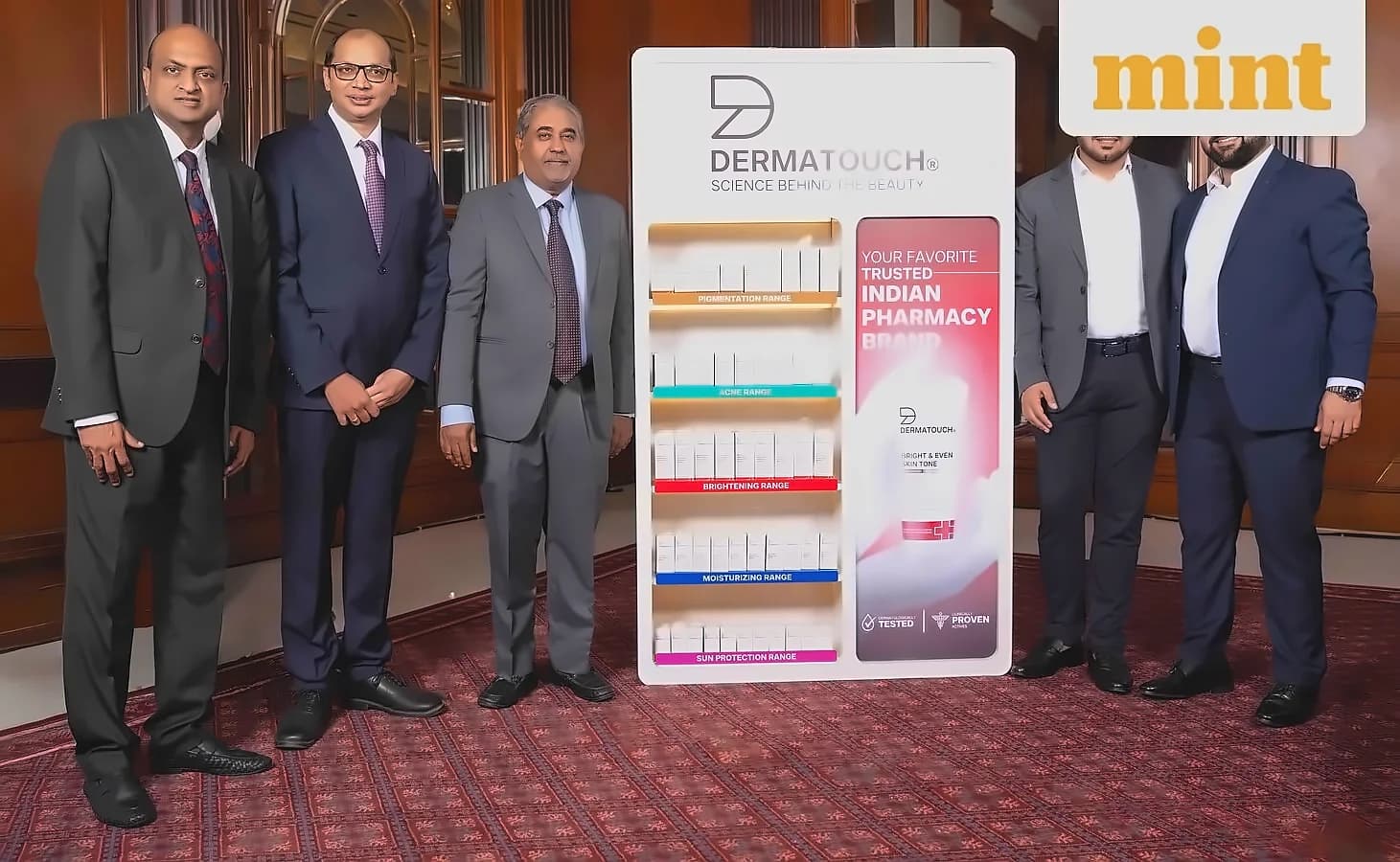
Wipro Consumer Care & Lighting has acquired a 60% stake in premium skincare brand Dermatouch at an enterprise value of Rs 387.5 crore, marking its first foray into digital-first brands and entry into India's premium skincare segment. The remaining 40% will be acquired over three years, with co-founders Anish Nagpal and Amit Purswani continuing to lead the business during this transition period.
This acquisition represents Wipro Consumer Care's 18th global acquisition and third strategic deal within a month, following the acquisitions of Good Home and Eva from TTK Healthcare, as well as S Brands in the Philippines. The move signals a deliberate shift toward high-growth premium categories, moving beyond its traditional stronghold in mass-market personal care products where 70% of revenue currently comes from palm oil-dependent soaps.
Valuation Justification: Growth That Commands Premium
Dermatouch's exceptional performance metrics justify the acquisition valuation. The brand reported revenue of Rs 131 crore in FY26, representing 114% year-over-year growth from FY25. Even more impressive is the scale transformation—sales volume grew from approximately 60,000 products per month two years ago to more than 60,000 products per day currently, a 30x expansion.
The Rs 387.5 crore enterprise value implies a revenue multiple of approximately 2.96x based on FY26 revenue.
The science-backed, efficacy-led positioning in categories like pigmentation, acne, brightening, and sun protection addresses specific consumer concerns with clinically-tested formulations, creating higher customer loyalty and repeat purchase rates.
Phased Acquisition Structure: Risk Mitigation and Incentive Alignment
The acquisition structure—60% initial stake with 40% deferred over three years—represents a classic earnout arrangement designed to bridge valuation gaps and align incentives. This approach mitigates risk for Wipro Consumer Care while providing founders with upside potential based on performance.
For Wipro, this structure reduces initial capital deployment while securing controlling interest. It allows performance validation before full commitment and provides time to assess integration effectiveness. The earnout mechanism aligns founder incentives with sustained growth rather than short-term exits.
For Dermatouch's founders, the structure creates performance incentives for the remaining 40% stake while ensuring continued operational control during the transition period. This preserves the entrepreneurial culture and digital-first agility that drove the brand's initial success while providing access to Wipro's resources for accelerated growth.
Distribution Acceleration: From Digital to Omnichannel
Wipro Consumer Care brings substantial distribution infrastructure that can dramatically accelerate Dermatouch's expansion from its current direct-to-consumer and online marketplace model. The company operates across 20 countries with 16 manufacturing units in India, Malaysia, Indonesia, Philippines, Vietnam, China, and South Africa. Its products are marketed in 60+ countries, providing immediate access to international markets.
The existing distribution network spans 1M+ retail touchpoints across modern trade, general trade, pharmacies, and specialty retailers. This infrastructure can reduce Dermatouch's time-to-market by 12-18 months while providing immediate shelf access across multiple retail formats. The transition from digital-first to omnichannel presents both challenges and opportunities. While nearly 90% of India's retail still happens offline, successful omnichannel integration requires significant investment in technology, supply chain, and retail partnerships.
R&D Synergies and Portfolio Integration
Wipro Consumer Care operates 11 state-of-the-art R&D centers globally, including facilities in India, Malaysia, China, Philippines, and South Africa. These centers specialize in personal care technology, pharmaceutical cosmetics, and home care products, with particular expertise in developing skincare products suitable for Asian skin.
The R&D integration creates powerful synergies across Dermatouch's core categories. In pigmentation, Wipro's Asian skin research expertise and brightening ingredient technologies from its Bio-essence brand can enhance formulations. For acne treatment, access to pharmaceutical cosmetics expertise and anti-bacterial technologies from Wipro's personal care portfolio provides competitive advantages. In sun protection, advanced UV filter technologies and stability testing capabilities from global R&D centers can improve product efficacy.
The decision to have co-founders Anish Nagpal and Amit Purswani continue leading Dermatouch during the three-year transition period is strategically critical. This approach preserves the digital-first agility, entrepreneurial decision-making, and data-driven culture that drove the brand's 114% growth and 30x volume expansion.
Founder continuity ensures brand authenticity preservation during mass-market expansion, maintains the 85% customer reorder rate that demonstrates strong brand loyalty, and facilitates cultural integration by serving as bridges between Dermatouch's startup mindset and Wipro's corporate structure. The founders' deep understanding of dermatology-led formulations and clinical positioning is crucial for maintaining the brand's premium, science-backed positioning during scale-up.
Financial Impact and Growth Sustainability
The acquisition significantly impacts Wipro Consumer Care's revenue mix and margin profile. Dermatouch's Rs 131 crore revenue represents 1.1% of Wipro Consumer Care's Rs 11,635 crore annual turnover. However, premium skincare margins (35-50%) compared to traditional personal care (10-15%) create substantial margin enhancement potential.
Sustaining Dermatouch's 114% growth rate post-acquisition faces challenges. The base effect makes maintaining triple-digit growth increasingly difficult, and India's skincare market CAGR of 7.82% suggests industry growth will normalize. However, realistic projections show 60-80% growth in Year 1, 40-60% in Year 2, and 30-45% in Year 3, driven by Wipro's distribution acceleration and R&D synergies.
The three-year earnout period will likely include milestones around revenue growth (53-68% in Year 1), gross margin improvement (>25% initially, expanding to 35-40%), offline revenue mix (targeting 45-50% by Year 3), and international expansion (25-30% of revenue by Year 3).
Competitive Positioning and International Expansion
The acquisition fundamentally alters Wipro's competitive positioning. Pre-acquisition, Wipro operated primarily in mass-market personal care with limited premium presence. Post-acquisition, it becomes a direct competitor in premium skincare against established MNC players like HUL, P&G, and L'Oréal, while maintaining differentiated positioning against emerging D2C brands like Mamaearth and Minimalist.
Dermatouch's science-backed positioning provides significant competitive advantages. Clinical credibility creates trust barriers to entry, with science-led skincare demonstrating significantly higher repeat rates and average order value compared to trend-driven products. The problem-solution focus—addressing specific concerns like acne, pigmentation, and sensitivity—creates high-retention, high-lifetime-value business models.
Wipro's recent acquisitions provide immediate international expansion platforms. The S Brands acquisition in the Philippines includes established distribution infrastructure and market-leading brands like KERATINplus and AlcoPlus. The Good Home and Eva acquisitions strengthen home care and fragrance capabilities while adding Rs 148 crore in revenue. These assets create synergies for Dermatouch's expansion into Southeast Asia, the Middle East, and Africa.
Implementation Challenges and Investment Requirements
The successful transition from digital-first to omnichannel requires significant investment. Technology infrastructure alone—including unified ERP systems, POS integration, customer data platforms, and order management systems—could require Rs 25-40 crore over 24 months.
Supply chain investments for distribution hubs, warehouse management systems, and cold chain infrastructure for temperature-sensitive skincare products could add another Rs 35-50 crore. Retail partnerships require slotting fees, trade promotions, and staff training programs, with flagship stores requiring Rs 80-120 lakh investment and 24-30 month break-even periods.
The phased implementation approach—foundation building (Months 1-6), controlled expansion (Months 7-18), and scale and optimize (Months 19-36)—allows for learning and adjustment while managing capital deployment risks. Success will depend on maintaining the delicate balance between preserving Dermatouch's premium, science-backed positioning while achieving mass-market scale through traditional retail channels.