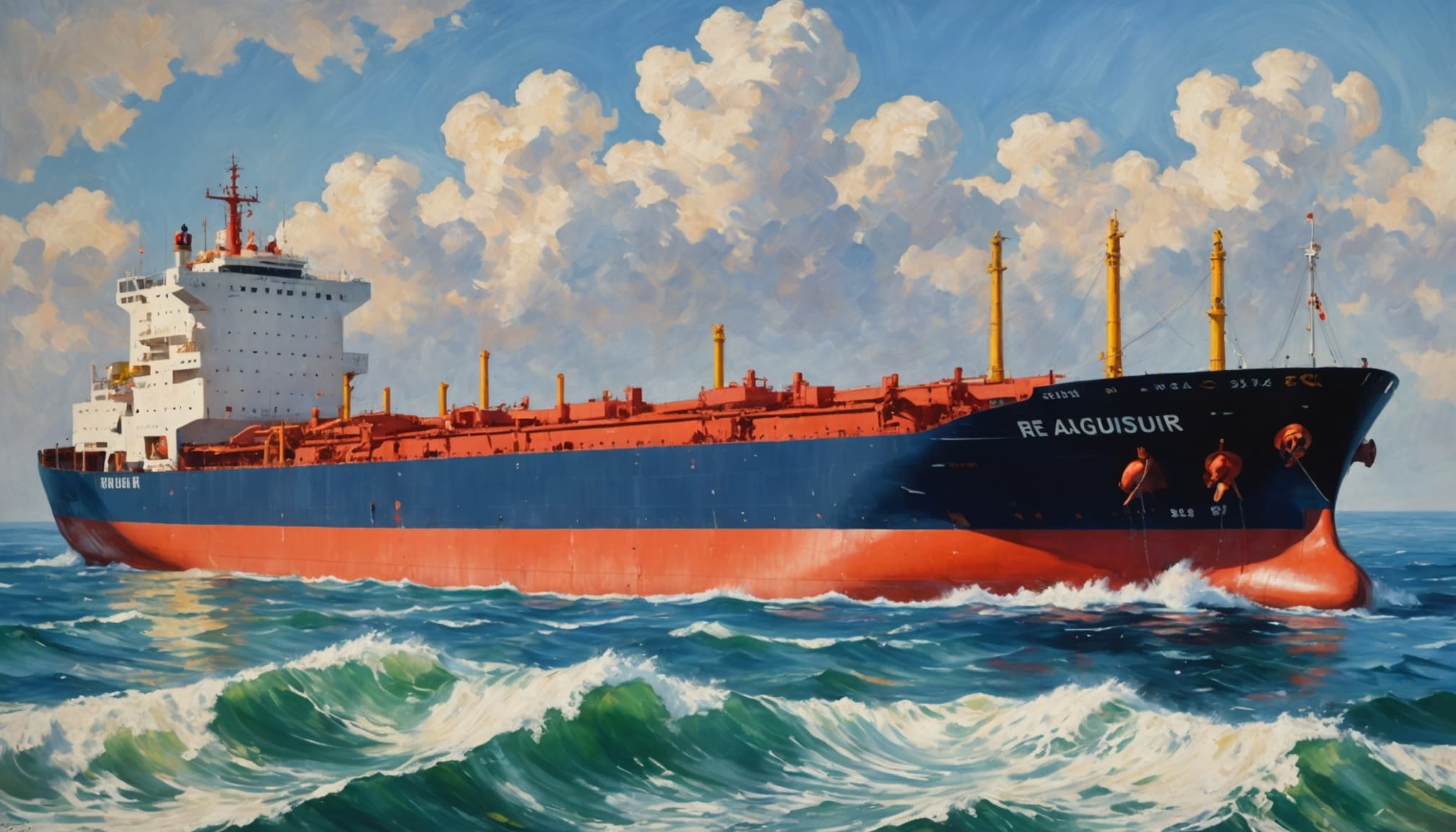
When Geopolitics Splits the Shipping World
Here's the fascinating thing about the current situation in the Strait of Hormuz: the same geopolitical tension is creating winners and losers in the maritime sector, but in completely opposite directions. It's like watching two different games being played on the same field, where one team's victory lap is another team's panic room.
The Tale of Two Sectors
Let's start with the numbers that tell the story. On one side, we have defense shipbuilders like Garden Reach Shipbuilders & Engineers, which just delivered a record 26% jump in annual turnover to ₹6,400 crore. Their stock is up 18%, and they're sitting pretty with an order book of ₹23,877 crore that they expect to grow to ₹40,000 crore by FY26 . They've commissioned 5 vessels this fiscal year and delivered 8 vessels to the Indian Navy, showing they can execute on their promises.
On the other side, commercial shipping companies like Shipping Corporation of India and Great Eastern Shipping Company are trading at P/E ratios around 9x—roughly a quarter of what defense shipbuilders command. Why? Because their fortunes swing wildly with every headline about Iran and the Strait of Hormuz. One day they're up on de-escalation hopes, the next they're down on renewed tensions. It's a cyclical rollercoaster that keeps investors on edge.
The Hormuz Factor
Here's why this matters so much: the Strait of Hormuz handles 20% of global oil supply and 20% of LNG shipments daily. That's about 14 million barrels of oil flowing through a waterway just 21 miles wide at its narrowest point . When tensions spike, everything gets expensive, fast.
During the February-March 2026 crisis, war-risk insurance premiums for tankers jumped from 0.25% of hull value to 1-3%. On a $100 million tanker, that's the difference between paying $250,000 and $3 million per voyage. Major insurers like Gard and Skuld actually suspended coverage, effectively stranding over 200 tankers . Charter rates went wild too—VLCC rates surged from $20,000 to $770,000 at peak tensions . These aren't just numbers on a spreadsheet; they're make-or-break costs for shipping companies.
The De-Escalation Dividend
Now, when de-escalation hopes emerge—like when Brent crude briefly dipped below $99 on March 25—commercial shipping stocks rally. The logic is straightforward: lower conflict risk means normalized shipping routes, predictable scheduling, and significantly reduced insurance costs. For SCI and GESHIP, whose tanker fleets have substantial Hormuz exposure, reduced insurance costs alone could improve EBITDA margins by 2-4% annually .
But here's where it gets interesting. The same de-escalation that helps commercial shipping doesn't necessarily hurt defense shipbuilders. In fact, they've been on their own tear. Cochin Shipyard gained 12.3% and Mazagon Dock rose 10.2%, driven by factors like F&O inclusion for Cochin and sector-wide momentum . The government has committed ₹70,000 crore to domestic shipbuilding, creating a structural growth story that doesn't depend on daily geopolitical headlines.
The Fuel Cost Connection
The logistics companies tell another part of this story. Take Blue Dart Express—aviation turbine fuel makes up 34% of their operating expenses. A 5% increase in ATF prices compresses their operating margins by 120 basis points. So when Brent drops below $99, ATF prices follow, and suddenly Blue Dart's margins could expand by 240-480 basis points . That's the kind of margin improvement that gets analysts excited and investors reaching for their wallets.
Delhivery benefits too, but differently. Stable maritime routes mean predictable transit times, which means lower inventory buffer requirements and better working capital efficiency. Their cross-border logistics margins could improve by 3-5% just from reduced contingency costs . The Middle East serves as a strategic connector between Asia, Europe, and Africa, so when those routes stabilize, Delhivery can optimize its network design without expensive contingency routing.
Allcargo Logistics faces a similar dynamic with diesel prices. Their Diesel Price Hike mechanism currently sits at 76% of freight charges. When diesel prices fall, this mechanism adjusts downward, potentially improving their operating margins by 120-220 basis points . Given that Allcargo's current EBITDA margin is just 3.65%, even small improvements in fuel costs could have a material relative impact on profitability.
The Asymmetric Risk Profile
Not everyone faces the same exposure, though. Shreeji Shipping Global, with its coastal shipping focus along India's west coast, has minimal direct Hormuz exposure. They operate primarily along ports like Kandla, Navlakhi, and Bhavnagar, handling about 14 million metric tons of cargo annually at Indian ports . They benefit indirectly from lower fuel costs and port congestion, but they're not losing sleep over tanker diversions or insurance premium spikes.
Seamec sits in the middle. Their offshore support vessels operate in Saudi Arabia and UAE, so they're exposed to regional stability but not transit risk. About 85% of their revenue comes from offshore assets, making their story more about operational continuity than route availability . They have a $57.4 million charter deal for SEAMEC SWORDFISH and clients including ONGC, Aramco, and ADNOC. Their exposure is more about whether offshore field operations continue smoothly rather than whether ships can pass through Hormuz.
What's Next?
The market is currently trying to interpret conflicting signals from Iranian authorities and President Trump. Iranian leaders are talking tough, dismissing threats and suggesting the Strait should remain shut. Trump is suggesting a 2-3 week timeline for military action, with an April 6 deadline for Iran to reopen Hormuz . This creates a fascinating divergence: commercial shipping stocks rally on de-escalation hopes, while defense shipbuilders gain from continued tensions.
For investors, the key is understanding which game you're playing. Commercial shipping is about short-term relief from lower costs—insurance premiums could drop 60-75%, and bunker fuel costs (50-60% of voyage expenses) would fall with Brent . A 6.6% drop in Brent from $106 to $99 could improve EBITDA margins by 115-132 basis points for shipping companies. Defense shipbuilding is about long-term structural growth from government capex and order book visibility.
The causal feedback loops here are powerful. When Brent drops below $99, ATF and diesel prices follow, improving margins for logistics companies. This creates positive investor sentiment, which drives stock prices higher, which reinforces the momentum. But these loops can reverse quickly—Trump's speech caused Brent to spike from $99 to $106, and oil futures jumped 5% on escalation warnings.
The Bottom Line
The Strait of Hormuz might be just 21 miles wide, but it's creating a massive divide in how the market values maritime companies. One sector's volatility is another's opportunity, and the smart money is figuring out which side of that divide they want to be on. Deep-sea tanker operators face the highest risk but also the highest potential reward from Hormuz reopening, while coastal and offshore operators have more stable profiles with limited direct exposure.
The 20% of global oil and LNG shipments that pass through Hormuz create asymmetric risk-reward profiles based on fleet composition and route exposure. Understanding these dynamics is crucial for navigating the current market environment. Whether you're betting on de-escalation or escalation, the maritime sector offers opportunities—but you need to know exactly which ship you're sailing on.