When Waaree Energies announced its plan to merge subsidiary Indosolar in September 2026, most headlines focused on the 1:11 share swap ratio. But the interesting story lies in what wasn't immediately obvious. This merger is fundamentally about fixing a structural problem that was creating friction within the group—specifically, how solar cells were being allocated between two companies with different shareholder groups.
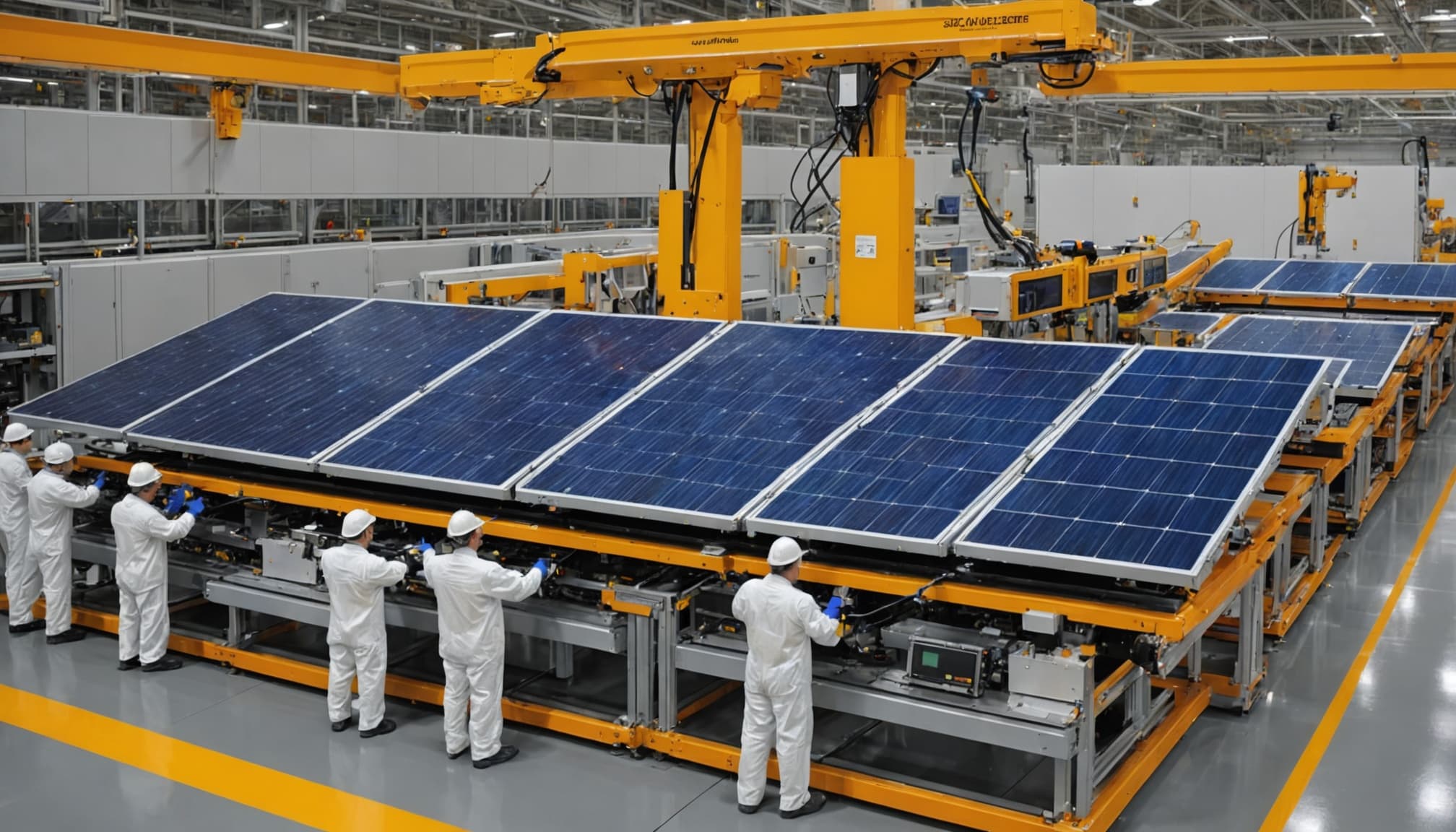
Indosolar manufactures solar modules but doesn't have its own cell manufacturing capacity. It depends entirely on Waaree Energies or external suppliers for its principal raw material. According to the merger scheme documents, this dependence directly influences Indosolar's production volumes, cost structure, and margins because these are "substantially determined by the terms of the supply arrangements".
The Allocation Conflict Nobody Talked About
Here's the problem: Waaree Energies and Indosolar, though part of the same group, are separate legal entities with different shareholders. Waaree owns 96.15% of Indosolar, but the remaining 3.85% public shareholders have their own interests. When Waaree decides how to allocate its limited cell output between its own module manufacturing and Indosolar's needs, it's essentially choosing between two sets of shareholders.
This isn't just theoretical—Indosolar's 1.3 GW module facility in Greater Noida reached about 75% capacity utilization in Q2 FY26, generating ₹196 crore in revenue and ₹65 crore in EBITDA that quarter. But its growth potential was constrained by how many cells Waaree chose to supply. Transcripts +1
How the Merger Fixes the Problem
By bringing both companies under one entity, the merger eliminates the corporate boundary between Waaree's cell manufacturing and Indosolar's module manufacturing. This removes the need for continuing related-party cell supply transactions and resolves the allocation conflict.
The operational benefits are straightforward. Instead of negotiating inter-company transfers and documenting related-party transactions (Waaree recorded ₹36.94 crore in sales to Indosolar and ₹328.99 crore in purchases from Indosolar in FY25), cell allocation becomes an internal operational decision. This allows integrated production planning, optimized inventory management, and improved domestic-content traceability. AnnualReports +2
The Scale Reality Check
The numbers tell an interesting story.
This isn't a merger of equals. It's an absorption of a much smaller subsidiary into a substantially larger platform. The strategic rationale isn't about creating scale—Waaree already has 24.2 GW of module capacity and is targeting 29 GW by FY27. It's about eliminating inefficiencies in the existing structure. Transcripts
Where the Savings Come From
The cost savings fall into three buckets. First, corporate compliance. Indosolar will no longer need separate audits, board meetings, statutory filings, and related-party disclosures. The scheme specifically identifies the elimination of these duplicated requirements as a source of savings.
Second, financial synergies. Indosolar's operations can access Waaree's lower cost of funds.
Consolidated procurement also provides incremental purchasing power leverage. AnnualReports
Third, operational efficiency. Unified governance, consolidated procurement, and greater flexibility in deploying capital across the combined business are all cited as potential sources of operational synergy.
The Regulatory Road Ahead
The merger still needs to clear several hurdles. Stock exchanges (BSE and NSE), the National Company Law Tribunal (NCLT), shareholders of both entities, and creditors must all approve the scheme.
The timeline isn't trivial. Stock exchange approvals typically take 2-4 months. NCLT proceedings can stretch 6-12 months. Shareholder and creditor meetings add another 2-4 months. Total estimated timeline: 8-16 months, with potential delays if objections arise or modifications are required.
The Domestic-Content Advantage
Here's where the merger gets strategically interesting. India's solar manufacturing policy includes domestic content requirements (DCR) under schemes like CPSU Phase-II, PM-KUSUM, and the Grid-connected Rooftop Solar Programme. These mandate sourcing cells and modules from domestic sources.
With cell and module manufacturing under one entity, Waaree can provide complete traceability from polysilicon sourcing through cell production to module assembly. This integrated visibility is critical for meeting DCR requirements and qualifying for PLI incentives (Waaree has 6 GW of PLI capacity operational by 2027).
Integration Challenges and Risks
The merger isn't without risks. Operational integration requires coordinating Indosolar's 1.3 GW module capacity with Waaree's much larger operations. Technology standardization, supply chain integration, and workforce cultural differences all present challenges. Transcripts
Legal integration is equally complex. Indosolar's customer contracts, supplier agreements, regulatory licenses, and intellectual property all need to be transitioned. Asset valuation, liability assumption, and accounting system integration require careful management.
The scale disparity, however, works in Waaree's favor here. With Indosolar representing less than 2% of Waaree's assets, integration risks are minimal. Waaree can implement changes gradually without disrupting its core operations.
What the Share Swap Tells Us
The 1:11 exchange ratio (one Waaree share for every 11 Indosolar shares) results in minimal ownership change. Waaree's promoter holding declines from 64.12% to 63.91%, while public shareholding rises from 35.88% to 36.09%.
This negligible dilution reflects the scale disparity. Indosolar's market cap of ₹1,011 crore versus Waaree's ₹71,395 crore means the equity issuance represents only 0.33% of Waaree's existing equity. The ratio also aligns closely with the market price ratio of 10.8:1, suggesting fair valuation. AnnualReports
The Bottom Line
This merger is as much a corporate restructuring exercise as it is a manufacturing consolidation.
For Waaree Energies, the strategic logic is clear. Remove the friction in the existing structure, improve operational efficiency, strengthen domestic-content traceability, and position the combined entity to capitalize on India's solar manufacturing push. The scale difference means integration risks are low, while the efficiency gains are immediate and tangible.
The real question isn't whether this merger makes sense—it clearly does. The question is whether Waaree can execute the integration smoothly and capture the full value of the synergies before competitors respond. Given Waaree's track record (FY26 Q4 revenue grew 79.22% YoY, net profit grew 111.8% YoY), they're well-positioned to deliver. AnnualReports