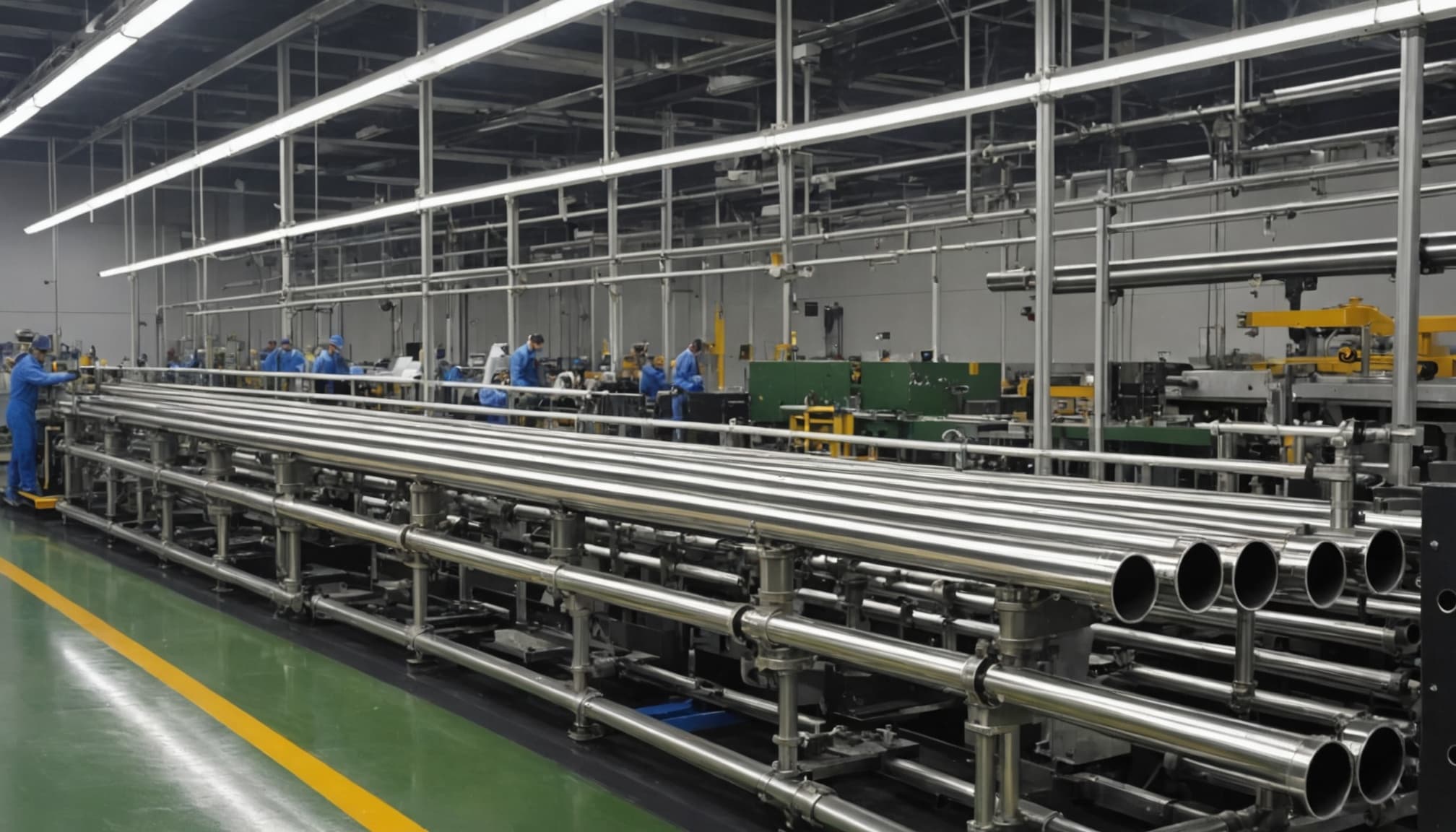
Venus Pipes & Tubes is making a bold move. The company secured a ₹185 crore Letter of Intent from a leading data centre player for stainless steel spools used in cooling applications. This isn't just another order—it's a strategic pivot from selling plain pipes to delivering engineered piping solutions. The question is whether this gamble will pay off.
The Revenue Diversification Play
The ₹185 crore LOI validates Venus Pipes' shift beyond traditional stainless steel pipes. Spooling involves pre-fabricating pipe assemblies with fittings, which means significantly higher value addition than selling standalone pipes. Management expects the spooling facility to generate more than three times its ₹70 crore capex investment in revenue at scale—that's over ₹210 crore when fully operational. Transcripts
This diversification matters because traditional pipe manufacturing is commoditized. Margins hover around 16%, but spooling offers "significantly better margins" according to management. For reference, industry peer Ratnamani's spooling business reportedly achieved margins near 52%, though Venus doesn't expect to reach those levels immediately. Transcripts +1
Domestic revenue grew 31% year-on-year in Q1 FY27, driven by strong demand from end-user industries. Exports maintained a steady 30% contribution to total revenues at ₹94 crore for the quarter. This balanced geographic mix reduces concentration risk. InvestorPresentations
Order Book Expansion Supporting Growth Targets
The order book tells an interesting story. Core pipes and fittings expanded from ₹450 crore to over ₹600 crore, with the incremental ₹150 crore coming from power, engineering, chemical, and oil & gas sectors. Add the ₹185 crore spooling LOI, and the total order book stands at approximately ₹800 crore. Transcripts +1
This robust order visibility supports the company's 20% revenue growth target for FY27. The diversification across sectors is crucial—if data centre demand fluctuates, Venus has traditional industrial sectors providing stability. Power, engineering, chemicals, and oil & gas contributed ₹150 crore in incremental orders, demonstrating broad-based demand. Transcripts +1
The Margin Puzzle: Why Flat Despite Growth?
Here's the puzzling part. Q1 FY27 EBITDA margin remained flat at 16.1% despite 16% YoY revenue growth. Why? Because the company is in transition. Higher-margin products like fittings and spooling are just beginning to contribute. The revenue mix in Q1 FY27 was 55% seamless pipes, 39% welded pipes, and only 6% others. Transcripts
Margins have stagnated in the 16% zone for 6-7 quarters due to several factors. New seamless and fittings capacities commenced at end-May 2026, so their full margin impact isn't yet realized. Customer approval cycles for fittings and spooling take time—sometimes "a few months" per customer. Welded segment utilization is around 60%, while seamless is at 90%, leaving room for efficiency improvements. Transcripts +1
The structural shift needed is clear. Venus is moving up the value chain: from simple pipe fabrication to backward integration for seamless pipes, then into fittings, and now end-to-end spooling solutions. Each step increases value addition and margin potential. Transcripts
Spooling's Margin Advantage
The margin differential between traditional pipes and spooling is substantial. Traditional pipes generate margins around 16%, while spooling is expected to deliver significantly better realizations. Fittings sit somewhere in between. InvestorPresentations +2
The spooling facility is scheduled to commence operations by end-Q3 FY27. Management expects spooling to contribute approximately 5% of total revenue in FY27, rising to 10-15% in FY28. This scaling is critical for margin expansion. Transcripts
The margin trajectory is explicitly tied to this transition. FY27 overall margin is expected to be less than 17%, with the 18%+ target achievable in FY28 when spooling reaches full-year effect. Management expects significant bottom-line improvement in the next 2-3 quarters as value-added products ramp up. Transcripts +2
Capital Efficiency and De-risking
The financials look reasonable. Venus is investing ₹70 crore in spooling infrastructure. Net debt stands at ₹325 crore as of Q1 FY27, with total FY27 capex planned at ₹100-110 crore. The debt-equity ratio is 0.5, up from 0.4 in FY25, but management considers this "quite fine". InvestorPresentations +2
The payback math works. The ₹185 crore LOI represents 2.64 times the spooling capex. Management expects revenue-to-capex of more than 3x at scale. Assuming 20% EBITDA margins for spooling, the expected ROCE exceeds 25%, suggesting a payback period of roughly 1.5-2 years. Transcripts +1
This order-led approach de-risks capital allocation. The ₹185 crore LOI provides revenue visibility before full capacity establishment. It validates customer demand for integrated piping solutions and demonstrates trust in Venus's execution capabilities. InvestorPresentations +1
The Data Centre Opportunity
India's data centre capacity is projected to grow from 1.3 GW in 2025 to 10.5 GW over five years—an 8x expansion. This creates structural demand for stainless steel spools in cooling applications, known as Secondary Fluid Networks (SFN). Transcripts +1
Industry reports corroborate this growth. Wood Mackenzie forecasts India's operational data centre capacity will increase from 2.2 GW in 2025 to 12 GW by 2030, with AI-dedicated capacity expanding nearly 24-fold. JLL projects capacity will triple from 1.6 GW in mid-2026 to 6 GW by 2029, requiring USD 110 billion in investments.
Venus has competitive advantages. Its backward-integrated capacity of 20,400 MTPA provides supply chain control and cost structure benefits over non-integrated manufacturers. The company exports to 30+ countries and serves 80+ Fortune 500 clients in India, providing global reach. InvestorPresentations +2
Barriers to Entry and Scaling Challenges
The competitive moat is substantial. Data centre operators have extremely stringent quality requirements because "single penny of dust can destroy their CPU system". This creates preference for reputed players who can maintain clean room environments. Venus claims to be "the first reputed data center" to receive such an order in India. Transcripts
Building competitive capabilities requires significant investment. Specialized equipment like JCO machines cost ₹12 crore each, and only a handful of players can manufacture them. The integrated platform encompassing seamless pipes, welded pipes, fittings, and spooling is difficult to replicate quickly. InvestorPresentations
But scaling won't be easy. Moving spooling from 5% of revenue in FY27 to 10-15% in FY28 represents a 2-3x growth in a single year. Customer approval processes can take "a few months" and vary by customer. Results from spooling will be visible in "2 to 3 quarters" after commencement, creating timeline pressure. Transcripts +1
The company has accelerated its capex timeline, targeting completion of "the major portion before December 2026". This acceleration may temporarily increase working capital needs during inventory buildup, but management expects higher margins of 18-19% will reduce working capital borrowing over time. Transcripts +1
Execution Risks and Margin Dependency
The ₹185 crore LOI has an execution period extending through December 2027. Management is "trying our level best to finish at the earliest", but any delays could impact FY27-28 revenue recognition. Based on a 15-month execution period, the LOI would generate approximately ₹37 crore per quarter, yet the company anticipates ₹70 crore of revenue from data centres in FY27—suggesting either accelerated execution or additional orders. Transcripts
The margin expansion trajectory is highly dependent on achieving the targeted spooling revenue contribution. Management explicitly states that "when you add fitting and spooling those started contributing definitely, the margins will pick from that". The 18% margin target requires spooling to reach 10-15% of revenue by FY28 with margins exceeding 25%. Transcripts
If spooling underperforms, the margin expansion stalls. A sensitivity analysis shows that if spooling contributes only 7.5% at 20% margins, overall margin would remain around 16.5%—nowhere near the 18% target.
The Verdict
Venus Pipes' strategic pivot to data centre spooling represents a calculated bet on India's digital infrastructure boom. The ₹185 crore LOI provides validation and de-risks the ₹70 crore capex investment. The order book expansion to ₹800 crore supports the 20% revenue growth target, while diversification across power, engineering, chemicals, and oil & gas provides stability.
The flat margins in Q1 FY27 are temporary—a natural consequence of transitioning through a period where higher-margin products are just beginning to contribute. The structural shift to integrated solutions, not just operational efficiency, is what will drive sustainable margin expansion.
Success depends on execution. Scaling spooling from 5% to 10-15% revenue contribution within a year is ambitious. Customer approvals, facility ramp-up, and competitive dynamics all pose risks. But with first-mover advantage, backward integration, and a validated business model, Venus Pipes is positioning itself at the intersection of two structural growth stories: India's data centre expansion and the shift from commodity manufacturing to engineered solutions.
The next 18-24 months will tell whether this strategic pivot delivers on its promise.