The Big Picture: UPI Is About to Get Expensive (For Some)
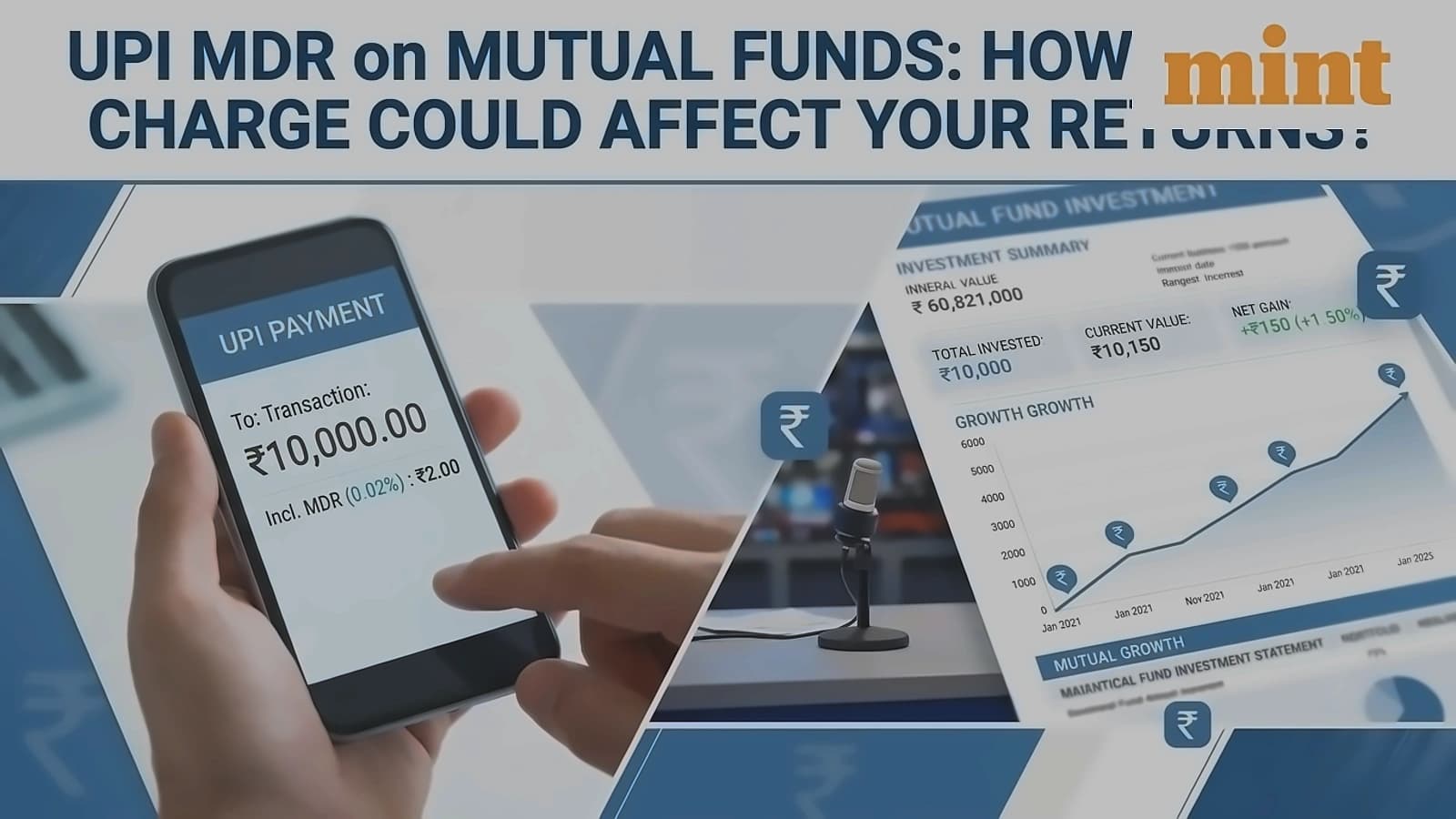
India's digital payments revolution has been built on a simple promise: UPI is free. That's changing. Starting October 15, 2026, a 0.4% Merchant Discount Rate (MDR) will apply to person-to-merchant (P2M) UPI transactions above ₹2,000, capped at ₹300 for payments of ₹75,000 or more. Person-to-person transfers remain free, and small merchants under the P2PM (Person-to-Person-Merchant) category continue to enjoy zero MDR up to ₹1 lakh in monthly receipts.
The move ends nearly six years of zero-MDR UPI for eligible merchants and creates a new revenue stream for payment aggregators. But the rollout is uncertain. Merchant bodies and fintechs have requested a deferment to January 2027, citing festive-season costs and implementation confusion. The National Payments Corporation of India (NPCI) is evaluating the request, and a formal decision is awaited.
Paytm: The Upside Option with a Cash Cushion
Paytm is the largest merchant acquirer in the UPI ecosystem, with 5 crore registered merchants and 1.57 crore on subscription plans. That scale matters. The proposed MDR turns a large chunk of currently free UPI volume into a potential revenue source. Investor Presentation
Management, however, has been cautious. On the Q1 FY27 earnings call, Vijay Shekhar Sharma said the company had "no materiality" to model and would "wait and watch". Paytm's current payment processing margin is "comfortably above 4 basis points" (bps), up from about 3 bps earlier, driven by MDR-bearing products like credit cards on UPI and postpaid credit lines. Net payment margin excluding PIDF (Payment Infrastructure Development Fund) incentives was 8.4 bps in Q1 FY27, down from 8.8 bps a year earlier, partly due to targeted pricing benefits for high-engagement merchants. Transcript +2
The MDR impact is largely an upside option. Paytm earns subscription and loan revenue from merchants, so UPI MDR is additive, not core. With about ₹13,500 crore in cash and a debt-free balance sheet, Paytm can absorb timing risks. The stock, however, is sensitive to headlines. It fell 10% intraday on October 8 on deferment reports, before closing down 5.23% at ₹1,641.50. Goldman Sachs has maintained a positive view, raising EPS estimates by up to 39% after incorporating MDR, but investors are clearly pricing in execution risk. Transcript
Pine Labs: High-Ticket Exposure and the ₹300 Cap
Pine Labs operates in a different lane. Its business is built on point-of-sale (POS) terminals for mid-market and enterprise merchants, with over 70% of its digital commerce platform (DCP) transactions now on UPI. UPI GTV grew over 80% year-on-year in Q1 FY27, but this growth dilutes the blended take rate because UPI carries lower margins than card products. Investor Presentation +2
The ₹300 cap on transactions above ₹75,000 is particularly relevant for Pine Labs. Its merchants skew toward higher average ticket sizes, where the cap compresses the effective MDR rate. A ₹1 lakh payment attracts a maximum fee of ₹300 (0.30%), and a ₹5 lakh payment drops to about 0.06%. Pine Labs' flow-based MDR and aggregator income is growing 60–70% annually, but management hasn't quantified its share of revenue. Transcript
The company's Q1 FY27 adjusted EBITDA was about ₹126 crore, short of the hoped-for ₹140 crore, with contribution margin at 72.3% against 78% a year earlier. Management attributed the margin pressure to seasonal mix and investments in connectivity and distribution, not pricing. Pine Labs' stock has underperformed, trading about 32% below its IPO issue price of ₹221, reflecting broader concerns beyond MDR. Transcript +1
MobiKwik: Low Exposure, High Ambition
MobiKwik has the least direct exposure to UPI MDR. Management calls the UPI take rate "practically nil" because UPI carries no MDR. In Q1 FY27, UPI GMV was ₹269 billion, about 46% of the platform's total GMV, but merchant GMV was only ₹126 billion (about 21%). The company hasn't disclosed a UPI P2M split, so the exact exposure is unclear. Transcript +1
Revenue mix tells the story. Payments revenue was ₹2,081 crore in Q1 FY27 (about 74% of total), with a net payments margin of just 13 bps. Financial services revenue was ₹733 crore (about 26%), with a much healthier 59% gross margin. MobiKwik is aggressively scaling its merchant business, targeting 25% quarter-on-quarter revenue growth and breakeven by FY28. Merchant revenue remains undisclosed, and management says it's "too early" to share it. Investor Presentation +4
For MobiKwik, MDR is a potential upside rather than a current dependency. The stock is volatile—it fell over 8% on deferment news but rebounded 6% the next day. With net cash of ₹437 crore and FY27 guidance of ₹75 crore EBITDA, the company has room to invest in merchant acquisition without immediate MDR support. Transcript +1
The Deferment Debate: Timing vs. Certainty
The push to delay MDR until January 2027 highlights the tension between policy intent and business reality. Trade bodies like CAIT (Confederation of All India Traders) and AIMRA (All India Mobile Retailers Association) argue that a 0.4% fee could eat into thin margins—small traders typically operate on net margins of 0.7–1.25%—and that introducing it during the festive season could hurt consumer sentiment. They've proposed a phased rollout starting at 0.20% and a higher exemption threshold of ₹5 lakh.
For payment companies, deferment is a timing risk. Paytm and Pine Labs have already invested heavily in merchant acquisition. Paytm added 27 lakh devices year-on-year and guides to 25–30 lakh additions annually. Pine Labs added about 500 sales staff over the past six months, with a six-to-twelve-month productivity ramp. MobiKwik has about ₹25 crore of IPO proceeds left for devices and expects fixed costs to rise 15–20% as distribution expands. Investor Presentation +4
A delay pushes out the revenue benefit but doesn't change the investment thesis. Paytm's management says the model doesn't depend on MDR. Pine Labs' margin challenges predate the MDR discussion. MobiKwik's guidance doesn't factor in MDR. The real risk is uncertainty—merchants may delay onboarding or shift to cash if they perceive higher costs, though the government has explicitly prohibited passing MDR to consumers. Transcript
Competitive Dynamics: Big Get Bigger
The MDR framework favors scale. NPCI has set the TPAP (UPI app) share at a fixed 8 bps, while the acquiring bank's share is split with payment aggregators based on negotiated agreements. Banks are expected to keep the largest chunk, around 60–65%. Paytm, as both a TPAP and the largest merchant acquirer, is well-positioned to capture both sides of the fee. PhonePe and Google Pay dominate consumer UPI but have less merchant-acquiring depth, giving Paytm an edge in P2M.
Smaller players face a squeeze. Industry commentary expects "big becoming bigger and small becoming smaller". Pure-play B2B aggregators like Razorpay, Cashfree, and PayU face ambiguity because they've historically charged platform fees on UPI—now barred under the new rules. Pine Labs' enterprise relationships give it negotiating power, but customer concentration (top 10 customers account for about 30% of revenue) is a risk. MobiKwik, with its smaller merchant base and thin take rates, is the most vulnerable to margin pressure. RHP
What to Watch Next
The NPCI Steering Committee's decision on deferment is the immediate catalyst. If implemented as scheduled on October 15, revenue visibility improves for Paytm and Pine Labs, but merchant resistance could test retention strategies. If deferred to January 2027, companies face a quarter of uncertainty without the fee income. A modified framework with higher exemptions or a phased rollout would shrink the fee pool, particularly for Paytm's large small-merchant base.
Longer term, the shift from subsidized UPI to a commercial revenue model is structural. The government has paid over ₹8,000 crore in incentives since 2020 to keep UPI free. MDR moves that cost to merchants, creating a more sustainable ecosystem but also new competitive pressures. Paytm's cash pile and scale give it the strongest hand. Pine Labs' high-ticket exposure and margin recovery path will be key. MobiKwik's financial services focus could offset lower payments margins.
For investors, the question isn't whether MDR happens—it's when, and at what rate. The stocks have shown they'll react sharply to headlines. But the underlying businesses are building beyond UPI, into lending, wealth, and merchant services. That diversification may matter more than any single fee policy.