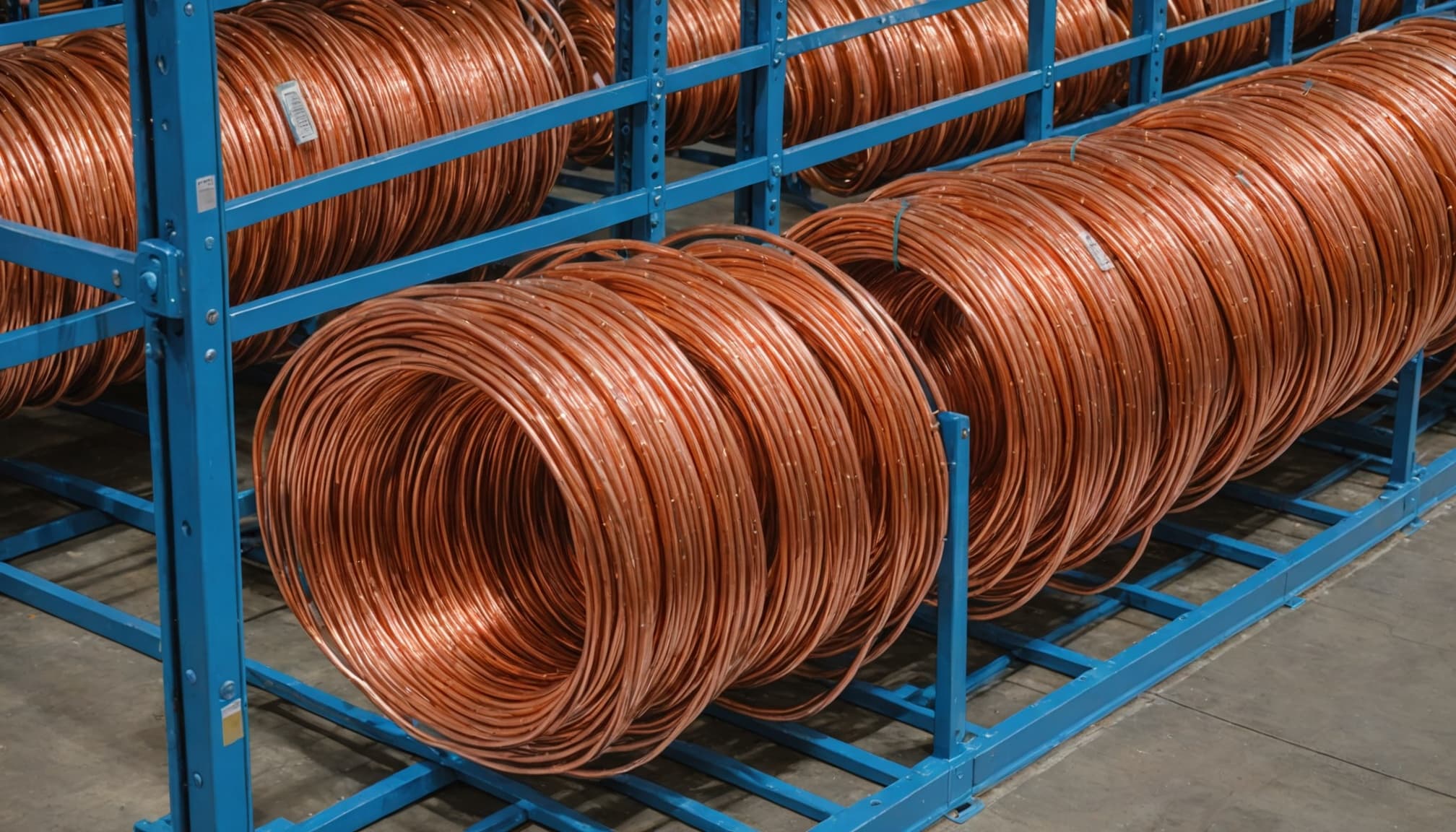
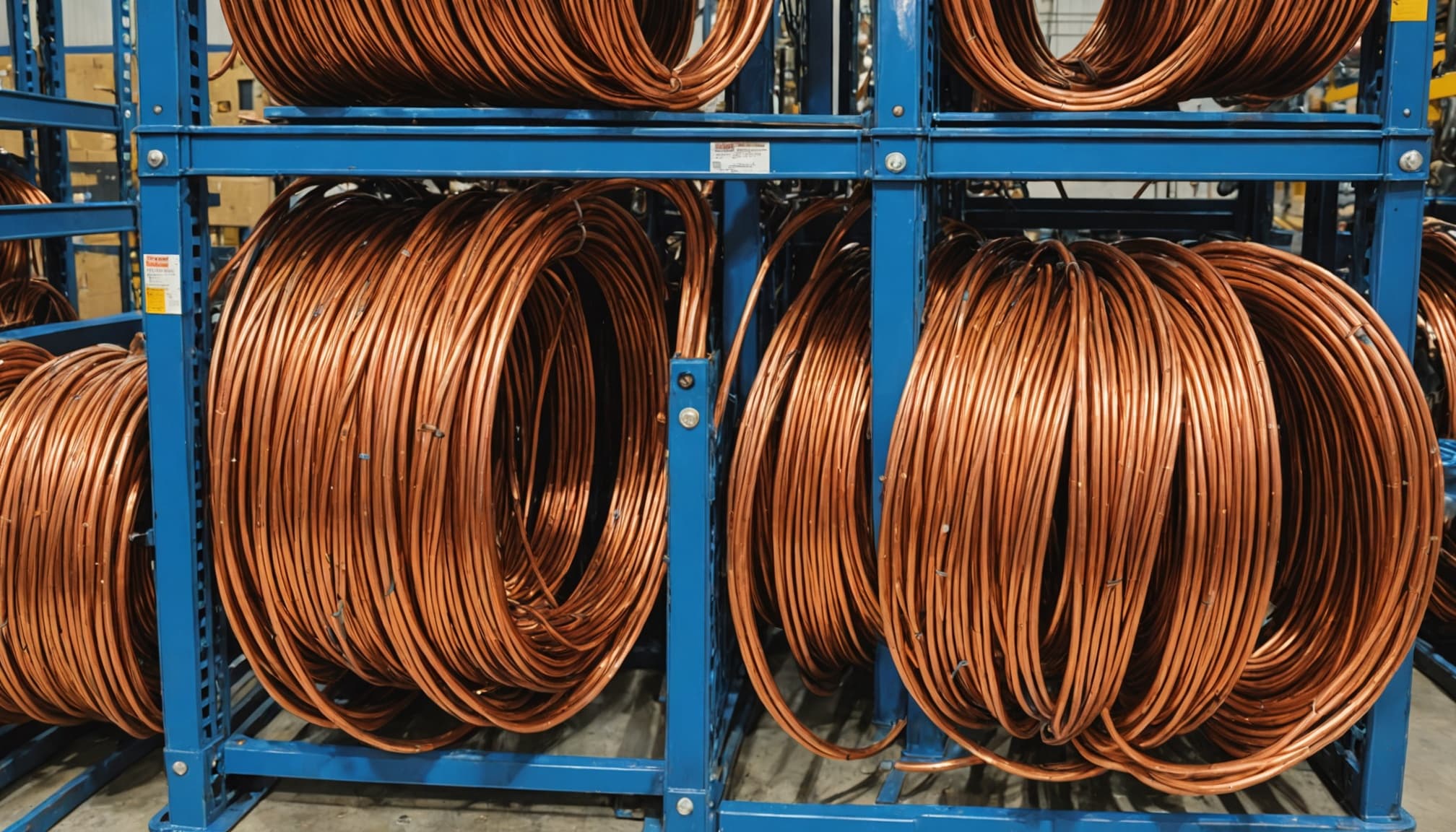
The new entrant, backed by ₹1,800 crore and an initial capacity of 10.98 lakh kilometres, focuses squarely on house wires and light-duty cables for residential, commercial, and industrial applications. This creates a direct competitive threat for companies with heavy exposure to retail distribution, while leaving specialized players largely untouched.
The market has already voted with its feet.
This divergence tells a clear story: not all cable companies are created equal when it comes to Ultravolt's competitive reach.
Why Polycab, KEI, and RR Kabel Are in the Crosshairs
These three companies share a common vulnerability: heavy dependence on house wires and dealer-driven retail distribution. Polycab derives 87% of revenue from wires and cables, with 30% coming from B2C channels and 90% flowing through distribution networks. KEI Industries isn't far behind at 96% of revenue from cables and wires, with 59% of sales through its dealer network. RR Kabel follows a similar pattern with 91% of revenue from wires and cables. AnnualReports +4
Ultravolt's strategy directly targets these weak points. The new player plans to reach 1 lakh retailers through 5,000+ UltraTech Building Solutions outlets, leveraging existing relationships with individual home builders who account for 65% of cement consumption. This creates immediate competitive pressure on dealer loyalty, electrician influence programs, and pricing power—all critical success factors in the house wires segment.
The valuation market reflects this risk. Despite strong fundamentals, all three companies trade at 43-47x P/E, below their five-year median of approximately 50x. This compression suggests investors are already pricing in margin pressure, market share loss, and increased competitive intensity.
Universal Cables: The EHV Moat
Universal Cables operates in an entirely different universe. The company focuses on Extra High Voltage (EHV) power cables up to 400kV, serving utilities, power transmission companies, and infrastructure projects through tender-based processes. Only 5.81% of sales flow through dealers, making Ultravolt's dealer-driven strategy structurally irrelevant. AnnualReports +2
The numbers tell the story of successful insulation. Q1FY27 revenue surged 57.5% to ₹945 crore, while PAT jumped 91% to ₹37.18 crore. Most impressively, exports skyrocketed 187% to ₹120 crore, driven by a prestigious 400kV EHV cable order from the Middle East. The company maintains a healthy 10% EBITDA margin despite rapid growth, supported by Price Variation clauses that protect against commodity volatility. AnnualReports +1
Universal Cables' order book of ₹2,860 crores, including ₹485 crores in exports, provides clear visibility for FY27's 25%+ revenue growth target. The stock trades at 25.3x P/E—51% above its five-year median of 16.8x—reflecting investor confidence in its competitive insulation.
KSH International: Complete Insulation Through Specialization
KSH International takes the concept of insulation to another level. The company is a pure-play manufacturer of specialized magnet winding wires, with 75% of revenue coming from high-value products like Continuously Transposed Conductors (CTC), rectangular enamelled wires, and bunched paper insulated wires. These products serve 120+ global OEM customers including Hitachi Energy, GE Vernova, Siemens Energy, and BHEL. InvestorPresentations +2
The business model is fundamentally different from retail cable companies. KSH operates on a make-to-order basis with 97% repeat revenue, serving critical infrastructure applications like power transformers (including HVDC and 765kV), traction transformers, EV traction motors, and wind generators. Ultravolt's consumer-focused house wires have zero overlap with this market. InvestorPresentations +1
Q1FY27 results demonstrate the power of this positioning: revenue doubled 108% to ₹1,164 crore, while PAT rose 86% to ₹42.2 crore. The company signed a five-year supply framework agreement with Hitachi Energy Global, providing unprecedented revenue visibility. Exports grew 76% YoY, contributing 27% of revenue, with a long-term target of 40%.
Despite margin contraction to 6.4% (down 80 bps) due to copper price pass-through mechanics, EBITDA per tonne improved dramatically to ₹93,325 from ₹66,000 a year earlier. The stock trades at 52.8x P/E—a 54% premium to its estimated five-year median—reflecting market recognition of its specialized moat.
Finolex Cables: Partial Protection Through Diversification
Finolex Cables occupies the middle ground—exposed but cushioned. While approximately 60% of electrical cables revenue comes from construction and house wires vulnerable to Ultravolt, the remaining 40% serves specialized segments including automobile (10-12%), agriculture (10-12%), industrial (10-12%), and solar cables. Transcripts
This diversification enabled Q1FY27 EBITDA margin expansion of 236 basis points to 12.13%, despite revenue growing 44.3% to ₹2,013 crore. The communication cables division, though currently at ~6% EBIT margins with expectations to improve to 8-9%, provides additional growth potential driven by data center expansion and AI demand.
Finolex's competitive advantages include E-beam curing technology for product differentiation, backward integration with in-house copper rod manufacturing, and a well-diversified pan-India distribution footprint. The stock trades at 27.45x P/E—38% above its five-year median of 19.95x—reflecting partial protection through diversification. InvestorPresentations +1
The Valuation Gap: Market Pricing of Differential Risk
The stark difference in valuations tells the complete story. Exposed players (Polycab, KEI, RR Kabel) trade at 43-47x P/E but below their five-year medians, indicating risk premium for competitive uncertainty.
This valuation gap reflects efficient market pricing of differential competitive risks. For exposed companies, the key question is whether they can defend volumes and margins as Ultravolt scales its dealer and electrician network. For insulated companies, investors will watch export order conversion, capacity utilization, and specialized segment growth.
The next 2-3 quarters will be critical. Ultravolt's competitive impact will become measurable in financial results through volume trends, margin trajectories, and market share data. Until then, the market has clearly separated winners from losers based on business mix, customer segments, and distribution channels.