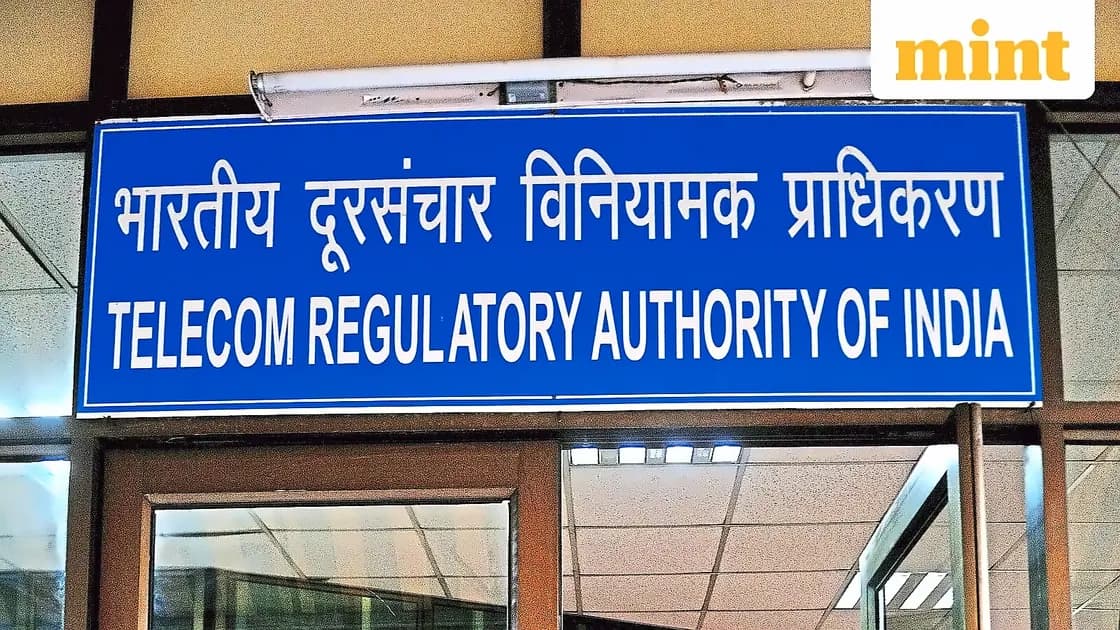
The Telecom Regulatory Authority of India (TRAI) is examining complaints filed by Bharti Airtel and Reliance Jio against Vodafone Idea (Vi) over alleged malpractices related to mobile number portability (MNP). TRAI Chairman AK Lahoti confirmed that when representations are received from operators, it is mandatory to investigate and examine the concerns raised. This protocol strengthens TRAI's credibility by demonstrating impartial enforcement, but the regulator faces a delicate test. The outcome will signal whether TRAI can effectively police a market where the third-largest player is fighting for survival against two deep-pocketed rivals.
Specific MNP 2009 Norm Violations
The allegations center on specific violations of the MNP 2009 regulations. Airtel and Jio claim that Vi and its channel partners violated TRAI directions while seeking to acquire customers through MNP. The most serious allegation involves restricting SMSes that customers must send to 1900 to generate a Unique Porting Code (UPC). The MNP 2009 norms specify that the UPC must be issued without delay by the network from which the customer is porting out. Blocking these requests directly contravenes core regulations designed to ensure seamless switching. Additionally, competitors allege that Vi's sales associates contacted customers while falsely claiming to be executives from other telecom companies, warning them about tariff hikes to encourage switching to Vi. Vi has denied wrongdoing, stating it conducts business in compliance with the law.
Deterrent Effect and Protocol Limitations
TRAI's mandatory investigation protocol creates a theoretical deterrent, but its effectiveness is constrained by penalty structures. Historical penalties for MNP violations range from Rs 5,000 to Rs 10,000 per instance. For telecom operators carrying billions in revenue, these fines are negligible. The real deterrent comes from the mandatory nature of the investigation itself—knowing that any complaint triggers a formal probe forces operators to maintain compliance systems. However, the protocol's impact is blunted when the potential rewards of market share gains outweigh the financial risks of penalties.
Strategic Urgency Behind Vi's Tactics
Vi's alleged MNP malpractices reflect existential strategic urgency. The company faces a catastrophic market share deficit.
Vi trailed with just 199.06 million. While Jio and Airtel continue adding millions of subscribers monthly, Vi struggles with consistent losses. The company lost 4.11 lakh wireless subscribers in January 2026, though this was an improvement from December's 9.41 lakh decline. This competitive pressure creates survival-level desperation to reverse subscriber losses through any available means.
The Debt-Acquisition Paradox
The causal relationship between Vi's discounted postpaid offers and sustainable customer addition is fundamentally weakened by its debt burden. Vi carries total debt of approximately Rs 2.1 trillion. Despite this, the company has achieved impressive ARPU growth, reaching Rs 195 in Q1 FY27, a 10.2% year-on-year increase. However, this remains significantly below Airtel's Rs 264 and Jio's Rs 215.60. Discounted MNP offers attract price-sensitive customers with lower lifetime value, precisely the profile Vi cannot afford given its massive debt servicing requirements. The company needs high-ARPU, low-churn customers to fund its Rs 45,000 crore capex plan, but aggressive discount strategies typically attract the opposite.
Metric Inflation Through Porting Restrictions
The alleged restriction of SMS porting codes to 1900 represents a sophisticated metric inflation strategy. By blocking customers from obtaining UPCs, Vi artificially suppresses churn and creates false retention metrics. While Airtel added 44.06 lakh and Jio added 24.37 lakh subscribers in January 2026, Vi's "only" 4.11 lakh loss appears artificially stable. This practice distorts competitive performance metrics and gives investors a misleading picture of Vi's true market position. TRAI has previously addressed similar issues, directing in 2021 that all operators must enable SMS facilities to shortcode 1900 for porting requests, indicating regulatory awareness of such tactics.
Capex and Funding Headwinds
The TRAI investigation creates significant headwinds for Vi's Rs 45,000 crore capex plans. While direct penalties may be modest, mandatory operational changes could divert resources. Restoring SMS porting systems, enhancing channel partner oversight, and implementing revised acquisition processes could cost Rs 250-500 crore. More critically, the investigation delays Vi's Rs 35,000 crore bank funding package. Lenders have broadly accepted Vi's revised financial projections but seek additional promoter guarantees before final approval. Regulatory uncertainty increases credit risk perceptions, potentially raising interest costs by 75 basis points and extending approval timelines by 4-8 weeks. Without timely funding, Vi risks falling further behind Airtel and Jio in 5G deployment.
Brand Strategy Contradiction
Vi's brand strategy presents a stark contradiction. The company recently appointed Shah Rukh Khan as brand ambassador for a "Vi badal raha hai... tayaar rahiye" campaign, promoting transformation and "equal service for all". This narrative fundamentally contradicts alleged deceptive acquisition practices that restrict consumer choice. The timing is particularly problematic—heavy marketing investment coincides with regulatory scrutiny into compliance failures. Any adverse findings could severely damage brand equity, especially given research showing perceived quality as the strongest driver of telecom brand equity.
Competitive Dynamics and Market Structure
The competitive dynamics reflect deeper structural tensions in India's three-player market. Airtel's launch of Fastlane service, which uses 5G network slicing to prioritize postpaid users, likely triggered Vi's intensified MNP efforts. Fastlane represents a direct competitive threat to Vi's ability to attract and retain high-value customers. Vi's response—aggressive MNP solicitation through discounted offers and alleged deceptive practices—represents a desperate attempt to counter Airtel's premium positioning and Jio's market leadership.
Regulatory Feedback Loops
The regulatory response could create complex feedback loops affecting all operators. Stricter MNP regulations would increase compliance costs system-wide, potentially accelerating Vi's decline and reinforcing duopoly dynamics. This creates a paradox: regulatory action intended to ensure fair competition might inadvertently reduce competitive intensity by constraining the financially weakest player most severely. For Airtel and Jio, the investigation validates their complaints but also forces strategic recalibration toward compliance-first acquisition and enhanced customer retention investments.
The Path Forward
The outcome of TRAI's investigation will significantly influence India's telecom market structure. A balanced response that addresses specific violations without imposing broad industry constraints could preserve a competitive three-player market. However, excessive regulatory burden could accelerate Vi's decline, leading to effective duopoly consolidation. The challenge for TRAI is to enforce fair competition while maintaining market structure—a delicate balance that will determine whether India's telecom sector remains genuinely competitive or settles into a comfortable duopoly that gradually erodes consumer welfare through reduced competitive pressure.