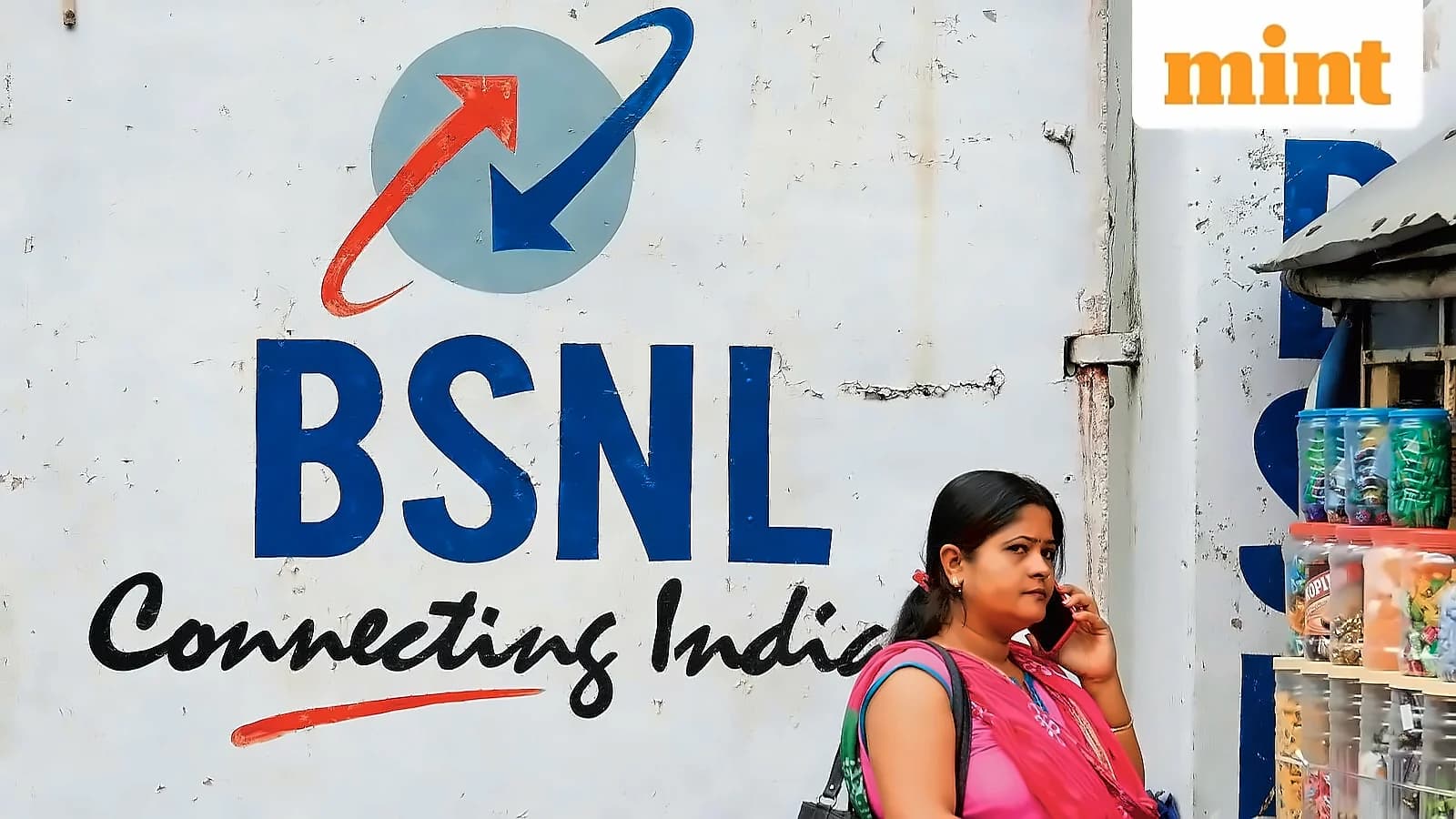
BSNL is making a bold bet. The state-run telecom operator has proposed a staggering ₹77,000 crore capital expenditure plan over the next five years. The goal? Deploy 200,000 additional 4G sites, roll out 5G in strategic high-traffic areas, and finally achieve operational breakeven by FY29. It's a transformation strategy that hinges on three pillars: massive infrastructure modernization, aggressive cost rationalization, and unprecedented collaboration with private operators.
The Investment Paradox: Short-term Pain for Long-term Gain
The Department of Telecommunications projects this capital infusion will help BSNL reach 98% nationwide coverage while ending years of financial bleeding. But the path there is paved with short-term pain. In FY26, BSNL's net loss widened to ₹4,738 crore, up from ₹2,247 crore the previous year. The culprit? A 65% surge in depreciation and amortization expenses to ₹10,350 crore, driven by the company's largest-ever capital expenditure of ₹26,022 crore in FY25.
This investment cycle is fundamentally different from previous attempts.
As of April-end, BSNL had installed 105,290 indigenous 4G sites, with over 96,000 operational. This rapid deployment has already yielded results: BSNL recorded consecutive profitable quarters in FY25 after 17 years of losses, and its customer base grew from 8.86 crore to 9.28 crore between March 2024 and December 2025.
The Revenue Gap: Capital Deployment vs. Monetization
But infrastructure alone won't solve BSNL's revenue challenge.
The gap highlights a critical disconnect between capital deployment and revenue generation—a time lag that's testing the company's financial resilience.
The collaboration with Vodafone Idea could be a game-changer. With the government holding a 49% stake in Vodafone Idea, infrastructure sharing discussions are actively underway. BSNL currently leases 1,441 towers to Vodafone Idea, but enhanced arrangements could generate ₹2,800-4,000 crore annually in recurring revenue. For Vodafone Idea, sharing BSNL's infrastructure means avoiding ₹5,000-7,000 crore in capital expenditure while accelerating its rollout timeline by 12-18 months.
Strategic Collaboration: The Vodafone Idea Partnership
The synergy goes beyond towers. Both operators are exploring fiber sharing through BharatNet, spectrum sharing arrangements, and intra-circle roaming agreements. This collaboration could reduce BSNL's combined capital requirements by 40-50% while cutting operating expenses by 20-25%. It's a pragmatic approach that acknowledges neither operator can independently match the scale of Reliance Jio and Bharti Airtel.
BSNL is also pursuing aggressive asset monetization to reduce dependence on government funding. The company targets ₹8,000 crore from land and property sales in FY27, with a prime Mumbai property and residential flats already attracting interest from the Income Tax Department. More strategically, BSNL is exploring data center conversions on its land parcels, with discussions reportedly underway with Google and Microsoft for mobile edge computing centers.
Beyond Traditional Telecom: Data Centers and New Ventures
The data center opportunity is substantial. India's data centre market value is projected to more than double from $4.35 billion in 2021 to over $10 billion by 2027. BSNL's 15,000 land parcels valued at ₹650 billion, combined with its 700,000 km fiber network, provide a natural advantage. The company has already opened its data centre network to private players and startups under a revenue-sharing model, offering space, power, and bandwidth at over 70,000 network stations nationwide.
New business ventures are expanding beyond traditional telecom. BSNL has partnered with Echelon Edge and L&T Technology Services to deploy private 5G networks for enterprises, targeting sectors like mines, refineries, airports, and government infrastructure. The global private 5G market is expected to exceed $8 billion by 2026, growing at 35.7% annually. BSNL is also building IoT capabilities through partnerships with Aeris and Corient, positioning itself for the enterprise digital transformation wave.
The Accountability Gap: Missing ROI Mechanisms
But accountability remains the critical missing piece. Former TRAI adviser Satya N. Gupta has warned that BSNL's capital infusion lacks proper ROI analysis and accountability mechanisms.
The ₹3.22 trillion in government revival packages have enabled massive investment, but without market discipline, the risk of inefficient allocation looms large.
The parliamentary committee on communications has pushed for comprehensive expenditure rationalization, focusing on controllable operational costs, increased tower sharing, network optimization, and prioritization of high-revenue segments. The Department of Telecommunications is responding by implementing performance monitoring systems and exploring market-based accountability mechanisms, including potential Real Estate Investment Trusts for BSNL's infrastructure assets.
The Government's Dilemma: Support vs. Performance Enforcement
The government faces a delicate trade-off. Continued financial support is essential for BSNL's survival and strategic objectives—universal service, competitive market structure, and technology sovereignty. But enforcing stricter performance metrics is equally crucial to ensure efficient use of public funds. The optimal path appears to be a graduated approach: provide necessary support during the transformation while progressively introducing market discipline and accountability.
BSNL's ARPU target of ₹150 by FY27—up from ₹101 in FY26—requires nearly 50% revenue growth if subscriber base remains stable. This ambitious goal depends on network quality improvement, 5G launch in high-traffic areas, and successful enterprise services expansion. The company's cellular revenue has been largely flat over FY22-FY25, growing only 3% in FY25, underscoring the challenge ahead.
The FY29 Breakeven Challenge: Execution is Everything
The FY29 operational breakeven projection remains achievable but requires flawless execution. The ₹10,350 crore depreciation burden represents a structural cost that must be offset through operational efficiency gains and revenue acceleration. BSNL's transformation represents a high-stakes gamble on the premise that massive infrastructure investment, combined with operational excellence and strategic focus, can reverse decades of decline.
The next two years will be decisive. If BSNL can accelerate revenue monetization from its 4G rollout, execute cost rationalization measures, and scale its tower leasing and data center initiatives, the FY29 breakeven target is within reach. But if execution falters or competitive pressures intensify, India's state-run telecom operator risks becoming a permanent drain on public finances. The ₹77,000 crore question isn't just about technology—it's about whether BSNL can transform from a protected entity into a competitive, market-driven operator.