India's electric vehicle market is growing fast, but the mid-size family SUV segment remains a battleground. Tata Motors dominates with the Nexon.ev, Curvv.ev, and Sierra.ev, yet the MG Windsor has carved out a niche with its spacious cabin and clever Battery-as-a-Service (BaaS) pricing. Enter 'Kuno'—a reported internal codename for Tata's upcoming mid-size electric SUV, expected to launch in 2027-28. If the reports hold water, Kuno isn't just another model; it's a strategic move to defend Tata's turf and capture the family buyer who prioritizes practicality over style.
Where Kuno Fits: Filling the Gap
Tata's current EV lineup covers distinct bases. The Nexon.ev is the compact, entry-level option. The Curvv.ev brings coupe-inspired flair to the Rs 17-22 lakh band. The Sierra.ev targets lifestyle buyers with its boxy design and premium positioning. Kuno, however, is reported to take a different path: a conventional, upright family SUV focused on cabin space, comfort, and everyday usability. It would sit between the next-generation Nexon.ev and Sierra.ev, measuring around 4.3 meters in length.
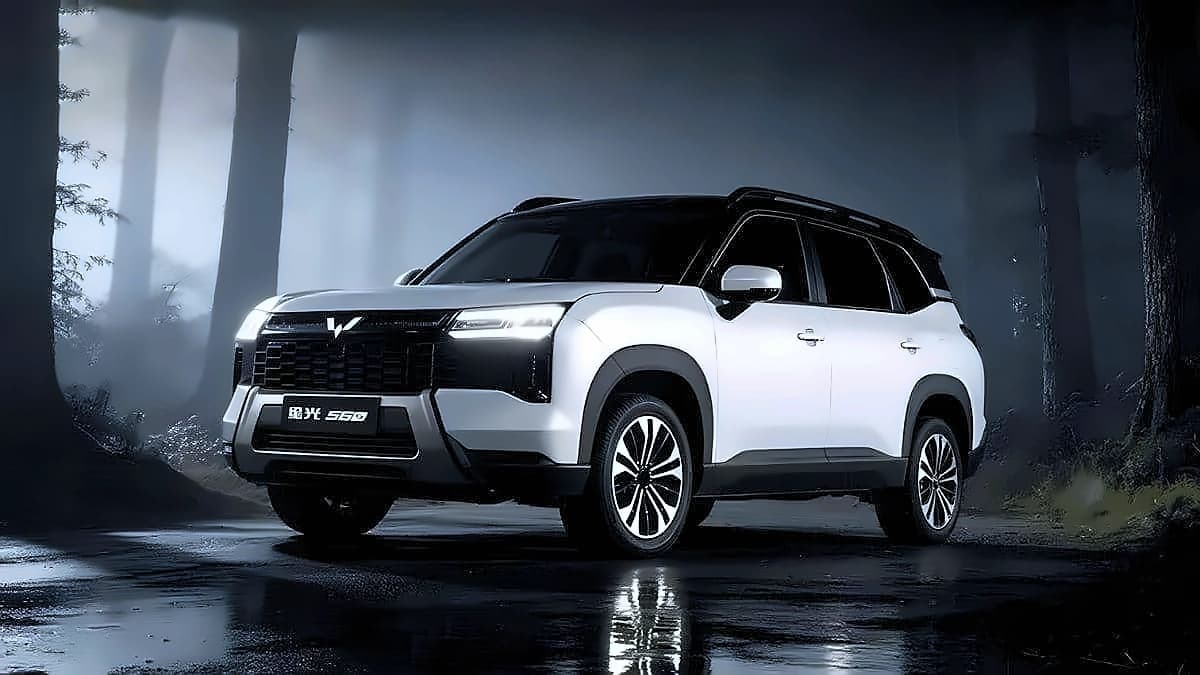
This positioning matters. The Windsor's strength lies in its "C-segment space" despite a compact exterior, achieved through a flat-floor EV architecture. Kuno is expected to leverage Tata's Acti.ev dedicated platform, which supports front-, rear-, and all-wheel-drive layouts and optimizes battery packaging for maximum interior room. The result? A potential challenger that matches or exceeds the Windsor's practicality while offering Tata's established brand and service network.
The Sanand Advantage: Scale and Speed
Manufacturing strategy is where Kuno could gain a real edge. Tata plans to produce Kuno at its Sanand facility in Gujarat, with an annual capacity of 80,000 to 100,000 units. This isn't a greenfield gamble. In 2022, Tata acquired Ford India's Sanand plant for Rs 725.7 crore, unlocking 300,000 units of annual capacity scalable to 420,000. The adjacent location to Tata's existing Sanand operations allows for shared infrastructure and a leaner workforce structure. Annual Report +1
Brownfield assets typically offer better capital efficiency than building from scratch. While Tata hasn't disclosed project-level capex for Kuno, the reuse of existing battery and motor options from the Curvv.ev and Sierra.ev could contain development costs. The Sanand plant's readiness also shortens the time-to-market, crucial as competition intensifies with launches like the VinFast VF5 and Hyundai Ioniq P expected by March 2027.
Economics of Scale: Volume and Margins
Tata's EV business is scaling rapidly. EV volumes hit a record 34,000+ units in Q1 FY27, with average monthly offtake at 11,500—up 112% year-on-year. Yet profitability remains a work in progress. The EV segment reported an operating loss of Rs 256 crore in FY25, down from Rs 792 crore in FY24. Management notes that EV costs are deflationary while ICE costs are inflationary, and PLI (Production Linked Incentive) schemes support profitability. Investor Presentation +4
Kuno's planned capacity of 80,000-100,000 units annually would represent a significant step up. At full utilization, it could generate Rs 13,600-25,000 crore in ex-showroom value, based on reported pricing estimates of Rs 17-25 lakh. However, ramp-up takes time. The Windsor itself sold 3,300 units in September 2026, down 30% year-on-year amid rising competition. Achieving Kuno's capacity targets will depend on demand and avoiding cannibalization of Curvv.ev and Sierra.ev sales—a risk management itself flags. Transcript
Specs Showdown: Battery, Range, and Charging
Technical details for Kuno remain unconfirmed, but reports suggest it may borrow battery and motor options from existing models. The Curvv.ev offers a 55 kWh pack with 502 km claimed range, while the Sierra.ev goes up to 75 kWh with 665 km range. The Windsor, in comparison, offers 38 kWh and 52.9 kWh options with claimed ranges of 332 km and 449 km respectively.
For family buyers, range anxiety is real. A 400+ km real-world range is becoming the baseline for highway confidence. The Windsor's larger battery delivers this, but its DC charging is limited to 60 kW. The Sierra.ev already supports 110 kW DC fast charging, reaching 20-80% in about 25 minutes. If Kuno inherits this capability, it would offer a clear advantage in charging speed—a critical factor for long-distance family travel.
Pricing Pressure: The BaaS Challenge
Pricing is where the battle will be fiercest. The Windsor's disruptive BaaS model starts at Rs 9.99 lakh plus a per-km battery rental, making it accessible to price-sensitive buyers. Outright purchase begins at Rs 14.85 lakh. Kuno, reportedly priced in the Rs 17-25 lakh bracket, cannot compete on headline price.
Tata's response will need to be nuanced. Entry variants priced close to the Curvv.ev's starting point could attract buyers cross-shopping the Windsor. Value will come from features, safety (the Curvv.ev already boasts a 5-star Bharat NCAP rating), and the promise of lower running costs. However, Tata must also protect margins. India business EBITDA margin was flat at around 4% in Q1 FY27, pressured by commodity costs. Aggressive discounting to match the Windsor could squeeze profitability further. Transcript
Execution Risks: Supply Chain and Competition
The path to 2027-28 is not without obstacles. Supply chain constraints have already impacted Tata's EV ramp-up. Casting and sheet-metal shortages delayed the Sierra.ev launch, and management expects relief only from October 2026. Battery cell availability remains a critical risk, though Tata is working on localisation through its Agratas subsidiary. Transcript +2
Sanand itself carries risks. Floods in July 2026 temporarily disrupted production, highlighting the vulnerability of concentrating volume at a single site. Moreover, the competitive landscape is evolving rapidly. Mahindra's XEV 9S is gaining ground, and global players like VinFast and BYD are expanding their presence. MG Motor plans to introduce two new EVs and a plug-in hybrid this fiscal year, potentially refreshing the Windsor or launching a direct rival. Other +1
Policy and Technology: The Wild Cards
Government policy remains a double-edged sword. The PLI scheme for auto and advanced chemistry cells (ACC) provides incentives for domestic manufacturing, with cumulative disbursements of Rs 2,377.56 crore as of January 2026. Kuno would need to meet domestic value addition thresholds to qualify. State-level incentives, such as Gujarat's EV hub status, further support manufacturing.
However, policy uncertainty looms. The PM E-DRIVE scheme and SPMEPCI (Scheme to Promote Manufacturing of Electric Passenger Cars in India) target specific segments and may invite new competitors with lower import duties. Changes in GST rates post-2027 could also alter the total cost of ownership equation. On the technology front, falling battery costs would benefit all players, potentially compressing margins if pricing becomes more aggressive.
The Verdict: A Calculated Gamble
Kuno represents Tata's most direct answer to the Windsor yet. It combines a practical family-focused design, a dedicated EV platform, and the manufacturing muscle of Sanand. If executed well, it could strengthen Tata's mid-size EV portfolio and defend its market share against encroaching rivals. But the stakes are high. Supply chain bottlenecks, pricing pressure from BaaS models, and the risk of cannibalizing existing models are real challenges.
For investors and industry watchers, the key metrics to watch will be Kuno's actual launch specs, its pricing strategy relative to the Windsor, and the speed of its production ramp-up at Sanand. Tata's EV journey is far from over, and Kuno could well be the model that defines its next phase.