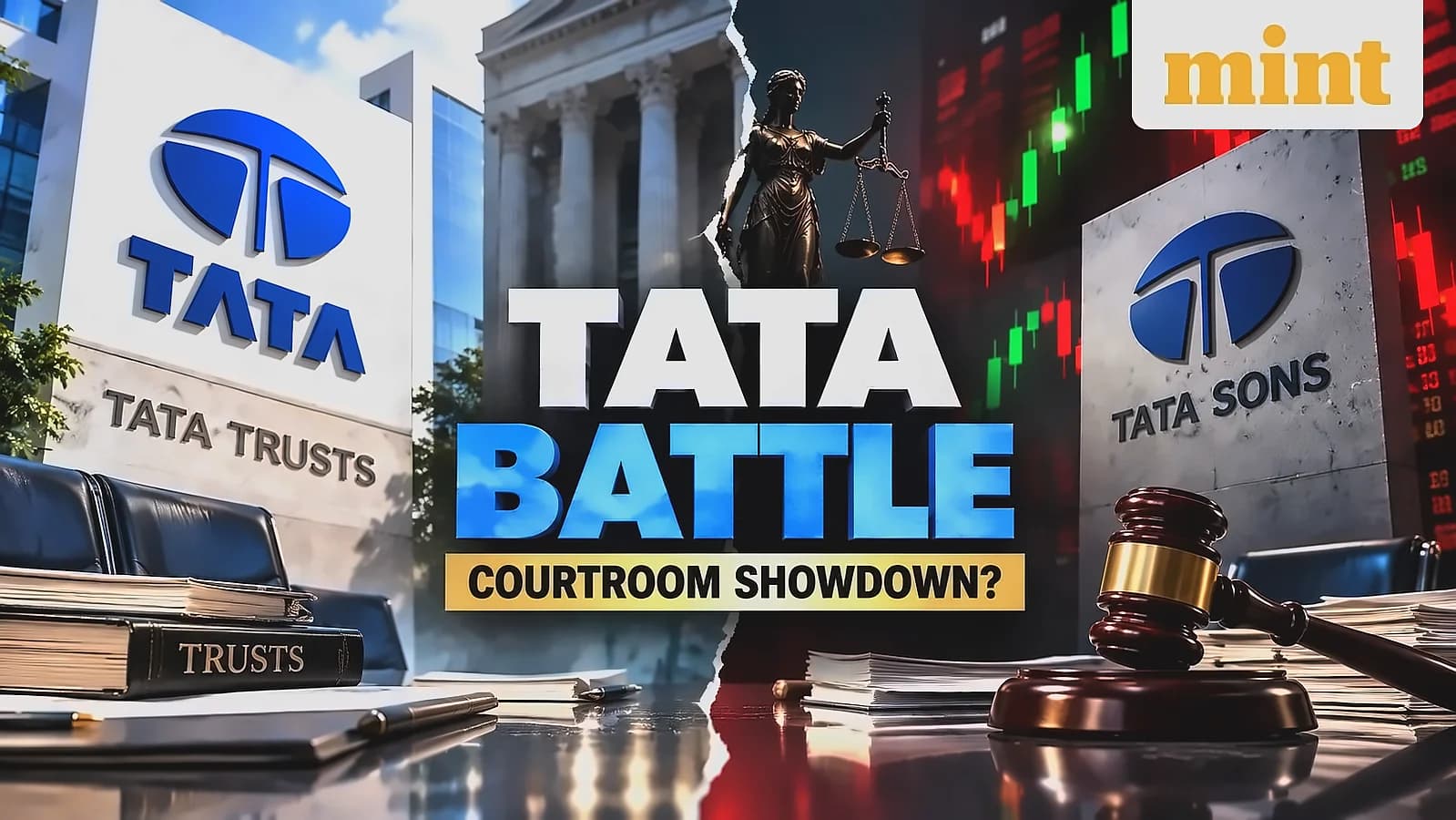
India’s most storied conglomerate is facing its most serious internal governance crisis in decades. The dispute centers on the reappointment of N. Chandrasekaran as Executive Chairman of Tata Sons Private Limited, the group’s principal holding company.
However, Noel Tata, Chairman of Tata Trusts—which holds approximately 66% of Tata Sons—cast the lone dissenting vote and immediately declared the resolution "illegal".
This isn't merely a disagreement over one man's job tenure. It is a fundamental collision between the board’s authority and the majority shareholder’s rights, exacerbated by a regulatory mandate from the Reserve Bank of India (RBI) that threatens to force the privately held conglomerate onto the public markets. The outcome will shape not just who leads the $185 billion empire, but how it is owned, governed, and funded for generations to come.
The Battle Over Balance of Power
The balance of power at Tata Sons has historically relied on a unique structure: Tata Trusts owns the majority stake but operates through a professional board. Under the Articles of Association (AoA), the Trusts appoint one-third of the directors and hold veto powers over key decisions, including the appointment of the chairman.
Chandrasekaran’s continuation tilts this balance. By securing board backing, he strengthens the operational management’s independence from the Trusts. Conversely, Noel Tata’s dissent highlights a strategic misalignment. The Trusts argue that the AoA requires both of their nominee directors to vote in favor for a chairman’s appointment to be valid. Since Noel Tata voted against, they maintain the resolution is a "legal nullity". Tata Sons, citing legal opinions from former Supreme Court judges, insists the reappointment is valid.
This split exposes a deeper rift. While Noel Tata opposes the reappointment, Venu Srinivasan—the other Trust nominee—voted in favor. This fracture within the Trusts’ own representation weakens their ability to present a unified front and complicates the governance picture significantly.
The Regulatory Sword: RBI’s Listing Mandate
While the boardroom drama unfolds, a regulatory clock is ticking. In September 2022, the RBI classified Tata Sons as an "Upper Layer" Non-Banking Financial Company (NBFC-UL), a category subject to enhanced oversight and a mandatory listing requirement within three years. The original deadline of September 30, 2025, has passed.
Tata Sons attempted to sidestep this by repaying over ₹21,000 crore in debt and applying to surrender its Core Investment Company (CIC) registration in March 2024. However, on September 12, 2026, the RBI rejected this application, directing the company to comply with Upper Layer rules and prepare for a public listing. This rejection removed the most direct route to remaining private and fundamentally altered the strategic landscape.
The financial implications of a listing are profound. It would introduce market discipline and transparency but also expose the group to shareholder pressure for returns, potentially conflicting with the Trusts’ philanthropic objectives. A listing would also provide a clear exit route for the Shapoorji Pallonji (SP) Group, the second-largest shareholder with an 18.4% stake, which is burdened by high-cost debt estimated around ₹60,000 crore.
The Merger Proposal: A Strategic Gamble
To avoid a listing, Tata Trusts have proposed a radical restructuring: merging Tata Electronics Systems Solutions (TESS) and Tata Consulting Engineers (TCE) into Tata Sons. The goal is to convert Tata Sons from a pure investment company into a holding-plus-operating entity.
The logic is regulatory arithmetic. The merged entity would report operating revenue of ₹1.05 lakh crore, significantly higher than its income from financial assets (₹40,072 crore). This would ensure financial investments are not the "dominant" source of income, potentially exempting it from NBFC classification. Additionally, its net assets of ₹2 lakh crore would include investments of ₹1.77 lakh crore, below the 90% threshold required for CIC status.
However, this path is fraught with uncertainty. Experts note that the RBI would assess whether this restructuring genuinely addresses regulatory concerns or is merely designed to circumvent the listing obligation. Noel Tata himself has expressed hope that the RBI will engage, but no approval has been granted.
Market Impact and the Cost of Conflict
The uncertainty has already spilled into the markets.
Tata Consultancy Services fell 2.98%, while Tata Chemicals tumbled 9.57% and Tata Investment Corporation dropped 3.55%. The selling pressure was attributed to governance concerns rather than operational deterioration.
Companies like Tata Chemicals and Tata Investment Corporation are particularly sensitive because their valuations are tied to their stakes in Tata Sons. For the larger operating companies like TCS, Tata Motors, and Tata Power, the risk is less about immediate operations and more about sentiment. Prolonged leadership uncertainty could trigger a "governance discount," affecting valuation multiples and the group’s ability to raise capital at favorable rates.
The Road Ahead: Litigation or Compromise?
With positions hardening, the dispute appears headed for the National Company Law Tribunal (NCLT). Tata Trusts have engaged senior advocate Abhishek Singhvi, while Tata Sons is represented by former Solicitor General Harish Salve. The legal battle will likely center on the interpretation of the AoA regarding the chairman’s appointment and the validity of the board’s vote.
A protracted legal fight carries significant risks. It could delay critical decisions on capital allocation for major ventures like Air India and Tata Digital. It could also force the courts to define the limits of the Trusts’ veto powers, potentially reshaping the group’s governance framework permanently.
Ultimately, the Tata Group is at a crossroads. The dispute is no longer just about personalities; it is about whether the century-old model of philanthropic ownership can coexist with modern regulatory requirements and the demands of a public market. The resolution will require more than a legal victory—it demands a new governance compact that balances the Trusts’ stewardship with the autonomy needed for professional management to navigate a complex global landscape.