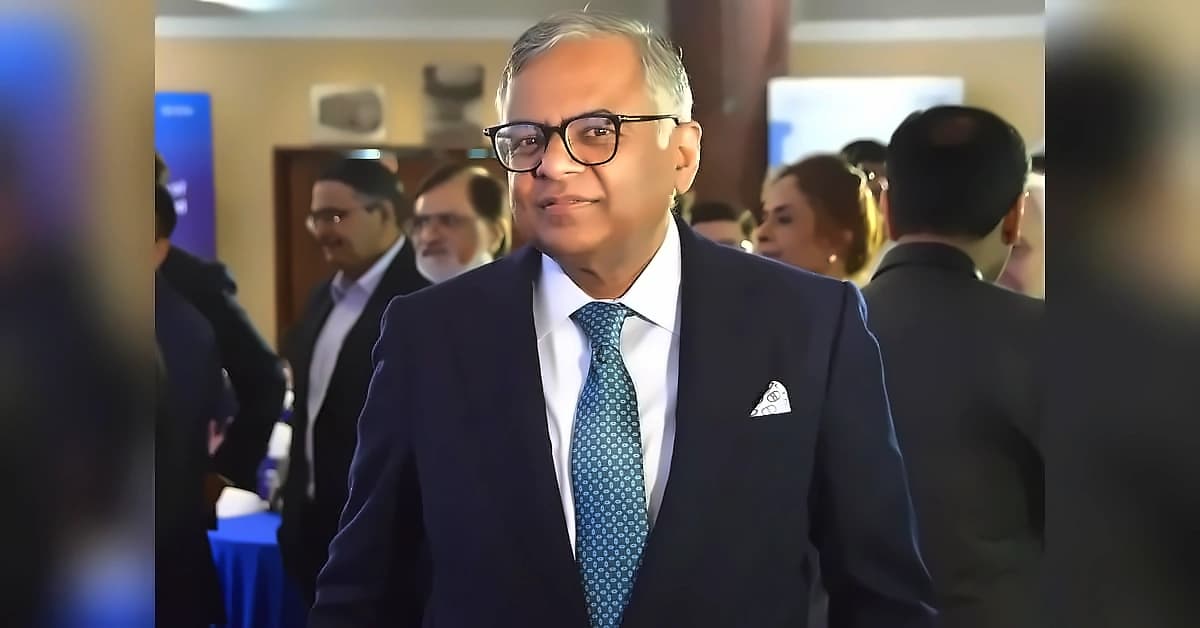
N. Chandrasekaran, Chairman of Tata Sons, has reportedly discussed with close associates the possibility of stepping down ahead of the company's August 18 annual general meeting (AGM). This development marks a significant escalation in governance tensions between Tata Sons and Tata Trusts, with profound implications for India's largest conglomerate. The situation centers on multiple interconnected issues: regulatory restrictions on the Sir Ratan Tata Trust (SRTT), questions about AGM quorum, and performance concerns raised by Tata Trusts Chairman Noel Tata.
Chandrasekaran's current term as executive chairman runs until February 2027, but his continuation depends on reappointment as a director at the upcoming AGM. What would typically be a routine procedural matter has become a closely watched vote due to extraordinary circumstances.
The SRTT Inclusion Dilemma
This restriction creates a critical problem: Tata Sons' Articles of Association require an authorized representative jointly nominated by SRTT and the Sir Dorabji Tata Trust (SDTT) to be present for a valid quorum at any general meeting.
Without SRTT's ability to hold internal meetings and nominate its representative, questions have emerged about whether the AGM can proceed. Tata Trustees have approached the Charity Commissioner seeking a one-time waiver to enable SRTT trustees to meet and consider their participation. The stakes are significant—beyond Chandrasekaran's reappointment, the AGM must approve accounts, dividend payouts, and approximately Rs 400 crore in proposed grants from SRTT.
The inclusion question directly impacts Chandrasekaran's authority because Tata Trusts collectively hold about 66% of Tata Sons. Any decision on extending his tenure requires their backing. Without SRTT participation, the legitimacy of voting on his reappointment could be challenged, creating uncertainty about whether he can continue as chairman even until February 2027.
The August 13 Trusts Meeting
The Tata Trusts board meeting scheduled for August 13, just days before the Tata Sons AGM, will be a critical inflection point. Trustees are expected to discuss whether the AGM can proceed if the required quorum remains unavailable and determine their position on Chandrasekaran's reappointment as a director.
This meeting assumes particular significance because of the fractured dynamics within Tata Trusts. While trustees including Vijay Singh and Venu Srinivasan have maintained that earlier unanimous resolutions approving a fresh term for Chandrasekaran remain valid, Noel Tata has expressed reservations. The February 24 Tata Sons board meeting revealed these tensions when Noel Tata surprised other directors by raising questions about losses in several unlisted companies and putting forth conditions for approving another term.
Four Tata Sons directors were ready to put the extension to a vote, but Chandrasekaran proposed postponement, emphasizing that decisions should be consensus-based following late Ratan Tata's tradition.
The August 13 meeting will test whether such consensus exists or whether the fractures have deepened beyond repair.
Governance Mechanisms Creating Pressure
Several governance mechanisms are converging to create pressure on Chandrasekaran's position. First, Noel Tata has called for performance-linked conditions for any third-term extension, specifically citing concerns about losses at Air India and newer ventures such as BigBasket. Air India has sought approximately Rs 100 billion in funding for FY2026-27 amid continuing losses, while Tata Steel UK has reported losses of about Rs 40 billion in FY2023-24.
Second, retirement age norms present a structural hurdle. Current policy states that directors in executive positions should retire at 65 years. Chandrasekaran is currently 63, meaning a third five-year term would require Tata Sons to waive these retirement norms—a significant departure from established policy.
Third, the breakdown in communication between Tata Trusts and Tata Sons has already begun affecting decision-making. Reports indicate delays in key appointments, slowing of discussions around strategic matters concerning new businesses, and postponement of senior-level hires. This governance strain creates pressure for resolution, potentially through leadership changes.
Strategic Calculus for Pre-AGM Resignation
Chandrasekaran's consideration of stepping down before the AGM rather than risking a contentious vote reflects several strategic considerations. The primary factor is the desire to avoid a hostile and abrupt end to his chairmanship. If the AGM were held and the outcome proved unfavorable, it would plunge India's largest business group into an immediate and unplanned leadership transition, creating reputational damage for both the individual and the institution.
By stepping down voluntarily, Chandrasekaran could control the narrative around his departure, maintain dignity and preserve his legacy, and enable a more planned transition. The timing is particularly nuanced—his current term as chairman runs until February 2027, but his continuation depends on reappointment as a director. Stepping down now allows him to exit on his own terms rather than being voted out, while preserving his nine-year legacy of growth and transformation.
The variables determining the AGM outcome are numerous and beyond any single entity's control: Noel Tata's opposition, unclear Tata Trusts voting strategy, SRTT's suspended status, and fundamental questions about whether the meeting can be held at all. With less than a week before the AGM, this uncertainty makes a controlled pre-AGM exit strategically preferable to risking an adverse vote.
Impact on Succession and Operations
The uncertainty surrounding Chandrasekaran's tenure renewal has created significant challenges for succession planning. The governance tensions have already delayed key appointments, slowed strategic discussions, and contributed to postponement of board-related decisions. This creates uncertainty for potential internal candidates about career progression and risks talent attrition during a critical period.
Despite the turbulence, analysts suggest there is no immediate operational impact expected. Most effects, if any, will be sentiment-driven. The Tata Group's strong institutional foundation and diversified business portfolio provide resilience even during leadership transitions. However, an abrupt transition could trigger stock market volatility across Tata Group companies, with potential short-term corrections creating selective opportunities for long-term investors.
Specific business areas face particular risks. Air India's turnaround strategy, requiring critical funding decisions, could be delayed. Semiconductor ventures and digital platforms might see slower investment execution, potentially ceding competitive advantage. M&A activity appears likely to be on hold, missing growth opportunities.
The Fundamental Trade-off
Tata Sons is evaluating a fundamental trade-off between maintaining leadership continuity under Chandrasekaran and accommodating Tata Trustees' governance demands.
The period has seen major acquisitions including Air India and expansion into new verticals such as semiconductors and digital platforms.
On the other hand, specific performance concerns have prompted Tata Trustees to seek greater accountability. Beyond Air India and Tata Steel UK losses, questions exist about the group's strategic direction and whether the current centralized model under one chairman remains appropriate for a $400 billion enterprise by the early 2030s.
The debate is not merely about whether Chandrasekaran continues, but about exploring whether the group should continue with its current conglomerate structure or adopt a different model.
What Lies Ahead
The August 13 Tata Trusts board meeting and subsequent August 18 AGM will likely prove decisive. If SRTT obtains its waiver and can participate, the jointly nominated representative requirement for quorum can be satisfied, and the AGM can proceed with Chandrasekaran's reappointment on the agenda. If the waiver is denied, the meeting may need to be adjourned, potentially requiring regulatory intervention from the Registrar of Companies.
Legal experts suggest that Chandrasekaran's position as chairman until February 2027 may not immediately be affected even if the AGM cannot consider his reappointment, but the final legal position depends on how the Companies Act and Tata Sons' Articles of Association apply to these unprecedented circumstances.
Regardless of the immediate outcome, this crisis has forced long-pending discussions about succession and governance to the forefront. The Tata Group is inevitably thinking about how leadership should evolve, with observers noting that succession planning is mature and necessary. The resolution of this situation will likely establish important precedents for governance of trust-controlled companies in India while determining the next chapter of one of the country's most storied conglomerates.