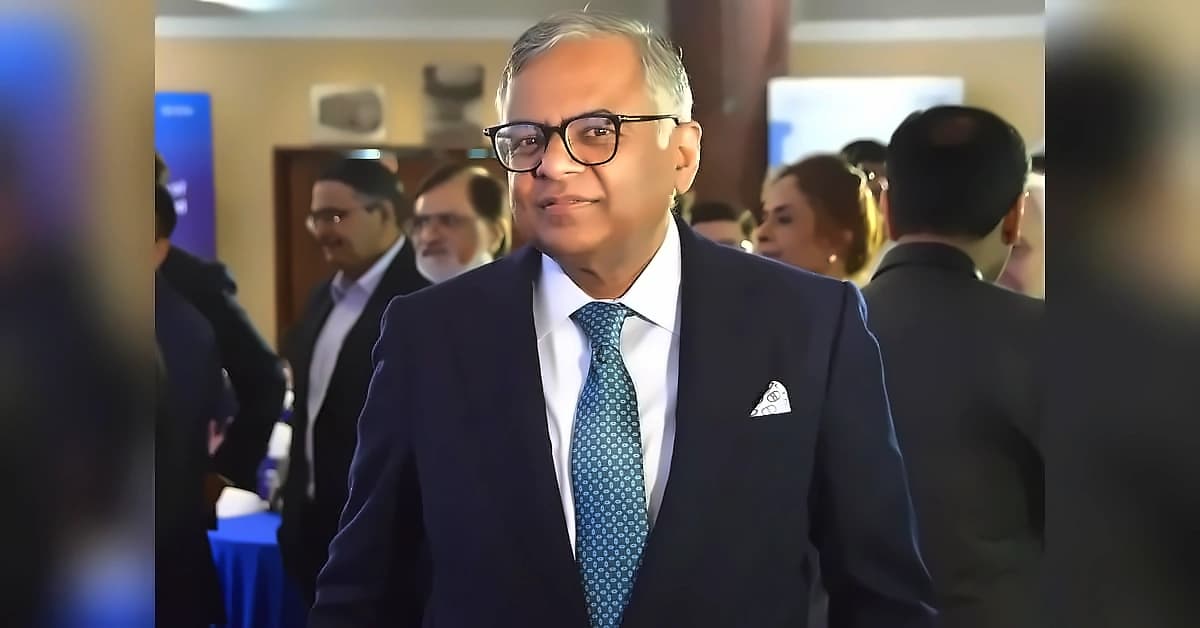
N Chandrasekaran has announced his resignation as chairman of Tata Sons effective February 20, 2027, marking the end of a nearly decade-long tenure that began with his appointment in February 2017. As reported by The Economic Times, Chandrasekaran became the first outsider in generations to lead Tata Sons after the group's board ousted Cyrus Mistry in October 2016, a decision that wiped roughly USD 9 billion off the combined market value of Tata's listed companies. His appointment functioned as the equivalent of a group CEO role, chosen by Ratan Tata to restore stability after the Mistry fallout and became the first non-Parsi professional to lead the conglomerate. According to latest reports, when the extension was formally considered in February 2026, it did not receive unanimous support. Six months later, with no resolution reached, Chandrasekaran decided not to offer himself for another term and asked the board and shareholders to begin the succession process.
Both Noel Tata and N Chandrasekaran separately met with senior government officials to brief them on their rift and concerns before Chandrasekaran's exit, according to Times of India reports citing sources. The meetings covered disagreements over the direction of new business, governance concerns, differences in strategy, losses incurred by Air India and Tata Digital, the group's semiconductor ventures, and uncertainty over Chandrasekaran's reappointment. Noel Tata is non-executive chairman of Trent and set to step down from the role in November this year, in line with the Group's retirement age policy. Tata Trusts initiated the process of finding a successor to lead the conglomerate's holding company, with the Sir Dorabji Tata Trust (SDTT) passing a resolution to set up a selection committee for recommending a new Chairman. Tata Trusts holds over 66% of Tata Sons and has extended full support to ensure a smooth transition consistent with the group's long-term interests.
Chandrasekaran's departure creates significant uncertainty over Tata's $120 billion investment program spanning the next five years, as reported by Bloomberg. Some of the conglomerate's current and planned projects could slow down, be scaled back or stretch out longer as the group awaits new leadership. The tension has come to a head between Chandrasekaran and Noel Tata, chairman of Tata Trusts, who has pushed back against the spending spree in recent months. Noel favors more measured capital spending with quicker payout horizons compared to Chandra's investment-heavy approach. The board wants proof of payoff before approving more spending, with directors pressing senior management to reassess capital-intensive projects, most notably the flagship chip fab, airline investments, and consumer tech business. Tata Sons' board had already begun pushing for a strategic recalibration even before Chandra announced his departure, with the board demanding detailed roadmaps for narrowing losses and improving execution across various ventures.
Under Chandrasekaran's leadership, Tata Group's revenue nearly doubled and profit tripled between 2017 and 2026, with aggregate group revenues crossing USD 180 billion in FY24-25. According to The Economic Times, the conglomerate now spans some 26 companies with a combined market capitalisation of roughly ₹26 lakh crore as of mid-2026, closer to USD 360-380 billion, larger than the GDP of Pakistan, Portugal or Greece combined. At the broader Tata Group level, aggregate revenue reached around ₹16.24 lakh crore, while profit after tax reached approximately ₹1.71 lakh crore. Tata Sons reported FY26 profit after tax of around ₹31,961 crore, up 21.8%, demonstrating the group's continued financial strength. This performance represents one of the most significant turnarounds in Indian corporate history, with the group successfully diversifying beyond its traditional technology, autos and steel strongholds into aviation, electronics, semiconductors, batteries and digital commerce. Chandra has overseen an investment-heavy transformation of the Tata Group across aviation, electronics, semiconductors and digital, with his successor likely facing a tougher environment due to an increasingly assertive trustee board.
The more cautious approach is already visible across Tata's major ventures. When management sought approval for roughly $1 billion of additional funding to support Tata Digital's operations, the board pushed back, demanding a detailed roadmap for narrowing losses and improving execution. This has triggered a broad restructuring inside Tata Digital, with the company slimming management layers, reducing headcount, and bringing in new leadership to improve operating performance. Agratas, the battery unit, is facing a widening cost gap with Chinese manufacturers and has abandoned plans for commercial-scale battery cell production, focusing instead on proving technology before committing billions more to scale. Air India continues to face challenges after record losses in the year to March 31 due to a plane crash in June 2025 and geopolitical conflicts, with the group already downsizing ambitions for the four-year-old acquisition. Meanwhile, TCS is entering a more uncertain phase as enterprise technology spending slows and AI disruption erodes its traditional strength, prompting the company to install new senior executives and aggressively explore acquisitions. The more cautious approach comes as TCS's board has installed a new layer of senior executives over the past 18 months under Chief Executive K. Krithivasan, including a chief operating officer, chief strategy officer and head of acquisitions, after historically relying almost exclusively on organic growth.
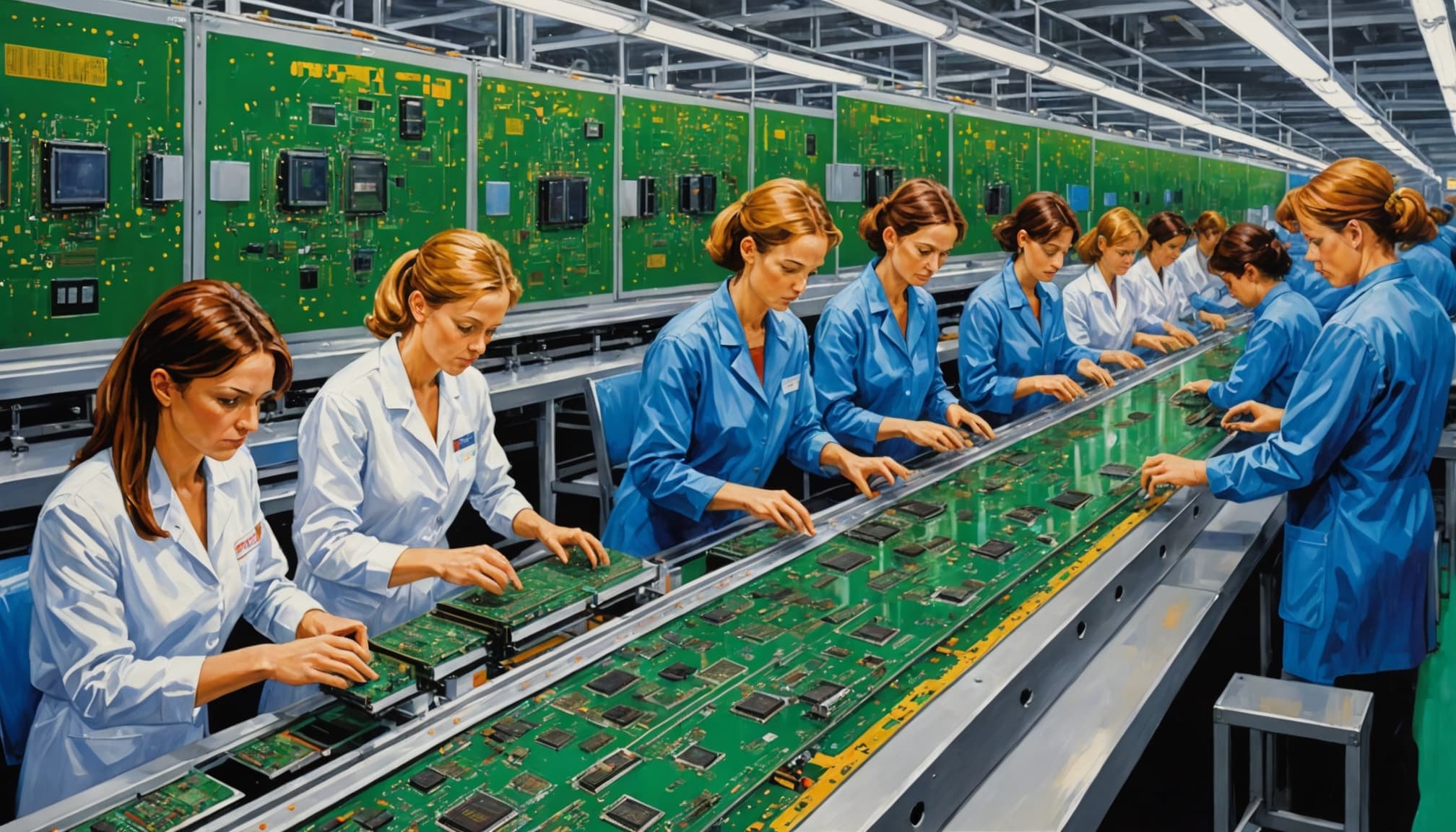
The most significant project at risk is Tata's semiconductor fab development, described as an attempt to build a local Taiwan Semiconductor Manufacturing Co.-like giant. As reported by Bloomberg, the project carries an unusual degree of oversight, with the fab team accountable not only to Tata's leadership but also to the Indian government. While Tata Electronics' Assam chip packaging plant remains on track to open next year, various operational and technology-access related delays have spurred the group to pace expectations by starting with less sophisticated technology. The chip fab project carries an unusual degree of oversight, with the fab team accountable not only to Tata's leadership but also to the Indian government, making it a crucial partner for Prime Minister Narendra Modi's agenda to recast India as a global manufacturing power. Company executives worry that a new leadership unwilling to spend ambitiously on long timelines may not be able to replicate success in sectors like semiconductors, aviation, and industrial battery cells. For Modi's administration, the Tata development offers the prospect of remaking Dholera into a Silicon Valley-like hub of innovation and aligns with India's pitch to foreign tech investors as an attractive alternative to China.